Mars rover detailed
1344×768 · AVIF · CC BY 4.0
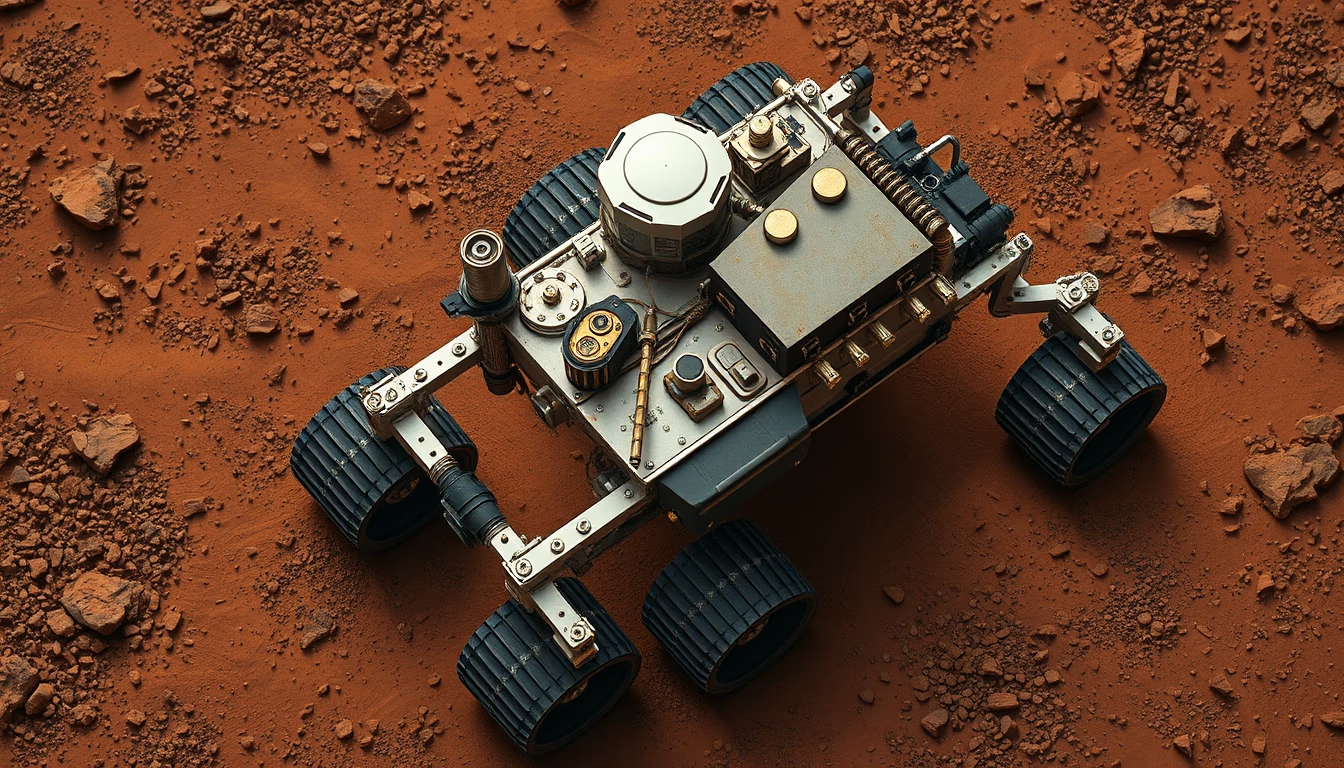
Mars rovers are robotic vehicles crucial for exploring Mars, unveiling geological secrets and searching for signs of past life.
About this subject
Mars rovers represent one of the greatest achievements in engineering and space exploration. From the first successful rover, Sojourner, which landed in 1997 as part of the Mars Pathfinder mission, to the most advanced one like Perseverance, each vehicle has brought significant advances in understanding the Red Planet. These mobile robots are designed to traverse rugged terrain, analyze soil and rock samples, and send valuable data back to Earth.
NASA leads most of these missions, with highlights including the twin rovers Spirit and Opportunity, which landed in 2004 and operated far beyond their initial expectations. Opportunity, for example, worked for nearly 15 years, covering over 45 kilometers. Curiosity, launched in 2011, brought sophisticated instruments to assess Mars' past habitability, discovering ancient riverbeds and organic molecules. Perseverance, which arrived in 2021, carries the Ingenuity helicopter and is collecting samples for a future Mars sample return mission.
The importance of these rovers extends beyond science: they inspire generations and demonstrate humanity's ability to overcome extreme technical challenges. Issues such as communication delays of several minutes, temperatures below -100°C, and Martian dust are routinely addressed. Each mission expands our knowledge of Martian geology, the water cycle, and the potential for microbial life, bringing us closer to one day sending astronauts to the neighboring planet.
Frequently Asked Questions
How many rovers have landed on Mars?
As of 2025, six rovers have successfully landed on Mars: Sojourner (1997), Spirit (2004), Opportunity (2004), Curiosity (2012), Perseverance (2021), and the Chinese Zhurong (2021).
What is the main goal of the Perseverance rover?
Perseverance seeks signs of ancient microbial life, collects rock and soil samples for future return to Earth, and tests technologies for producing oxygen from the Martian atmosphere.
Can Mars rovers move on their own?
Yes, but to a limited extent. They use autonomous navigation algorithms to avoid obstacles, but major decisions are made by operators on Earth due to communication delay.
Direct URL
https://pub-c7d6a6ea828543ac903a74a341ccb2e1.r2.dev/imagens/mars-rover-detailed-isometric-flat-lay-p0.avifHow to credit
Include a visible link back to UtilizAí. Copy one of the snippets below:
<a href="https://xn--utiliza-eza.com/en/midia/imagens/mars-rover-detailed-isometric-flat-lay-p0">Mars rover detailed</a> by <a href="https://xn--utiliza-eza.com">UtilizAí</a>, licensed under <a href="https://creativecommons.org/licenses/by/4.0/">CC BY 4.0</a>.
[Mars rover detailed](https://xn--utiliza-eza.com/en/midia/imagens/mars-rover-detailed-isometric-flat-lay-p0) by [UtilizAí](https://xn--utiliza-eza.com), CC BY 4.0
License: CC-BY-4.0