Machu picchu ruins morning mist
1344×768 · AVIF · CC BY 4.0
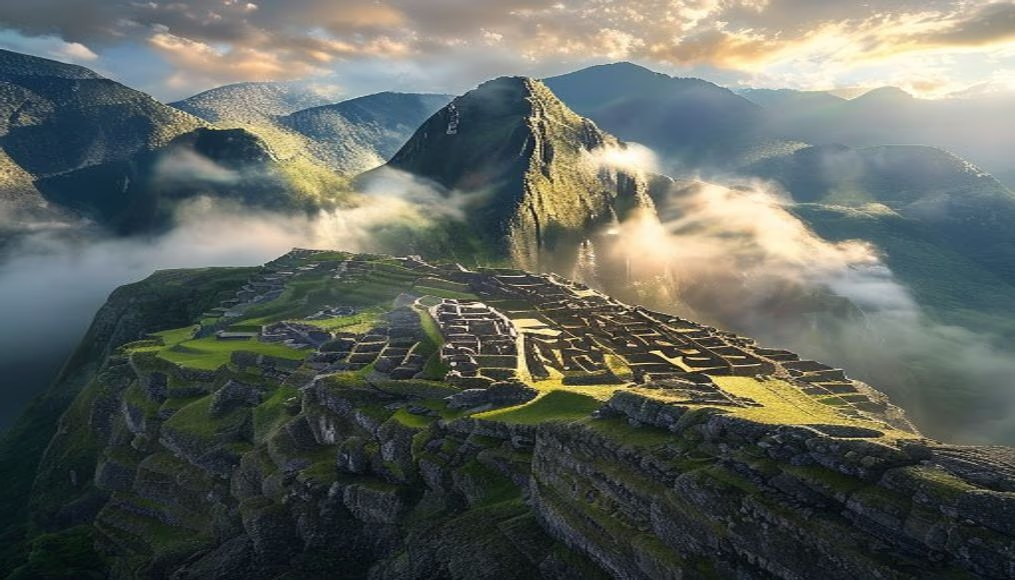
Ruínas de Machu Picchu envolvidas pela névoa matinal, um dos sítios arqueológicos mais emblemáticos do mundo.
Sobre o tema
Machu Picchu é uma antiga cidade inca localizada no topo de uma montanha, a 2.430 metros acima do nível do mar, no vale do rio Urubamba, no Peru. Construída por volta do século XV, durante o auge do Império Inca, acredita-se que tenha sido um retiro real para o imperador Pachacuti. O sítio foi redescoberto em 1911 pelo explorador americano Hiram Bingham e desde então se tornou um dos destinos turísticos mais famosos do planeta.
A névoa matinal que frequentemente envolve as ruínas é resultado da alta umidade da região e do resfriamento noturno, criando uma atmosfera mística que realça a imponência das estruturas de pedra. Este fenômeno é mais comum durante a estação chuvosa, de novembro a março, quando a visibilidade pode variar drasticamente em poucos minutos. Apesar do clima, a visitação continua intensa, com cerca de 1,5 milhão de turistas por ano.
A arquitetura de Machu Picchu impressiona pelo encaixe perfeito das pedras, sem uso de argamassa, e pela integração com o relevo montanhoso. Destaques incluem o Templo do Sol, a Intihuatana (um relógio solar) e as centenas de terraços agrícolas que evitavam a erosão. Em 1983, o sítio foi declarado Patrimônio Mundial da UNESCO e, em 2007, eleito uma das Novas Sete Maravilhas do Mundo.
Curiosamente, a cidade foi construída sobre uma falha geológica, o que facilitou o drenamento da água da chuva e a fragmentação das rochas para construção. Os incas não conheciam a roda, mas moveram blocos de até 50 toneladas através de rampas e força humana. Estudos recentes indicam que Machu Picchu foi abandonada cerca de 100 anos após sua construção, possivelmente devido à invasão espanhola, embora os espanhóis nunca tenham encontrado o local.
Perguntas frequentes
Qual é a melhor época para visitar Machu Picchu e ver a névoa matinal?
A névoa matinal é mais frequente durante a estação chuvosa (novembro a março). Porém, a visibilidade é imprevisível; muitas vezes a névoa se dissipa no meio da manhã. A estação seca (abril a outubro) oferece céu mais limpo, mas menos névoa.
Como os incas construíram Machu Picchu sem ferramentas modernas?
Os incas usaram martelos de pedra, bronze e técnicas de polimento. As pedras eram encaixadas por tentativa e erro, ajustando-se perfeitamente sem argamassa. Eles aproveitaram a falha geológica para obter blocos e usaram rampas de terra para movê-los.
Machu Picchu é realmente uma das Novas Sete Maravilhas do Mundo?
Sim. Em 2007, após uma votação global organizada pela New7Wonders Foundation, Machu Picchu foi eleita uma das Novas Sete Maravilhas do Mundo, ao lado de monumentos como a Grande Muralha da China e o Cristo Redentor.
URL direta
https://pub-c7d6a6ea828543ac903a74a341ccb2e1.r2.dev/imagens/machu-picchu-ruins-morning-mist-travel-photography-v10.avifComo creditar
Inclua um link visível de volta pro UtilizAí. Copie um dos snippets abaixo:
<a href="https://xn--utiliza-eza.com/midia/imagens/machu-picchu-ruins-morning-mist-travel-photography-v10">Machu picchu ruins morning mist</a> by <a href="https://xn--utiliza-eza.com">UtilizAí</a>, licensed under <a href="https://creativecommons.org/licenses/by/4.0/">CC BY 4.0</a>.
[Machu picchu ruins morning mist](https://xn--utiliza-eza.com/midia/imagens/machu-picchu-ruins-morning-mist-travel-photography-v10) by [UtilizAí](https://xn--utiliza-eza.com), CC BY 4.0
Licença: CC-BY-4.0