Loch ness scotland
1344×768 · AVIF · CC BY 4.0
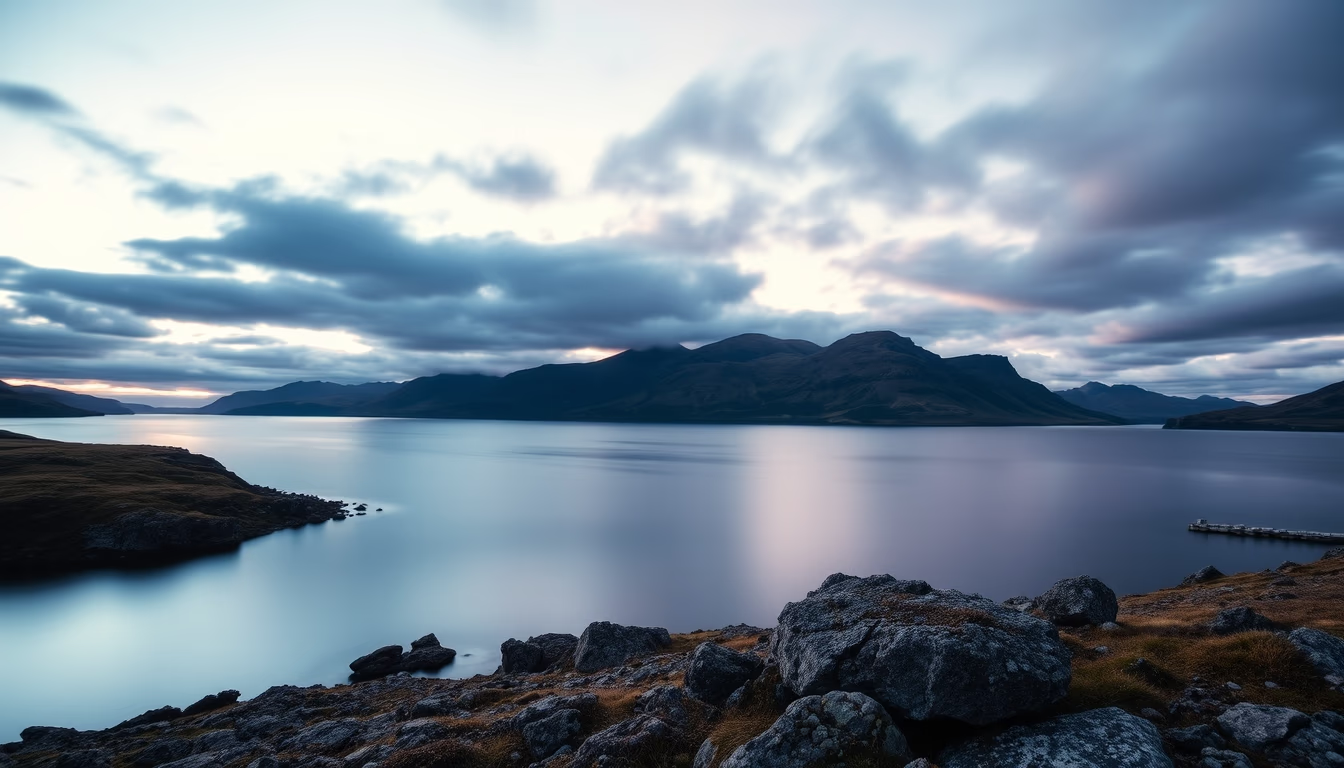
Loch Ness, in Scotland, is one of the world's most famous lakes, known for its natural beauty and the legendary Loch Ness Monster.
About this subject
Loch Ness is a large, deep freshwater lake in the Scottish Highlands, stretching about 37 kilometers southwest of Inverness. With a maximum depth of 230 meters, it is the second deepest loch in Scotland after Loch Morar. Geologically, it was formed during the last Ice Age by glacial erosion, now occupying part of the Great Glen (Glen More), a valley that runs across Scotland. The loch is integrated into a canal system connecting the east and west coasts, notably via the Caledonian Canal.
Worldwide fame of Loch Ness comes primarily from the legend of the Loch Ness Monster, affectionately called Nessie. Sightings date back to the 6th century when Saint Columba reportedly confronted a water beast in the River Ness. Modern interest surged in 1933 after a new road provided better views of the loch, leading to numerous claimed encounters. Despite many expeditions using sonar, submarines, and DNA sampling, no definitive evidence of a large unknown creature has been found. Most sightings are explained by waves, logs, boat wakes, or hoaxes.
Tourism thrives on the myth, with millions visiting each year. Urquhart Castle, a ruined medieval fortress on the western shore, offers scenic vistas and historical context. The surrounding landscape features rolling hills and forests typical of the Highlands. Activities include boating, fishing, and kayaking, but weather can change rapidly. Conservation areas protect local wildlife such as otters, ospreys, and Arctic charr.
Interestingly, the water of Loch Ness contains high levels of peat, reducing visibility and fueling speculation about hidden creatures. Acoustic surveys have detected large moving objects, but they are always natural phenomena. The loch remains a cultural icon, appearing in films, literature, and folklore, cementing its place as one of the world's most mysterious locations.
Frequently Asked Questions
What is the depth of Loch Ness?
Loch Ness reaches a maximum depth of 230 meters, making it the second deepest loch in Scotland. It stretches about 37 kilometers, and underwater visibility is low due to high peat content.
Are there recent sightings of the Loch Ness Monster?
Yes, reports of sightings continue, but none have been confirmed. In 2023, an expedition using drones and sonar claimed to detect something unusual, but scientists attribute it to natural phenomena.
How was the loch formed?
Loch Ness was formed during the last Ice Age about 10,000 years ago, when glacial movement carved the Great Glen valley. Subsequent melting filled the depression with water.
Direct URL
https://pub-c7d6a6ea828543ac903a74a341ccb2e1.r2.dev/imagens/loch-ness-scotland-long-exposure-p11.avifHow to credit
Include a visible link back to UtilizAí. Copy one of the snippets below:
<a href="https://xn--utiliza-eza.com/en/midia/imagens/loch-ness-scotland-long-exposure-p11">Loch ness scotland</a> by <a href="https://xn--utiliza-eza.com">UtilizAí</a>, licensed under <a href="https://creativecommons.org/licenses/by/4.0/">CC BY 4.0</a>.
[Loch ness scotland](https://xn--utiliza-eza.com/en/midia/imagens/loch-ness-scotland-long-exposure-p11) by [UtilizAí](https://xn--utiliza-eza.com), CC BY 4.0
License: CC-BY-4.0