Lego bricks colorful
1344×768 · AVIF · CC BY 4.0
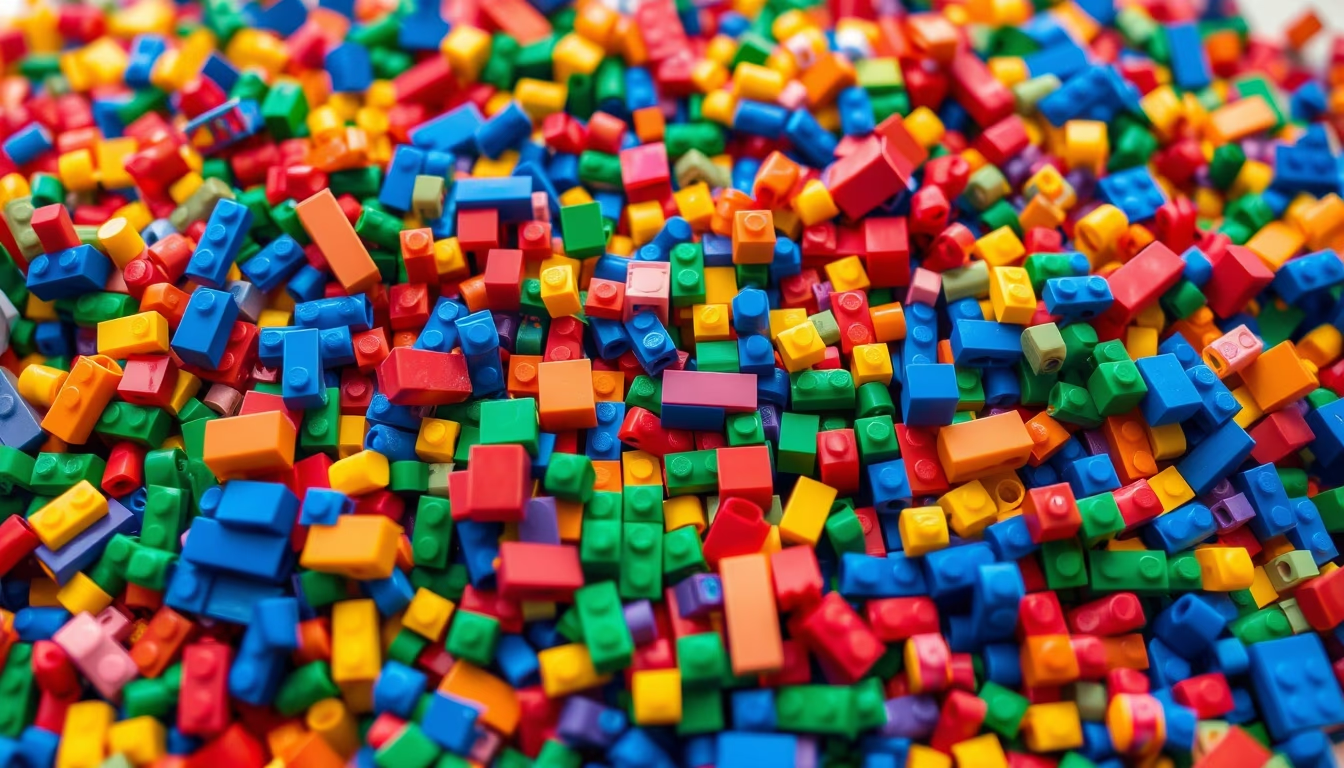
Small colorful plastic bricks that have captivated generations: Lego bricks are far more than toys. Discover their history, design, and cultural impact.
About this subject
Lego bricks, the iconic interlocking plastic blocks, were invented by Danish carpenter Ole Kirk Christiansen in 1949. The name Lego derives from the Danish phrase "leg godt," meaning "play well." The modern brick design, featuring internal tubes for enhanced clutch power, was patented in 1958 and remains unchanged, guaranteeing compatibility across decades. Each brick is manufactured with micrometer precision to ensure a snug fit, and the company has produced over 600 billion pieces since its founding.
Beyond entertainment, Lego bricks are a powerful educational tool. The LEGO Education line provides kits for teaching science, technology, engineering, and mathematics (STEM), including robotics with LEGO Mindstorms. In 2024, the company offered more than 3,700 different elements, with red being the most common color. Colorful sets help children develop fine motor skills, color recognition, and spatial reasoning. Lego also hosts competitions like the FIRST LEGO League, where teams solve real-world problems using creativity and engineering.
Lego has a strong cultural footprint. Adult fans, known as AFOLs (Adult Fans of Lego), attend conventions such as BrickFair and build intricate models. The company has a sustainability goal: by 2030, all bricks will be made from renewable or recycled materials. In 2023, a rare 1979 space set sold for over $7,000. Lego bricks are not just toys; they are a symbol of creativity, precision, and enduring quality that spans generations and continents.
Frequently Asked Questions
Why do Lego bricks fit perfectly even after decades?
Since 1958, the brick design includes internal tubes that provide consistent clutch power. Manufacturing uses high-precision molds with tolerances up to 5 micrometers, ensuring new pieces fit perfectly with old ones.
How many Lego bricks exist in the world?
It is estimated that Lego has produced over 600 billion pieces since its founding. In 2024 alone, more than 60 billion bricks were manufactured, enough to circle the Earth multiple times.
Are Lego bricks recyclable?
Yes, Lego invests in sustainable materials. Some pieces are now made from sugarcane-based plastic. The company also recycles damaged bricks and aims to use renewable materials in all products by 2030.
Direct URL
https://pub-c7d6a6ea828543ac903a74a341ccb2e1.r2.dev/imagens/lego-bricks-colorful-national-geographic-style-p2.avifHow to credit
Include a visible link back to UtilizAí. Copy one of the snippets below:
<a href="https://xn--utiliza-eza.com/en/midia/imagens/lego-bricks-colorful-national-geographic-style-p2">Lego bricks colorful</a> by <a href="https://xn--utiliza-eza.com">UtilizAí</a>, licensed under <a href="https://creativecommons.org/licenses/by/4.0/">CC BY 4.0</a>.
[Lego bricks colorful](https://xn--utiliza-eza.com/en/midia/imagens/lego-bricks-colorful-national-geographic-style-p2) by [UtilizAí](https://xn--utiliza-eza.com), CC BY 4.0
License: CC-BY-4.0