Leather craft tools
1344×768 · AVIF · CC BY 4.0
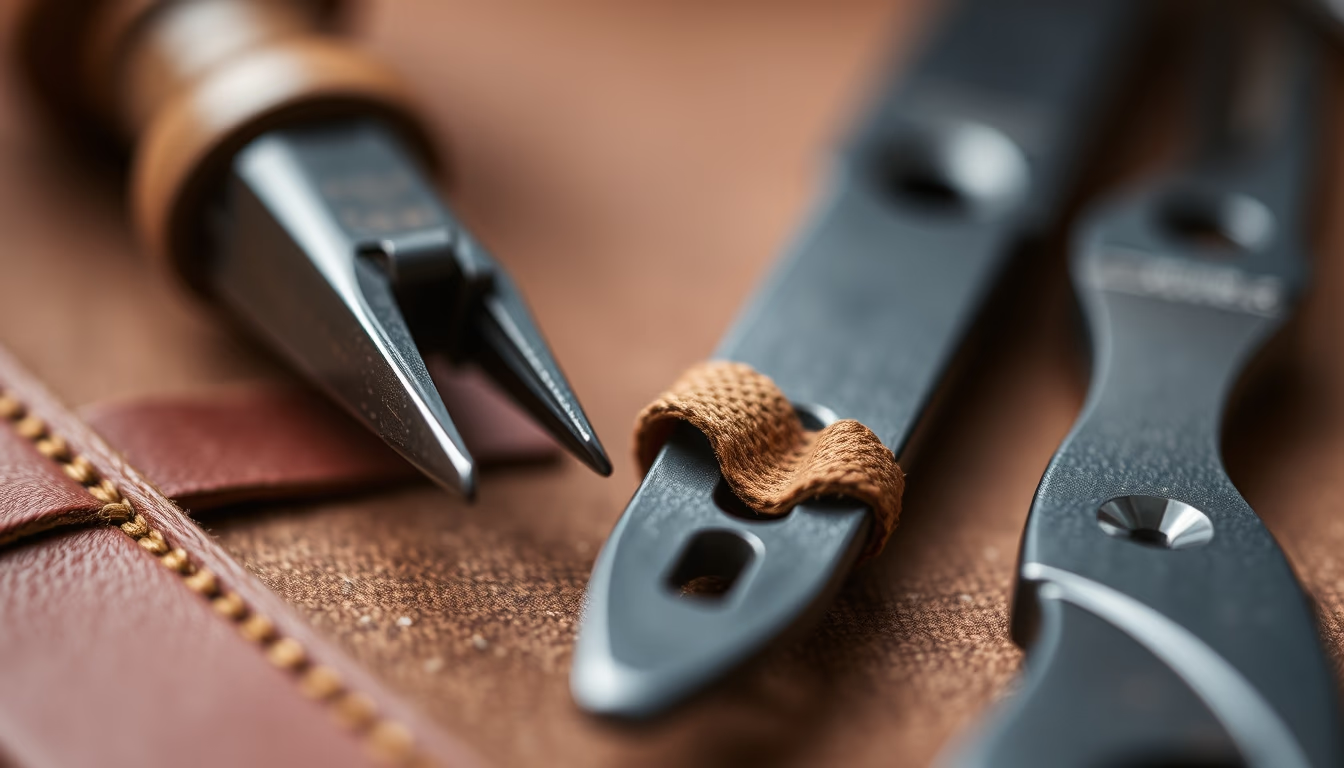
Leather craft tools in macro close-up: carving knives, awls, and modeling tools used in traditional leatherworking.
About this subject
Leather crafting, also known as leatherworking, is an ancient practice that relies on specialized tools for cutting, molding, stitching, and decorating leather. Essential tools include skiving knives for thinning edges, awls for piercing sewing holes, and modeling tools for embossing and smoothing finishes. Each tool features carbon steel blades or tips, designed to work with various leather thicknesses and types such as cowhide, suede, and nubuck.
In Brazil, leatherworking has deep roots in the Northeast and South, where gaucho and vaqueiro cultures rely on leather for saddles, belts, and boots. Tools like the stitching chisel and edge beveler are common in artisan workshops, which often blend hand techniques with industrial machinery. Brazilian leather is globally renowned for its quality, especially wet-blue and crust varieties.
Modern tool designs cater to both beginners and professionals. Starter kits typically include a precision utility knife, steel ruler, and a groover. Advanced artisans use power tools like bench grinders for sharpening and industrial sewing machines. Proper maintenance, lubrication, rust prevention, and dry storage, is essential for tool longevity.
Fun fact: leatherworking tools date back to ancient civilizations such as Egypt and Rome, where similar instruments were used for armor and containers. Today, handmade leather crafting is experiencing a revival due to the maker movement and appreciation for artisan goods.
Frequently Asked Questions
What are the essential tools for starting leather crafting?
For beginners: a precision utility knife, steel ruler, groover, stitching awl, stitching chisels (3mm and 6mm), leather needles, and waxed thread. A rubber mallet and hole punch are also useful.
How to properly sharpen a leather cutting knife?
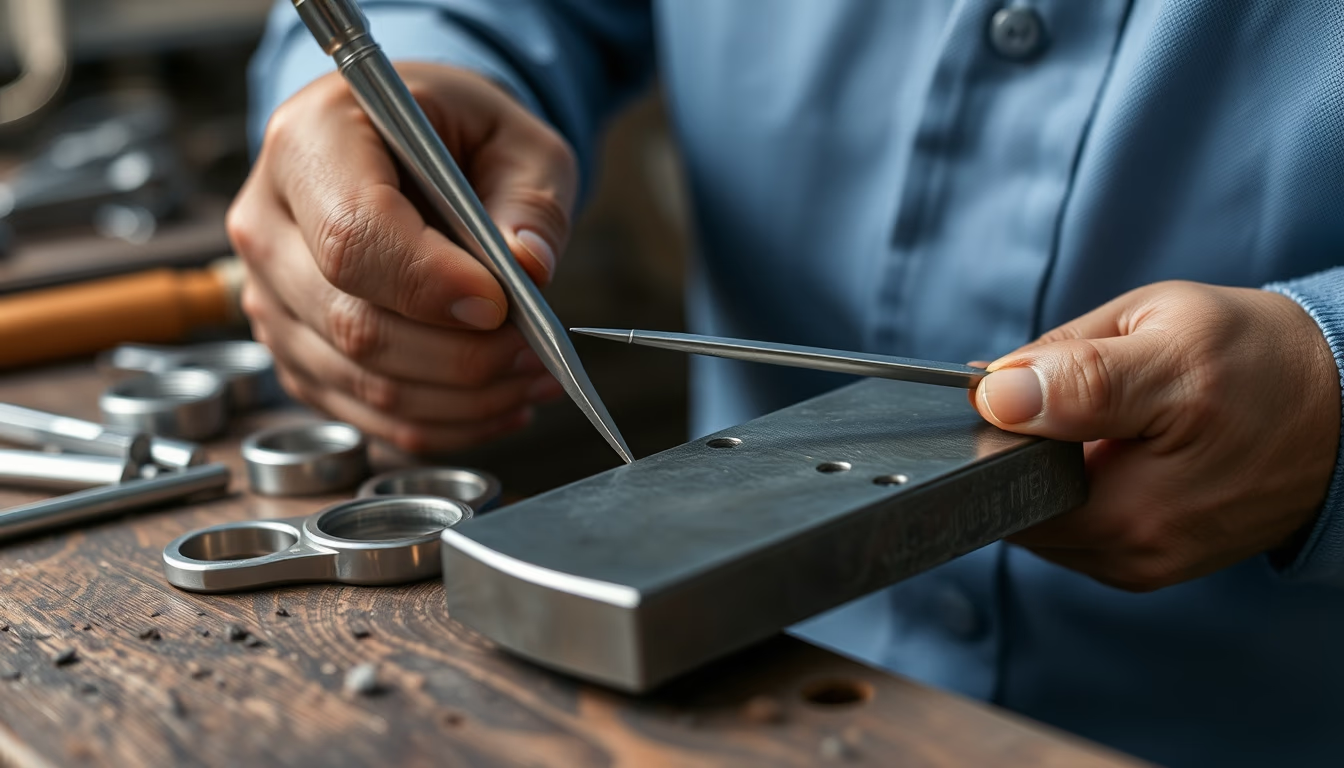
Use a fine-grit whetstone (1000 to 3000) or a water-cooled grinder. Maintain the original blade angle (around 25°) and make smooth, even strokes. Finish with a polishing stone to remove burrs.
What is the difference between wet-blue and crust leather?
Wet-blue is chrome-tanned leather with a blueish tint and softness. Crust leather is tanned and surface-dyed, preserving the natural texture and allowing further finishing. Crust is stiffer, ideal for carving and modeling tools.
Direct URL
https://pub-c7d6a6ea828543ac903a74a341ccb2e1.r2.dev/imagens/leather-craft-tools-macro-closeup-p4.avifHow to credit
Include a visible link back to UtilizAí. Copy one of the snippets below:
<a href="https://xn--utiliza-eza.com/en/midia/imagens/leather-craft-tools-macro-closeup-p4">Leather craft tools</a> by <a href="https://xn--utiliza-eza.com">UtilizAí</a>, licensed under <a href="https://creativecommons.org/licenses/by/4.0/">CC BY 4.0</a>.
[Leather craft tools](https://xn--utiliza-eza.com/en/midia/imagens/leather-craft-tools-macro-closeup-p4) by [UtilizAí](https://xn--utiliza-eza.com), CC BY 4.0
License: CC-BY-4.0