Last supper detail
1344×768 · AVIF · CC BY 4.0
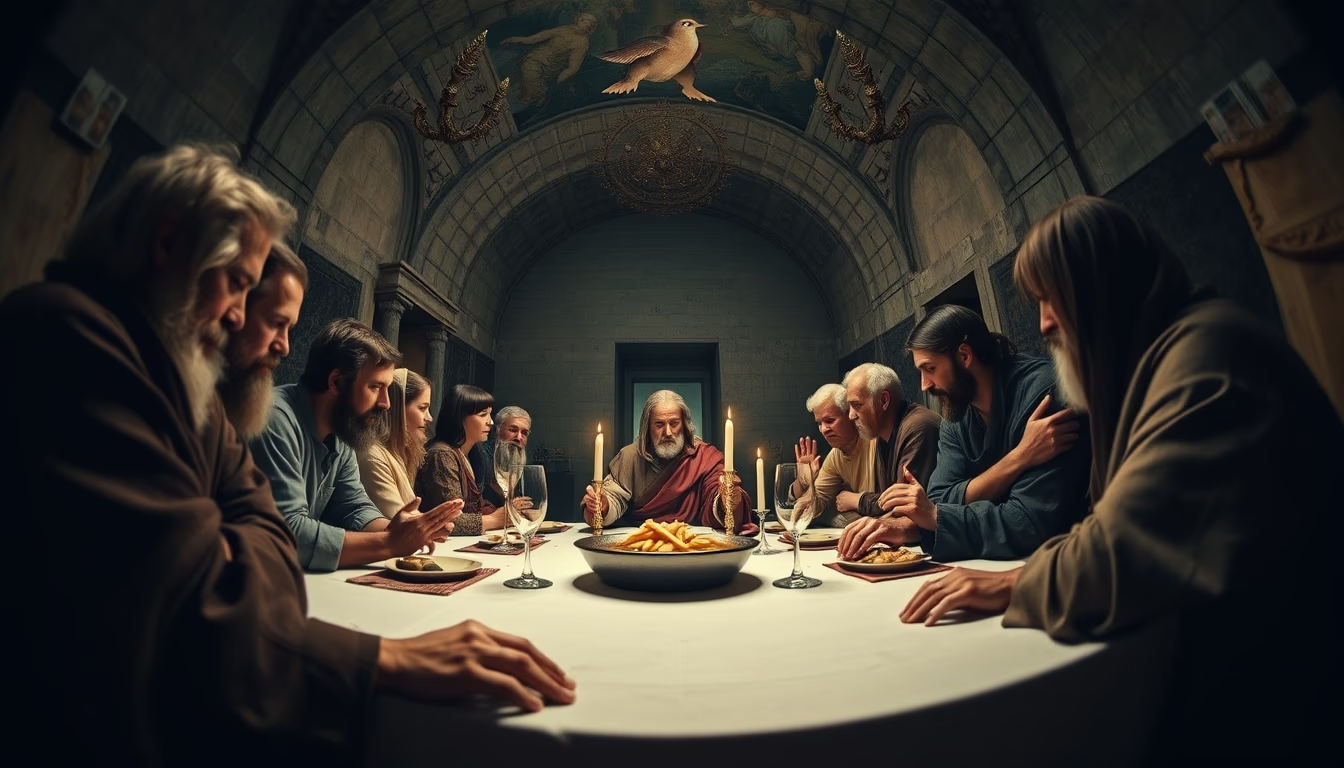
The detail of Leonardo da Vinci's Last Supper reveals Renaissance mastery in capturing human emotions in the face of betrayal.
About this subject
The Last Supper, painted by Leonardo da Vinci between 1495 and 1498, is one of the most iconic murals in art history. Located in the refectory of the Convent of Santa Maria delle Grazie in Milan, the work was commissioned by Duke Ludovico Sforza. Unlike traditional frescoes, Leonardo used a mixed technique of tempera and oil over a gesso preparation, allowing greater detail but also causing early deterioration due to humidity.
The scene depicts the biblical moment when Jesus announces that one of the twelve apostles will betray him. The composition is marked by the individualized reaction of each apostle, with gestures and expressions conveying shock, disbelief, and guilt. Leonardo used linear perspective to direct the eye toward Jesus at the center, with vanishing lines converging on his head. Natural light, represented by windows in the background, heightens the drama.
A notable detail is the depiction of Judas Iscariot. He is the only apostle with his face in shadow, seated at the same level as the others but leaning back, with his hand reaching toward the bread. Symbolically, his figure contrasts with that of John, who leans toward Jesus. The painting also includes elements like spilled salt, an omen of betrayal, and the expressive hands of the apostles, which Leonardo studied extensively.
Despite restoration attempts over the centuries, the original work has suffered irreversible damage. The most recent restoration, completed in 1999, removed old overpaints and revealed more vibrant colors, but still preserves only about 20% of the original painting in good condition. The Last Supper continues to inspire debates on Renaissance techniques and religious symbolism, standing as a milestone of humanism.
Frequently Asked Questions
How many apostles are depicted in the Last Supper?
The painting shows the twelve apostles plus Jesus Christ, totaling thirteen figures.
Why is Leonardo da Vinci's Last Supper so deteriorated?
Leonardo used an experimental technique of tempera and oil over gesso, which did not adhere well to the wall. Humidity in the refectory and historical damage, such as bombings during World War II, accelerated the deterioration.
What is the meaning of the spilled salt in the painting?
The spilled salt on the table is a symbol of bad omen and betrayal, associated with Judas Iscariot.
Direct URL
https://pub-c7d6a6ea828543ac903a74a341ccb2e1.r2.dev/imagens/last-supper-detail-fish-eye-wide-angle-p5.avifHow to credit
Include a visible link back to UtilizAí. Copy one of the snippets below:
<a href="https://xn--utiliza-eza.com/en/midia/imagens/last-supper-detail-fish-eye-wide-angle-p5">Last supper detail</a> by <a href="https://xn--utiliza-eza.com">UtilizAí</a>, licensed under <a href="https://creativecommons.org/licenses/by/4.0/">CC BY 4.0</a>.
[Last supper detail](https://xn--utiliza-eza.com/en/midia/imagens/last-supper-detail-fish-eye-wide-angle-p5) by [UtilizAí](https://xn--utiliza-eza.com), CC BY 4.0
License: CC-BY-4.0