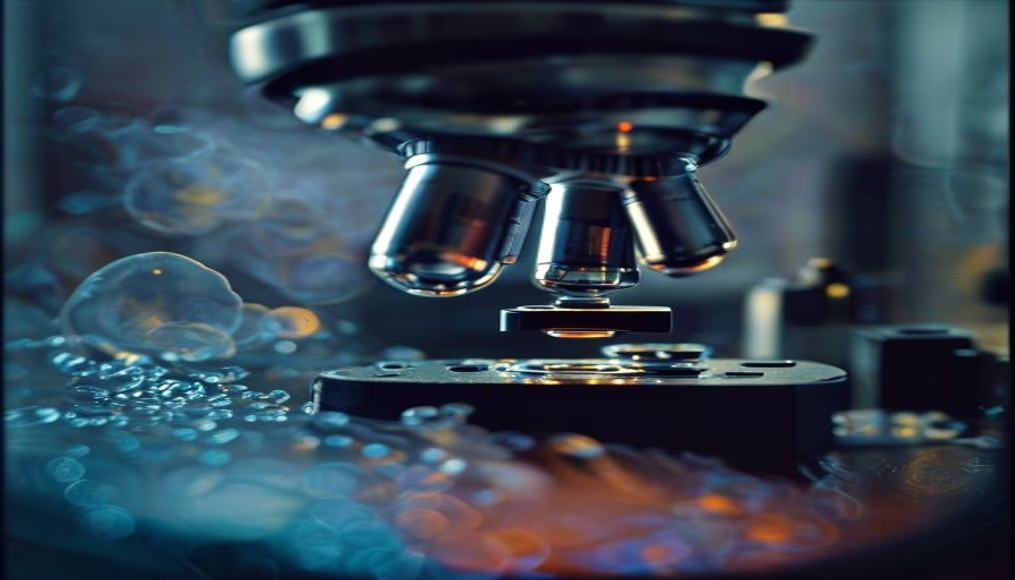
Lab technician looking through microscope
1344×768 · AVIF · CC BY 4.0
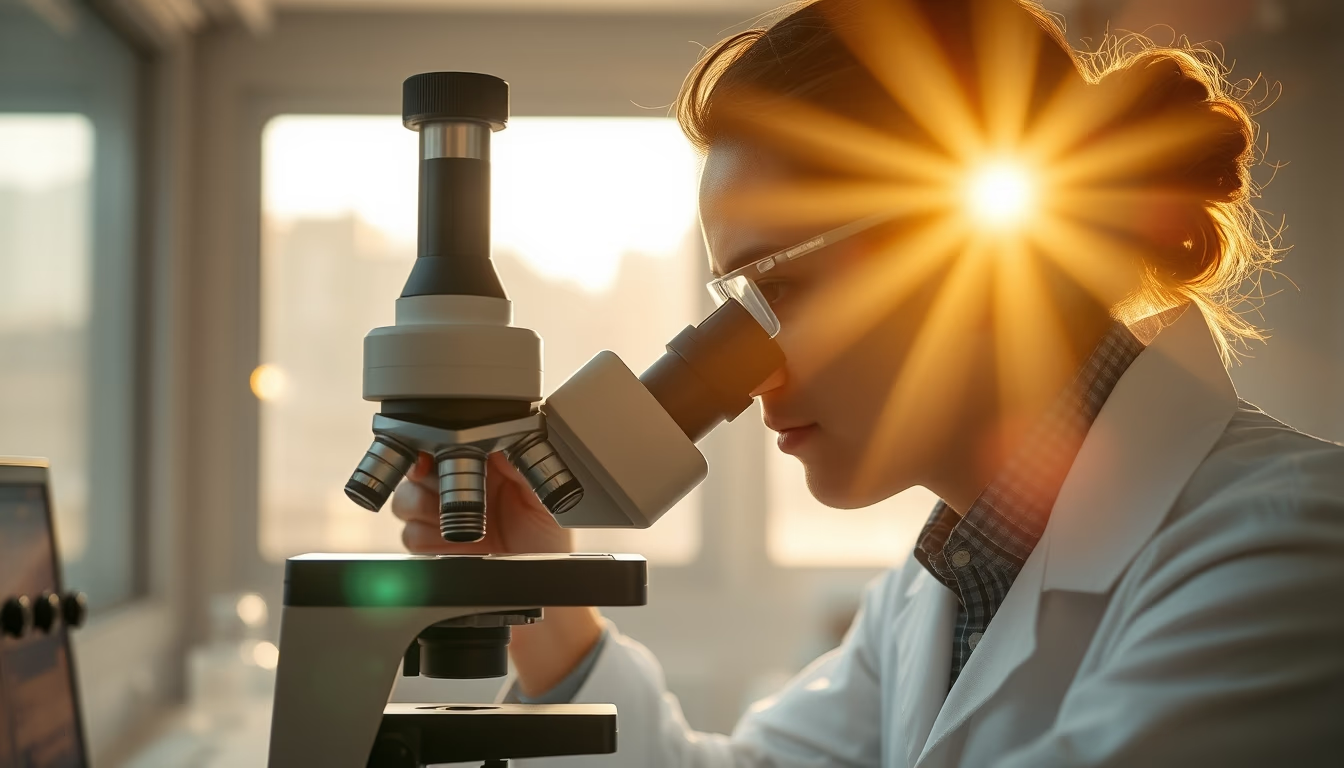
Lab technician examines a sample under a microscope on an overcast day, in a clinical research setting.
About this subject
The work of a lab technician involves meticulous analysis of biological samples, such as blood, tissues, or cell cultures, using optical or electron microscopes. On an overcast day, natural diffused light can reduce glare and enhance detail visualization, although modern labs rely on controlled artificial light sources. In Brazil, the training of these professionals is regulated by the Federal Council of Biomedicine (CFBM) or the Regional Chemistry Council (CRQ), depending on specialization. They work in hospitals, universities, and research centers, contributing to diagnoses of diseases like cancer, bacterial infections, and genetic disorders. The routine includes equipment calibration, slide preparation, and recording observations in computerized systems. Optical microscopy, invented in the 17th century by Antonie van Leeuwenhoek, remains fundamental to science, allowing magnifications up to 1500 times. During the COVID-19 pandemic, lab technicians were essential for RT-PCR testing and analysis of viral variants.
Frequently Asked Questions
What is the difference between a lab technician and a biomedical scientist?
A lab technician typically has technical or undergraduate training in areas like Clinical Analysis, while a biomedical scientist holds a degree in Biomedicine and can work in research, diagnosis, and management. Both work in labs, but the biomedical scientist has broader responsibilities, including supervision.
What samples does a lab technician analyze under a microscope?
Common samples include blood for complete blood counts, urine for sediment analysis, stool for parasitology, secretions for bacteriology, and biopsies for histopathology. Each type requires specific preparation, such as staining or fixation.
How does natural lighting affect microscope work?
Diffuse natural light from an overcast day can reduce glare and improve contrast in unstained samples, but professional labs use adjustable artificial light to standardize viewing conditions and avoid interference.
Direct URL
https://pub-c7d6a6ea828543ac903a74a341ccb2e1.r2.dev/imagens/lab-technician-looking-through-microscope-editorial-overcast-daytime-4.avifHow to credit
Include a visible link back to UtilizAí. Copy one of the snippets below:
<a href="https://xn--utiliza-eza.com/en/midia/imagens/lab-technician-looking-through-microscope-editorial-overcast-daytime-4">Lab technician looking through microscope</a> by <a href="https://xn--utiliza-eza.com">UtilizAí</a>, licensed under <a href="https://creativecommons.org/licenses/by/4.0/">CC BY 4.0</a>.
[Lab technician looking through microscope](https://xn--utiliza-eza.com/en/midia/imagens/lab-technician-looking-through-microscope-editorial-overcast-daytime-4) by [UtilizAí](https://xn--utiliza-eza.com), CC BY 4.0
License: CC-BY-4.0