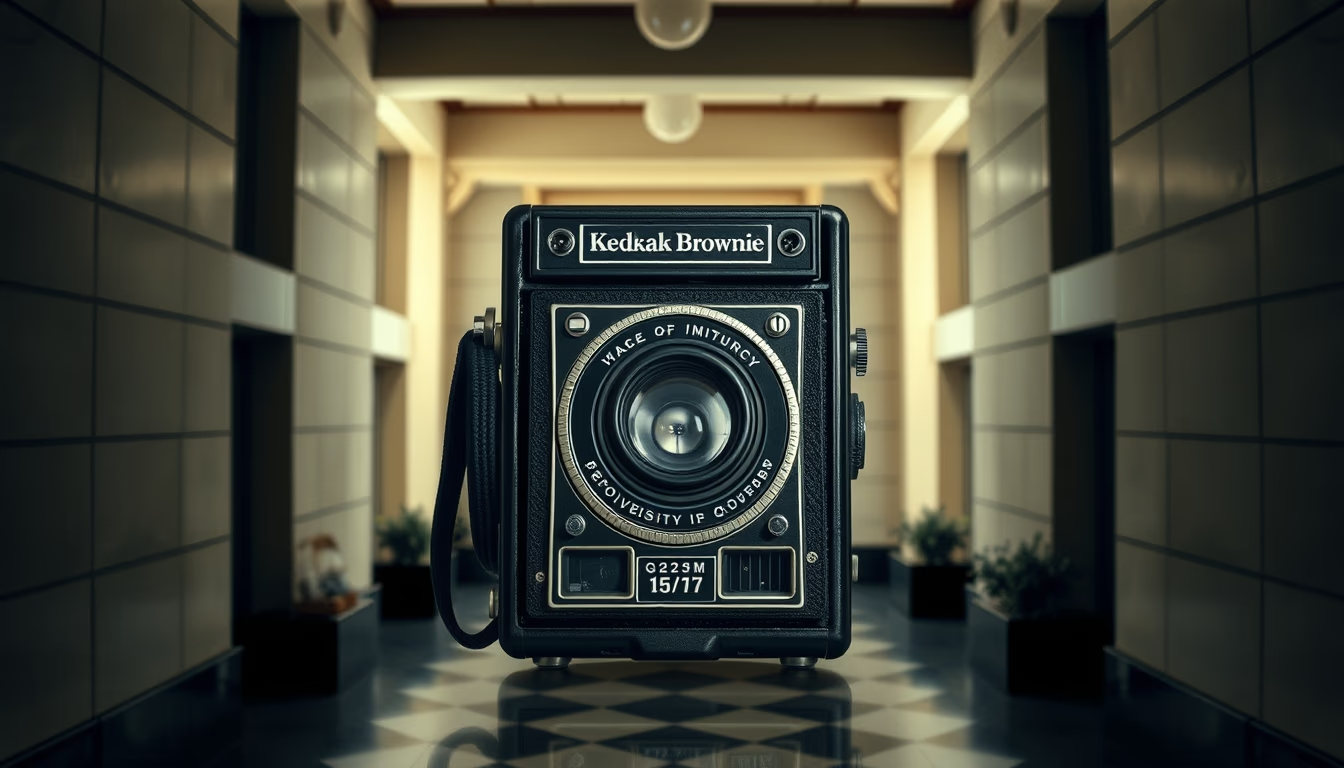
Kodak brownie box camera
1344×768 · AVIF · CC BY 4.0

The Kodak Brownie box camera, launched in 1900, democratized photography by offering a simple and affordable device for the amateur public.
About this subject
The Kodak Brownie box camera was introduced by the Eastman Kodak Company in 1900, revolutionizing access to photography. Before it, cameras were large, expensive, and complex devices used mainly by professionals. The Brownie, with its cardboard and wood box design, was extremely simple: just point and press a button to capture an image. It used 120 roll film, which allowed multiple exposures without changing sensitive plates.
The name "Brownie" was inspired by fairy characters from Scottish folklore created by Canadian writer Palmer Cox. The camera sold for only $1, while film cost 15 cents, making photography affordable for the working class. Success was immediate: within the first few years, over 250,000 units were sold. The Brownie popularized the concept of the "snapshot" and encouraged people to record everyday moments.
Technically, the camera had a simple meniscus lens and a fixed-speed shutter (about 1/25 of a second). Focus was fixed (around 6 feet to infinity). The user composed photos through two viewfinders: one for landscape and one for portrait format. The 120 film, still used today in analog cameras, produced 6x9 cm negatives.
The cultural impact of the Kodak Brownie was profound. It ushered in the era of amateur photography, allowing ordinary people to document their lives. This spurred the creation of family albums and informal historical records. The Brownie was also used by artists and documentarians, such as photographer Jacques Henri Lartigue, who captured his works with a Brownie in the 1900s. The camera remained in production until the 1960s, evolving into versions like the Brownie Starmite and Brownie Flash, but the original box design remains an icon of vintage photography.
Frequently Asked Questions
What film did the Kodak Brownie use?
The original Kodak Brownie used 120 roll film, producing 6x9 cm negatives. This film format is still available for analog cameras today.
When was the first Kodak Brownie launched?
The first Kodak Brownie was launched by the Eastman Kodak Company in February 1900, priced at $1.
How did the Brownie change photography?
The Brownie made photography accessible to the general public by being cheap and easy to use, promoting the snapshot concept and popularizing amateur photography.
Direct URL
https://pub-c7d6a6ea828543ac903a74a341ccb2e1.r2.dev/imagens/kodak-brownie-box-camera-minimalist-composition-fresh12.avifHow to credit
Include a visible link back to UtilizAí. Copy one of the snippets below:
<a href="https://xn--utiliza-eza.com/en/midia/imagens/kodak-brownie-box-camera-minimalist-composition-fresh12">Kodak brownie box camera</a> by <a href="https://xn--utiliza-eza.com">UtilizAí</a>, licensed under <a href="https://creativecommons.org/licenses/by/4.0/">CC BY 4.0</a>.
[Kodak brownie box camera](https://xn--utiliza-eza.com/en/midia/imagens/kodak-brownie-box-camera-minimalist-composition-fresh12) by [UtilizAí](https://xn--utiliza-eza.com), CC BY 4.0
License: CC-BY-4.0