Kinkaku-ji golden pavilion
1344×768 · AVIF · CC BY 4.0
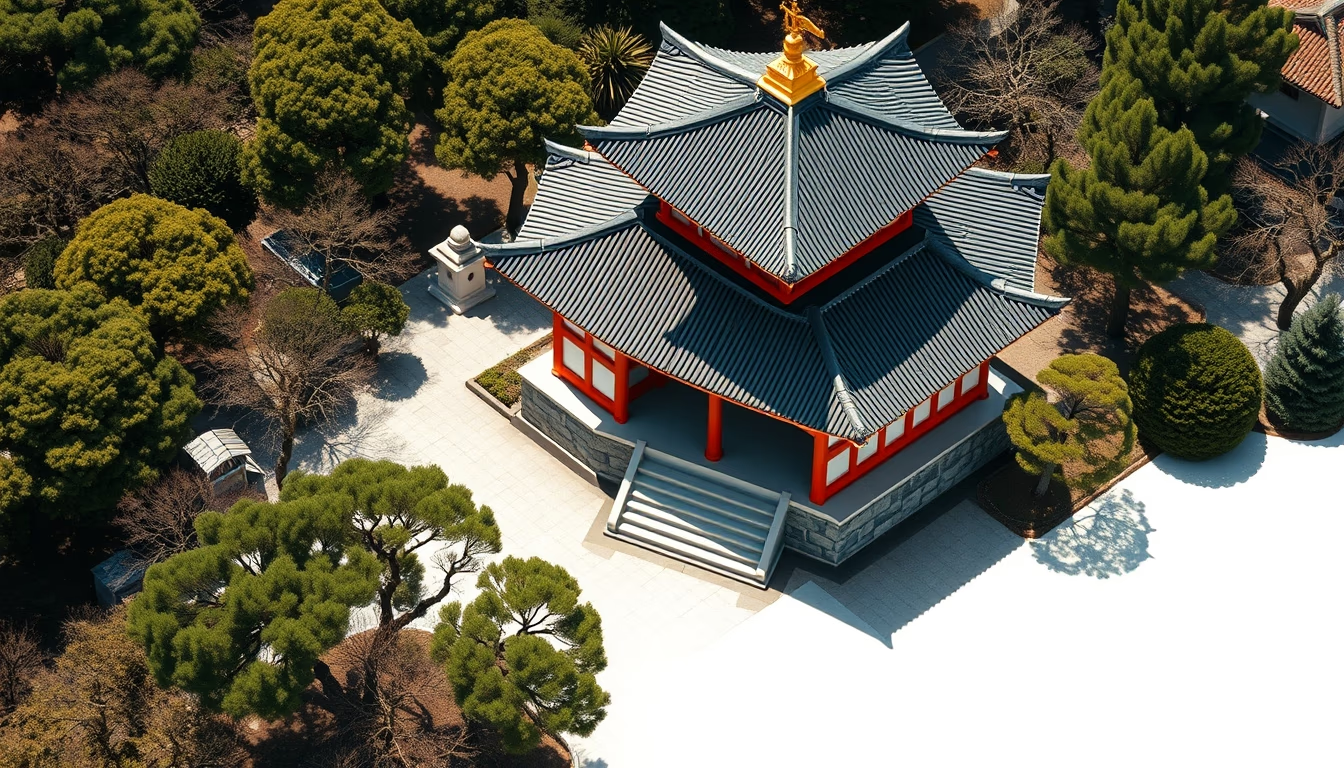
Kinkaku-ji, the Golden Pavilion in Kyoto, is a Zen temple covered in gold leaf, a UNESCO World Heritage site.
About this subject
Kinkaku-ji, officially named Rokuon-ji, is one of Japan's most iconic temples, located in Kyoto. Originally built in 1397 as a retirement villa for shogun Ashikaga Yoshimitsu, it was converted into a Zen temple of the Rinzai sect after his death according to his will. The pavilion is famous for its top two floors completely covered in pure gold leaf, shining and reflecting in the Kyōko-chi (Mirror Pond) that surrounds it. Each floor represents a different architectural style: the first in Shinden (palace) style, the second in Bukke (samurai) style, and the third in Zen temple style.
On July 2, 1950, the pavilion was set on fire by a novice monk, an event that shocked Japan and inspired Yukio Mishima's novel "The Temple of the Golden Pavilion." Reconstruction was completed in 1955, with the gold leaf applied thicker than the original. In 1987, a further renovation replaced the gold leaf and applied Japanese lacquer inside. Kinkaku-ji was designated a UNESCO World Heritage Site in 1994 as part of the Historic Monuments of Ancient Kyoto.
The garden surrounding the pavilion is a classic example of the Muromachi period, with winding paths, arranged stones, and pruned pines that create a symbolic landscape of the Buddhist Pure Land paradise. The pond contains several islands, including one representing the Treasure Island, accessible by stone bridges. Despite its fame, Kinkaku-ji does not allow entry into the pavilion; visitors enjoy the view from outside, which does not diminish the visual impact.
Culturally, Kinkaku-ji is an icon of the golden age of Kitayama culture, blending elements of imperial courts, samurai, and Zen. Its image is reproduced countless souvenirs, but the personal experience in front of the golden pavilion against the green mountains of Kyoto remains unparalleled.
Frequently Asked Questions
What is the best time to visit Kinkaku-ji?
Spring (late March to April) and autumn (November) are the best seasons, with cherry blossoms or autumn leaves. Winter with snow is also spectacular but less common.
Is Kinkaku-ji entirely made of gold?
No, only the top two floors are covered with gold leaf. The first floor is natural wood. The gold symbolizes purity and enlightenment in Buddhism.
Was the 1950 fire an accident?
No, it was arson committed by a novice monk suffering from mental illness. He confessed and was arrested. The event inspired Yukio Mishima's famous novel.
Direct URL
https://pub-c7d6a6ea828543ac903a74a341ccb2e1.r2.dev/imagens/kinkaku-ji-golden-pavilion-isometric-flat-lay-p10.avifHow to credit
Include a visible link back to UtilizAí. Copy one of the snippets below:
<a href="https://xn--utiliza-eza.com/en/midia/imagens/kinkaku-ji-golden-pavilion-isometric-flat-lay-p10">Kinkaku-ji golden pavilion</a> by <a href="https://xn--utiliza-eza.com">UtilizAí</a>, licensed under <a href="https://creativecommons.org/licenses/by/4.0/">CC BY 4.0</a>.
[Kinkaku-ji golden pavilion](https://xn--utiliza-eza.com/en/midia/imagens/kinkaku-ji-golden-pavilion-isometric-flat-lay-p10) by [UtilizAí](https://xn--utiliza-eza.com), CC BY 4.0
License: CC-BY-4.0