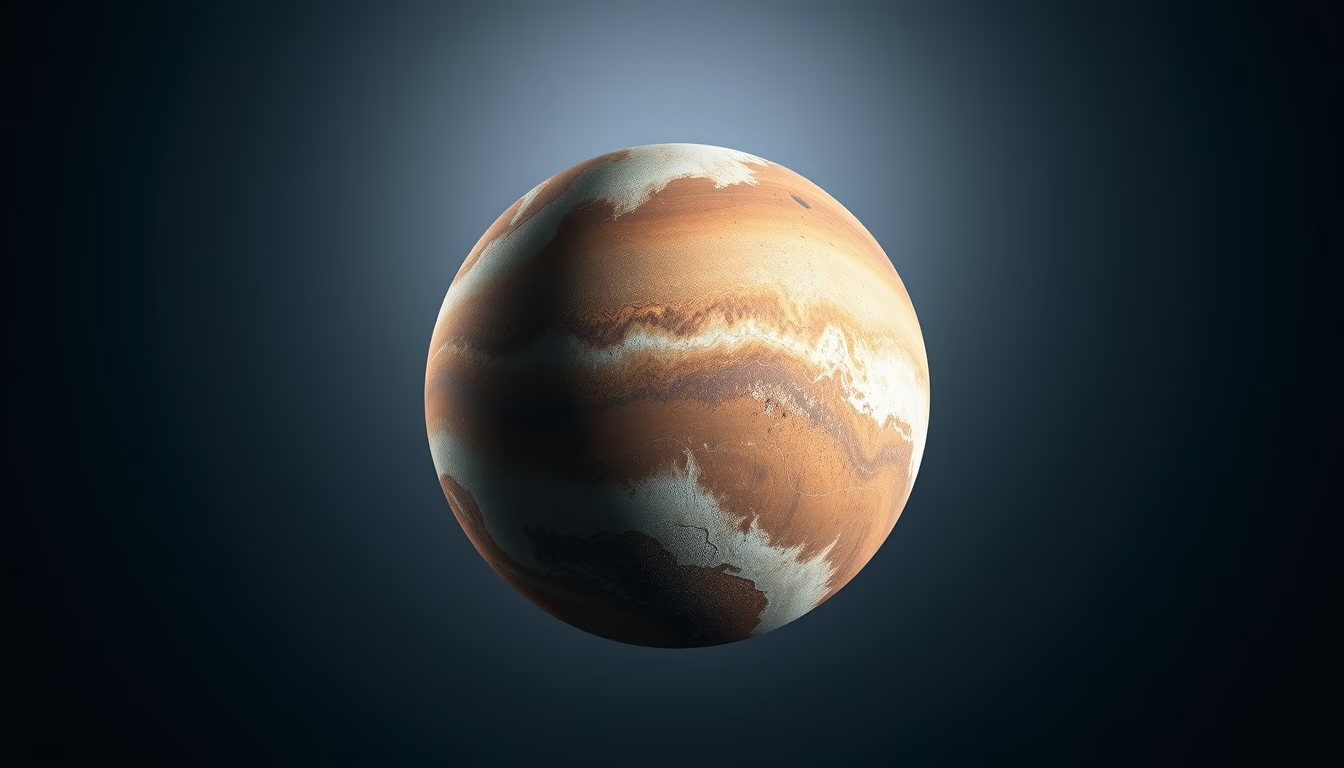
Kepler 186f earthlike concept
1344×768 · AVIF · CC BY 4.0

Kepler-186f, the first Earth-sized exoplanet found in the habitable zone of a red dwarf star, offers a tantalizing glimpse into potentially habitable worlds beyond our solar system.
About this subject
Kepler-186f is an exoplanet approximately the size of Earth, discovered by NASA's Kepler space telescope in 2014. It orbits the red dwarf star Kepler-186, located about 500 light-years away in the constellation Cygnus. The planet completes one orbit every 130 days and lies at the outer edge of its star's habitable zone, the region where liquid water could exist on the surface. This discovery marked a milestone in the search for Earth-like worlds.
The significance of Kepler-186f lies in being the first rocky-sized planet confirmed in the habitable zone of another star. Although its star is much cooler and dimmer than the Sun, the planet receives about one-third of the radiation Earth gets, similar to the amount received by Mars. This raises questions about its atmosphere and composition: if dense enough, it could retain heat and allow liquid water to exist. However, its mass and atmosphere have not yet been measured.
Compared to Earth, Kepler-186f has a shorter orbital period (130 days vs. 365) and is much closer to its star (about 0.4 AU). The red dwarf star emits mostly infrared light, which could influence photosynthesis and climate on the planet. Models suggest that if the planet has an Earth-like atmosphere, its surface temperature could be below freezing, but a greenhouse effect might bring it to temperate conditions. Discoveries like Kepler-186f help refine criteria for habitability.
Future study of Kepler-186f will depend on next-generation telescopes such as the James Webb Space Telescope (JWST) and the Extremely Large Telescope (ELT). These instruments could analyze the atmospheric composition of rocky exoplanets, searching for biosignatures like oxygen and methane. Although Kepler-186f is too distant for detailed observations at present, it serves as a prototype for understanding Earth-like worlds in the habitable zone of red dwarfs, which are the most common stars in the galaxy.
Frequently Asked Questions
How far is Kepler-186f from Earth?
Kepler-186f is approximately 500 light-years away in the constellation Cygnus.
Is Kepler-186f habitable?
It lies in the habitable zone, but its atmosphere and surface conditions are unknown. It likely receives about one-third the energy from its star that Earth gets from the Sun.
What star does Kepler-186f orbit?
It orbits Kepler-186, a red dwarf star (M1-type) cooler and dimmer than the Sun.
Direct URL
https://pub-c7d6a6ea828543ac903a74a341ccb2e1.r2.dev/imagens/kepler-186f-earthlike-concept-long-exposure-fresh14.avifHow to credit
Include a visible link back to UtilizAí. Copy one of the snippets below:
<a href="https://xn--utiliza-eza.com/en/midia/imagens/kepler-186f-earthlike-concept-long-exposure-fresh14">Kepler 186f earthlike concept</a> by <a href="https://xn--utiliza-eza.com">UtilizAí</a>, licensed under <a href="https://creativecommons.org/licenses/by/4.0/">CC BY 4.0</a>.
[Kepler 186f earthlike concept](https://xn--utiliza-eza.com/en/midia/imagens/kepler-186f-earthlike-concept-long-exposure-fresh14) by [UtilizAí](https://xn--utiliza-eza.com), CC BY 4.0
License: CC-BY-4.0