Kabuki stage japanese
1344×768 · AVIF · CC BY 4.0
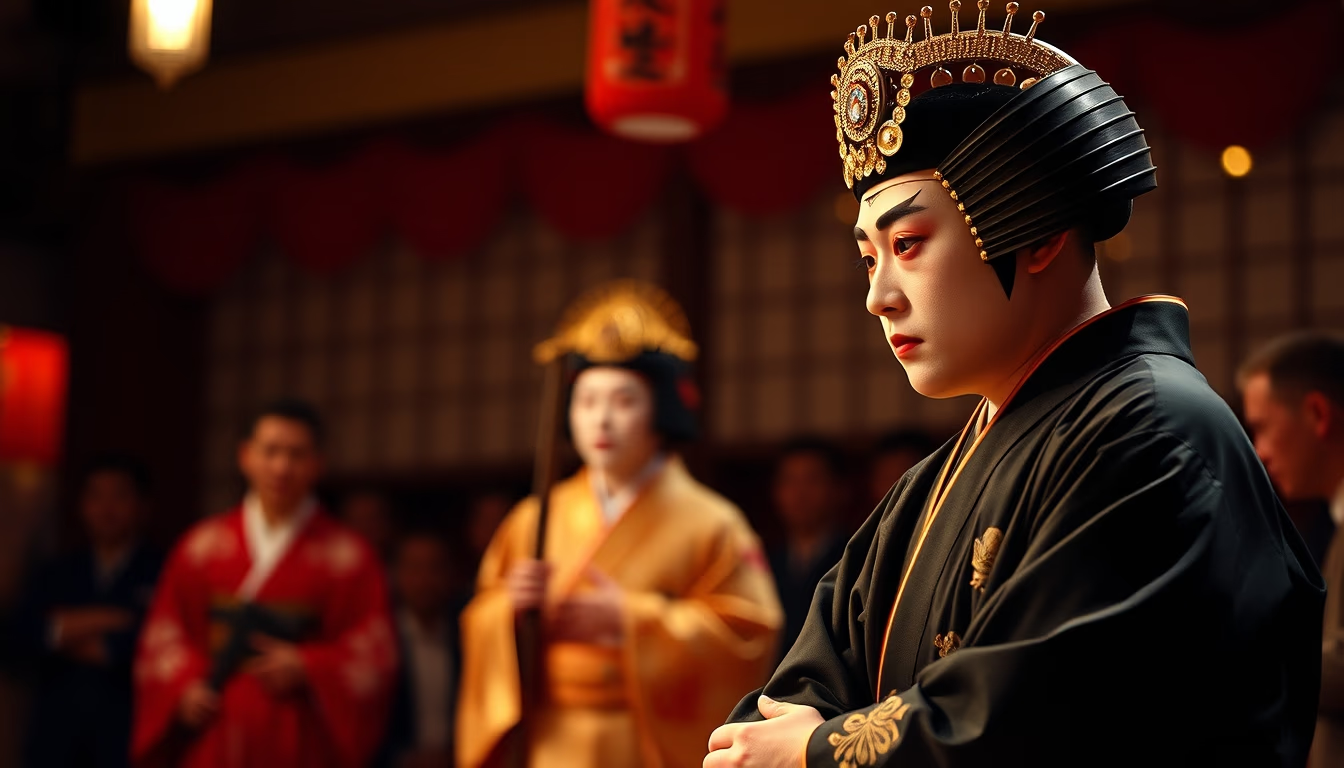
O palco kabuki é o coração do teatro tradicional japonês, com mecanismos giratórios e alçapões que transformam o espaço em um espetáculo dinâmico.
Sobre o tema
O kabuki surgiu no início do século XVII no Japão, durante o período Edo, como uma forma de entretenimento popular criada pela sacerdotisa Izumo no Okuni. Inicialmente, era executado por mulheres, mas posteriormente tornou-se um teatro exclusivamente masculino, com atores especializados em papéis femininos (onnagata). O palco do kabuki é uma obra de engenharia teatral: possui um hanamichi (passarela que atravessa a plateia), um mawari-butai (palco giratório) e seri (alçapões) que permitem entradas e saídas espetaculares. Esses mecanismos foram inovações técnicas do teatro japonês que influenciaram encenações no Ocidente.
O palco principal é tradicionalmente construído em madeira de cipreste, com uma altura elevada para que todos os espectadores possam ver. A área do hanamichi, que se estende do palco até o fundo da sala, é usada para entradas dramáticas e monólogos. Já o palco giratório, introduzido em 1758, permite mudanças rápidas de cenário sem interromper a peça. Os alçapões, por sua vez, são utilizados para aparições surpresa de personagens sobrenaturais ou para simular desaparecimentos.
A importância do palco vai além da funcionalidade: ele é considerado um espaço sagrado onde os atores incorporam seus personagens com maestria. A estética do kabuki valoriza o exagero, com cores vibrantes, maquiagem dramática (kumadori) e figurinos elaborados. Cada movimento dos atores, desde a postura até os olhares, é coreografado meticulosamente para transmitir emoção e narrativa. O kabuki foi reconhecido pela UNESCO como Patrimônio Cultural Imaterial da Humanidade em 2005, destacando sua relevância histórica e artística.
Curiosamente, o kabuki influenciou outros gêneros como o cinema e a dança contemporânea. Diretores como Akira Kurosawa incorporaram elementos do kabuki em seus filmes, como o uso dramático de cores e movimentos estilizados. A técnica do palco giratório, por exemplo, inspirou produções no teatro ocidental, como em algumas montagens de Shakespeare. Ver um espetáculo de kabuki ao vivo é mergulhar em séculos de tradição, onde o palco não é apenas um cenário, mas um personagem por si só.
Perguntas frequentes
O que significa o termo kabuki?
Kabuki significa 'arte de cantar e dançar' em japonês. Originalmente, a palavra era escrita com caracteres que indicavam algo excêntrico ou inovador, refletindo o caráter ousado do teatro.
Por que o palco do kabuki tem uma passarela (hanamichi)?
O hanamichi permite que os atores façam entradas e saídas impactantes passando pelo meio da plateia. Isso cria uma conexão direta com o público e enfatiza momentos dramáticos, como monólogos ou aparições.
O kabuki ainda é apresentado atualmente?
Sim, o kabuki continua sendo uma forma de arte viva no Japão. Teatros como o Kabukiza em Tóquio apresentam temporadas regulares, e a UNESCO reconheceu a tradição como Patrimônio Cultural Imaterial em 2005.
URL direta
https://pub-c7d6a6ea828543ac903a74a341ccb2e1.r2.dev/imagens/kabuki-stage-japanese-film-grain-authentic-fresh15.avifComo creditar
Inclua um link visível de volta pro UtilizAí. Copie um dos snippets abaixo:
<a href="https://xn--utiliza-eza.com/midia/imagens/kabuki-stage-japanese-film-grain-authentic-fresh15">Kabuki stage japanese</a> by <a href="https://xn--utiliza-eza.com">UtilizAí</a>, licensed under <a href="https://creativecommons.org/licenses/by/4.0/">CC BY 4.0</a>.
[Kabuki stage japanese](https://xn--utiliza-eza.com/midia/imagens/kabuki-stage-japanese-film-grain-authentic-fresh15) by [UtilizAí](https://xn--utiliza-eza.com), CC BY 4.0
Licença: CC-BY-4.0