Kabuki masks display
1344×768 · AVIF · CC BY 4.0
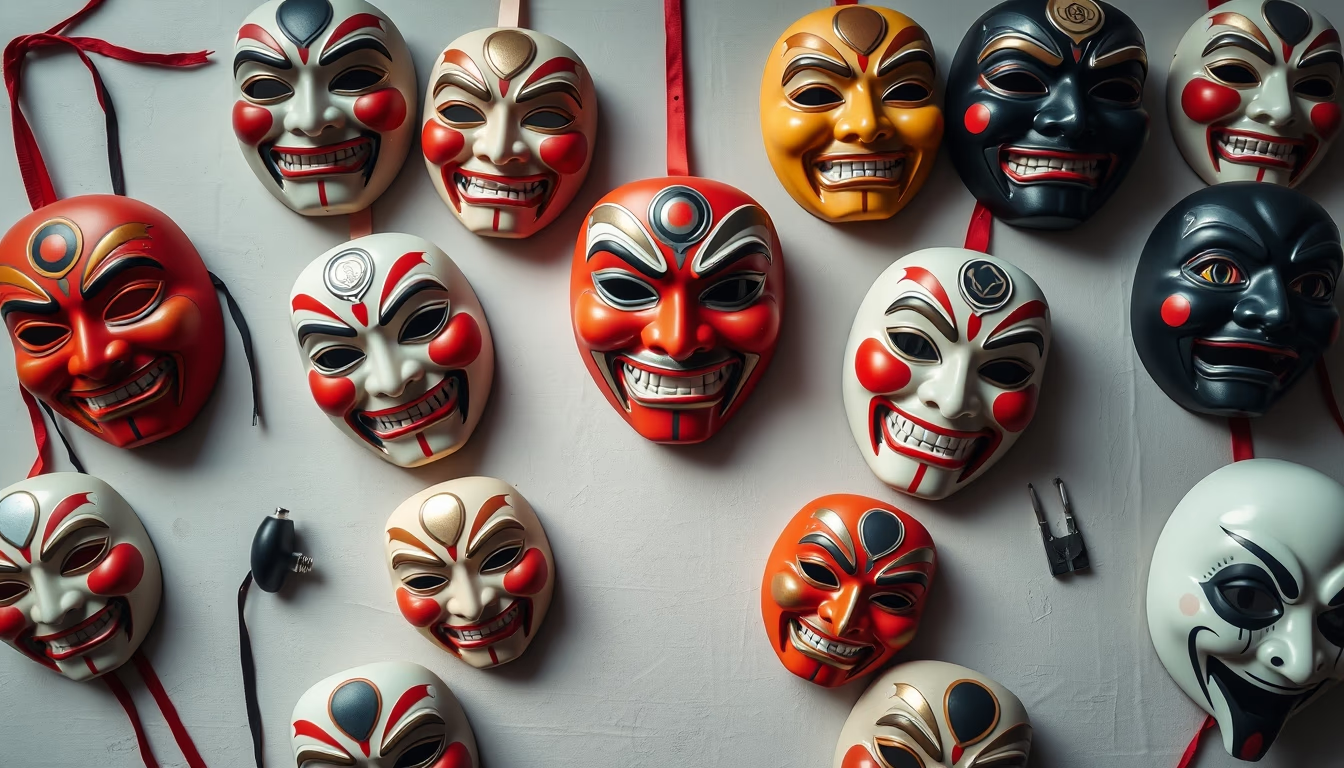
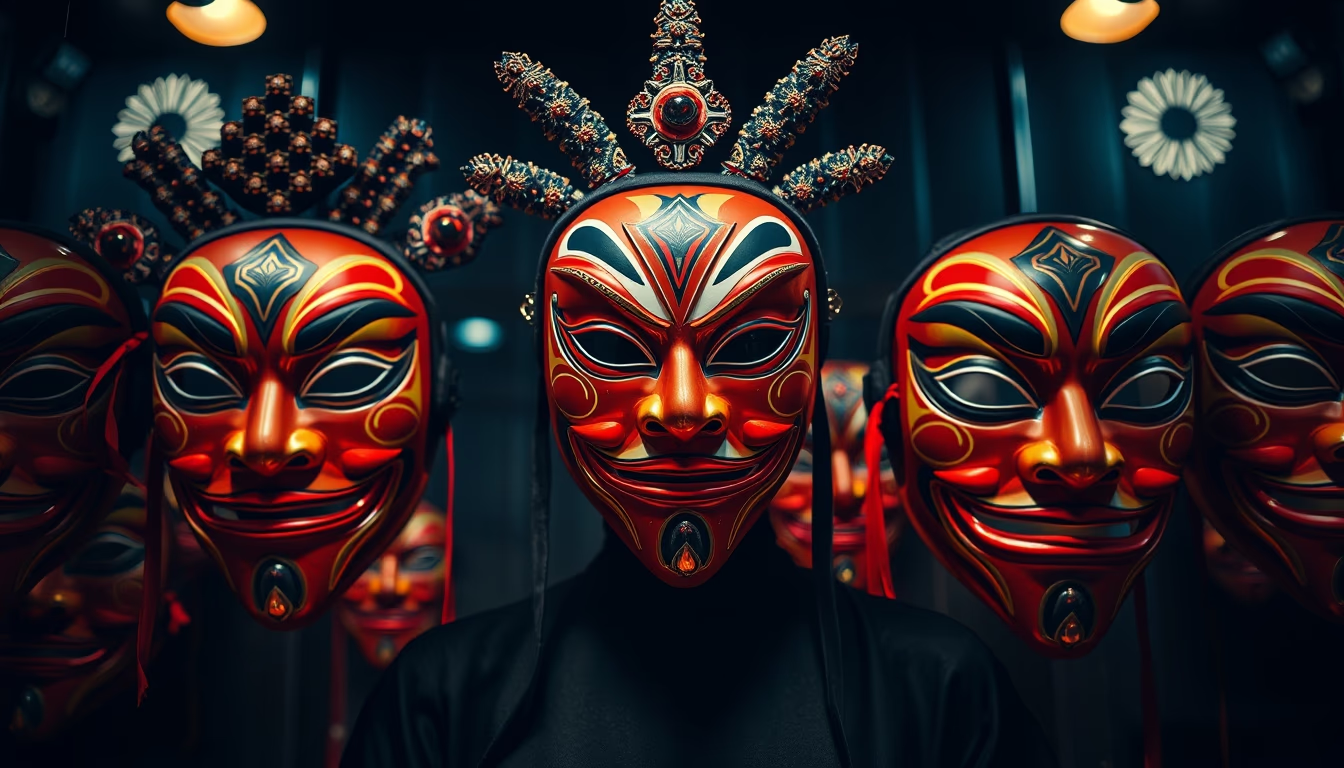
A set of Kabuki masks, representing traditional Japanese theater art, displayed in an isometric flat lay on a light background.
About this subject
Kabuki masks are central elements of Kabuki theater, a form of Japanese dramatic art that originated in the early 17th century. Unlike Noh theater, which uses fixed expressive masks, Kabuki employs masks to characterize specific roles such as ghosts, animals, or supernatural beings. Each mask is hand-carved and painted following aesthetic conventions that define exaggerated facial expressions, symbolic colors, and textures conveying emotions like anger, sadness, or joy.
The tradition of Kabuki was recognized by UNESCO as an Intangible Cultural Heritage of Humanity in 2005. Masks are not worn by all actors; only non-human characters or those with special traits use them. The creation process involves specialized artisans who use Japanese cypress wood (hinoki) and apply layers of plaster and lacquer before painting. Colors such as red (representing virtue or passion), blue (villainy or calm), and black (nobility or mystery) are chosen according to the role.
In Kabuki, makeup (kumadori) is more common than masks, but masks hold an important place in specific plays, such as those in the "shosagoto" genre (dramatic dances). Displaying masks as decorative objects has become popular in Japan and the West, appreciated by collectors and enthusiasts of Japanese culture. Isometric arrangements, like the one in the image, highlight the symmetry and details of the pieces.
Frequently Asked Questions
What is the difference between Kabuki masks and Noh masks?
Noh masks are worn in all performances and have fixed expressions that change with viewing angle, while Kabuki masks are used only for non-human or special characters, with more exaggerated expressions and symbolic colors.
What materials are used to make Kabuki masks?
Traditionally, they are carved from Japanese cypress wood (hinoki) and then coated with plaster, lacquer, and natural paints. Artisans use fine brushes for details.
Can Kabuki masks be used as decoration?
Yes, many people collect them as decorative objects. They are displayed on stands or arrangements, appreciating Japanese art and culture, especially in themed settings.
Direct URL
https://pub-c7d6a6ea828543ac903a74a341ccb2e1.r2.dev/imagens/kabuki-masks-display-isometric-flat-lay-fresh4.avifHow to credit
Include a visible link back to UtilizAí. Copy one of the snippets below:
<a href="https://xn--utiliza-eza.com/en/midia/imagens/kabuki-masks-display-isometric-flat-lay-fresh4">Kabuki masks display</a> by <a href="https://xn--utiliza-eza.com">UtilizAí</a>, licensed under <a href="https://creativecommons.org/licenses/by/4.0/">CC BY 4.0</a>.
[Kabuki masks display](https://xn--utiliza-eza.com/en/midia/imagens/kabuki-masks-display-isometric-flat-lay-fresh4) by [UtilizAí](https://xn--utiliza-eza.com), CC BY 4.0
License: CC-BY-4.0