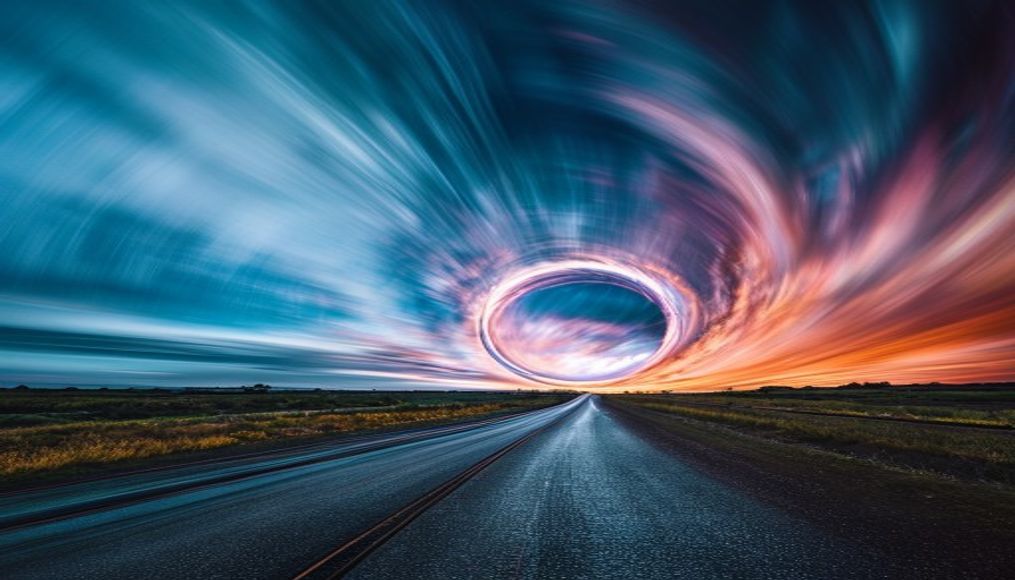
Jupiter great red spot
1344×768 · AVIF · CC BY 4.0

Jupiter's Great Red Spot is a persistent anticyclonic storm on the gas giant, observed for over 350 years.
About this subject
The Great Red Spot is a high-pressure storm located in Jupiter's southern hemisphere, approximately 22 degrees south of the planet's equator. Its reddish color is believed to be caused by chemical compounds such as phosphorus, sulfur, or hydrocarbons rising from deeper atmospheric layers. The storm is so vast that it could engulf Earth multiple times, with a current diameter of about 16,000 km, though it has significantly shrunk over the centuries.
Historical records indicate the spot was first observed in 1665 by astronomer Giovanni Cassini, though earlier mentions of a spot on Jupiter date back to 1631. The storm is anticyclonic, rotating counterclockwise in the southern hemisphere, with wind speeds reaching up to 680 km/h. It is surrounded by turbulent cloud bands and interacts with other atmospheric features such as Jupiter's zones and belts.
Recent studies from NASA's Juno spacecraft revealed that the storm's root extends about 300 to 500 km below the cloud tops. The spot has varied in size over time, and climate models suggest it may disappear or fragment in the coming decades. Despite its longevity, the Great Red Spot is a dynamic and not permanent phenomenon as once thought.
Interestingly, the spot's color can change over time, becoming more orange or even nearly white in some periods. Observations from the Hubble Space Telescope show that the spot is shrinking at a rate of about 0.2 degrees of longitude per year. Understanding this storm helps scientists study atmospheric dynamics not only on Jupiter but also on other gas giants and exoplanets.
Frequently Asked Questions
How big is the Great Red Spot?
Currently, the Great Red Spot is about 16,000 km in diameter, large enough to hold Earth. However, it has been shrinking over the centuries: in the 19th century, its diameter was estimated at about 40,000 km.
Could the Great Red Spot disappear?
Yes, climate models suggest that if the current shrinking rate continues, the storm may fragment or disappear in the coming decades. Data from the Juno spacecraft indicates the spot is becoming more oval and unstable.
What causes the red color of the spot?
The exact color is still debated, but it is believed that compounds such as phosphorus, sulfur, or hydrocarbons are lifted from deeper layers and react with solar ultraviolet radiation, producing the reddish hue.
Direct URL
https://pub-c7d6a6ea828543ac903a74a341ccb2e1.r2.dev/imagens/jupiter-great-red-spot-cinematic-wide-shot-p3.avifHow to credit
Include a visible link back to UtilizAí. Copy one of the snippets below:
<a href="https://xn--utiliza-eza.com/en/midia/imagens/jupiter-great-red-spot-cinematic-wide-shot-p3">Jupiter great red spot</a> by <a href="https://xn--utiliza-eza.com">UtilizAí</a>, licensed under <a href="https://creativecommons.org/licenses/by/4.0/">CC BY 4.0</a>.
[Jupiter great red spot](https://xn--utiliza-eza.com/en/midia/imagens/jupiter-great-red-spot-cinematic-wide-shot-p3) by [UtilizAí](https://xn--utiliza-eza.com), CC BY 4.0
License: CC-BY-4.0