Jewelry making bench
1344×768 · AVIF · CC BY 4.0

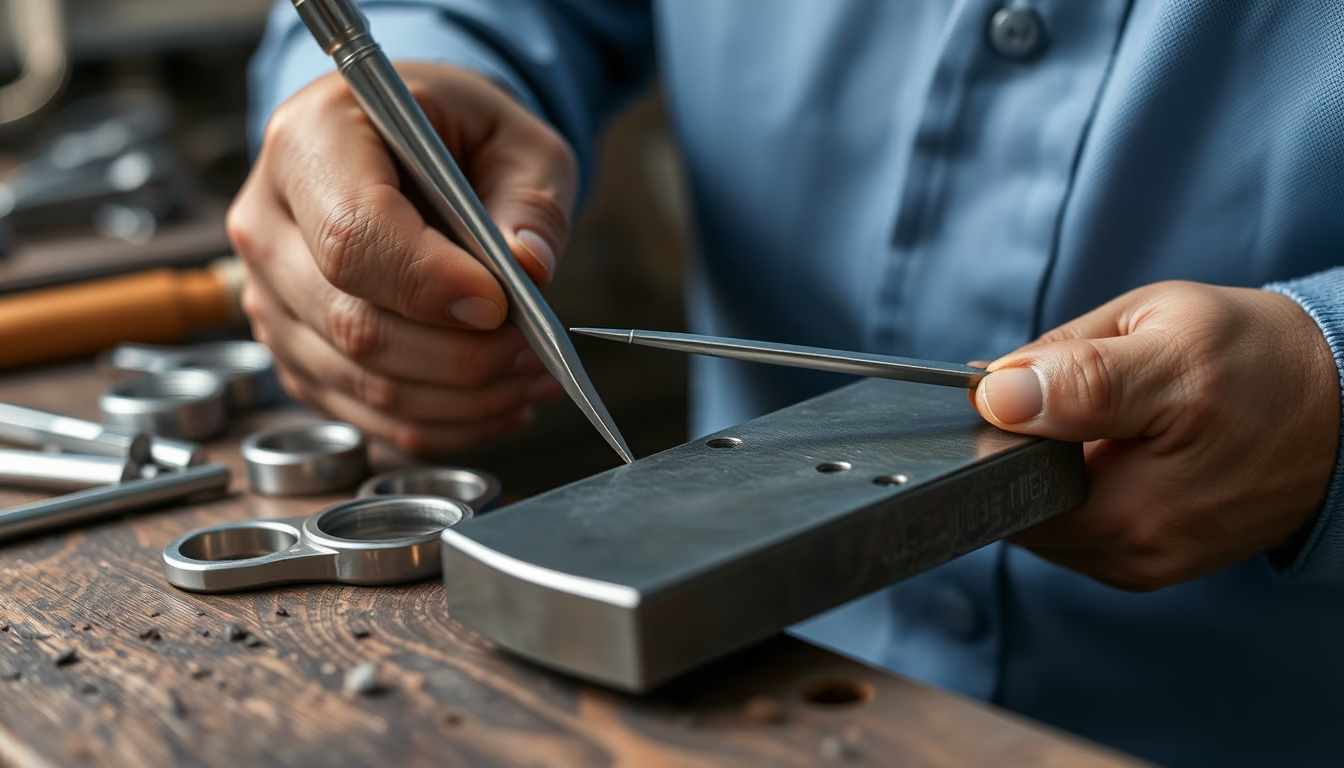
Uma bancada de ourivesaria revela ferramentas e materiais usados na criação de joias artesanais.
Sobre o tema
A bancada de ourivesaria é o centro do ateliê de um joalheiro artesão. Geralmente feita de madeira maciça, como carvalho ou faia, sua superfície resistente suporta tornos, bigornas e blocos de solda. Ferramentas como serras de ourives, limas, pinças e martelos ficam ao alcance das mãos, organizadas em gavetas ou penduradas em suportes. Uma bancada bem equipada permite realizar desde a fundição de metais preciosos até o engaste de pedras.
A origem da bancada de ourives remonta às antigas civilizações, como os egípcios e mesopotâmicos, que já utilizavam mesas de trabalho para lapidar metais. Na Europa medieval, os ourizes desenvolveram bancadas com furos para fixar tornos de mão, enquanto no Brasil colônia, a ourivesaria floresceu em Minas Gerais com técnicas trazidas de Portugal. Hoje, bancadas modernas incorporam iluminação LED, exaustores de fumos e sistema antiderrapante para segurança.
Além da função prática, a bancada reflete a identidade do artesão. Cada ourives organiza suas ferramentas de acordo com seu fluxo de trabalho, criando um espaço personalizado que favorece a criatividade e a precisão. Peças como o torno de ourives, o maçarico e o laminador são comuns em bancadas profissionais. Para 2026, a tendência é o resgate do feito à mão, com joalheiros optando por bancadas sustentáveis e ferramentas artesanais, valorizando o processo lento e a qualidade sobre a produção em massa.
Curiosidade: uma bancada típica pode conter mais de 50 tipos de ferramentas diferentes, cada uma com finalidade específica. A limpeza e a manutenção regulares são essenciais para evitar contaminação dos metais e prolongar a vida útil dos equipamentos.
Perguntas frequentes
Quais ferramentas são essenciais em uma bancada de ourives?
Serra de ourives, limas, pinças, martelo, torno, maçarico, blocos de solda, laminador e bigorna. Essas ferramentas permitem cortar, modelar e unir metais.
Qual a história da ourivesaria no Brasil?
A ourivesaria chegou ao Brasil com os colonizadores portugueses, florescendo em Minas Gerais durante o ciclo do ouro no século XVIII. Técnicas europeias foram adaptadas, criando um estilo barroco-rococó característico.
Como organizar uma bancada de joalheria para maior eficiência?
Agrupe ferramentas por função, mantenha as mais usadas ao alcance, use gavetas para itens pequenos e pendure ferramentas longas. Iluminação direcionada e tapete antiderrapante aumentam a segurança.
URL direta
https://pub-c7d6a6ea828543ac903a74a341ccb2e1.r2.dev/imagens/jewelry-making-bench-macro-closeup-p5.avifComo creditar
Inclua um link visível de volta pro UtilizAí. Copie um dos snippets abaixo:
<a href="https://xn--utiliza-eza.com/midia/imagens/jewelry-making-bench-macro-closeup-p5">Jewelry making bench</a> by <a href="https://xn--utiliza-eza.com">UtilizAí</a>, licensed under <a href="https://creativecommons.org/licenses/by/4.0/">CC BY 4.0</a>.
[Jewelry making bench](https://xn--utiliza-eza.com/midia/imagens/jewelry-making-bench-macro-closeup-p5) by [UtilizAí](https://xn--utiliza-eza.com), CC BY 4.0
Licença: CC-BY-4.0