Irrigation drip system
1344×768 · AVIF · CC BY 4.0
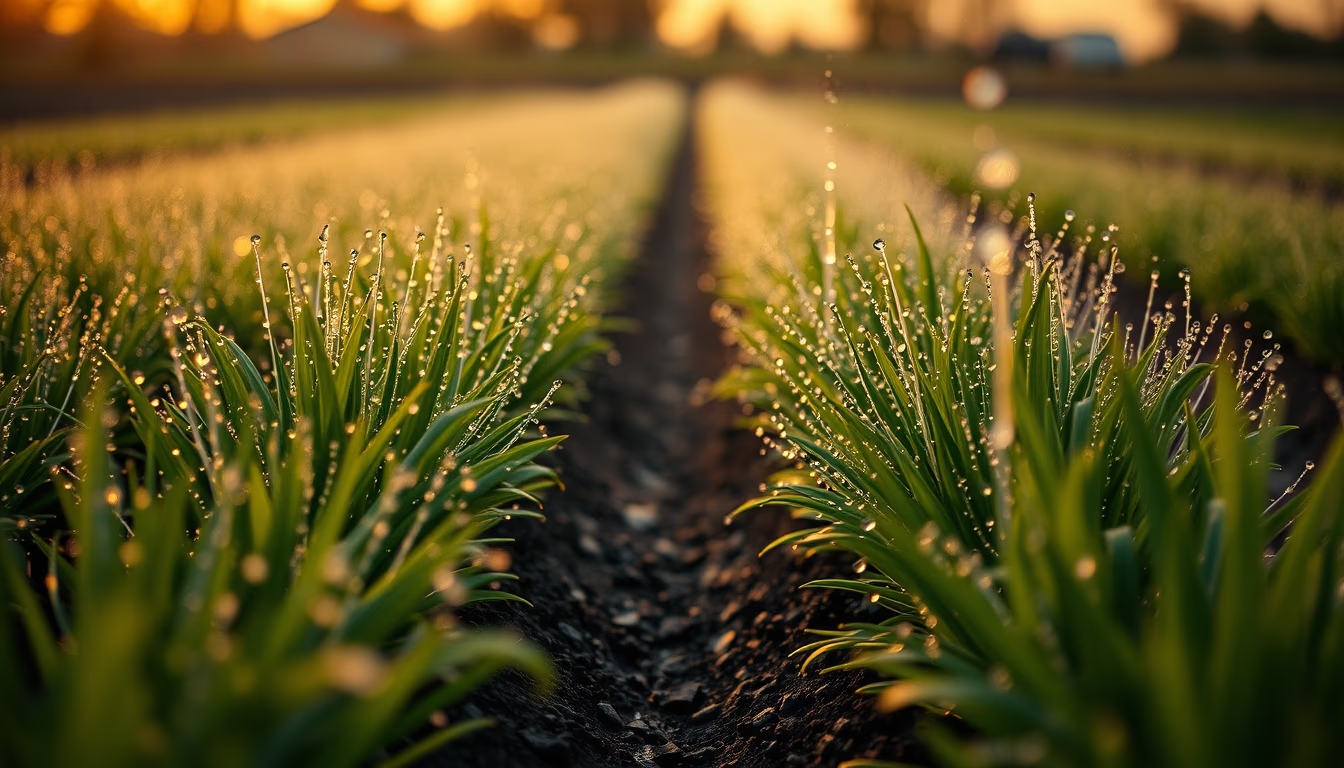
Drip irrigation system that delivers water directly to plant roots, reducing evaporation losses and increasing agricultural productivity.
About this subject
Drip irrigation is a method that delivers water drop by drop directly to the root zone of plants, minimizing evaporation and runoff losses. Developed in Israel in the 1960s, the technology spread rapidly across arid and semi-arid regions such as California, Australia, and northeastern Brazil. In Brazil, it is widely used for vegetables, fruits, coffee, and sugarcane, especially where water is scarce.
The system consists of main and lateral pipes, emitters, filters, and pressure regulators. Emitters can be pressure-compensating (maintaining constant flow on slopes) or non-compensating, simpler and cheaper. Typical flow rates range from 1 to 4 liters per hour per emitter, and water use efficiency can reach 95%, compared to 70-80% for traditional sprinklers.
Beyond water savings, drip irrigation allows fertigation (applying fertilizers through the system), reducing labor costs and improving nutrient uptake. Studies by Embrapa show yield gains of 20% to 50% in crops like tomatoes and bell peppers compared to conventional methods. The technique is key in precision agriculture, often controlled by soil moisture sensors and automated timers.
An interesting fact: in Brazil's semi-arid region, drip irrigation has empowered small family farms with simple, low-cost kits. Despite a higher initial investment than sprinkler systems, payback is quick due to water and input savings. Globally, localized irrigation already accounts for over 10% of irrigated land, with growth expected as climate change intensifies.
Frequently Asked Questions
What is drip irrigation and how does it work?
It is a system that delivers water drop by drop directly to plant roots through tubes with emitters. It operates under low pressure and high efficiency, reducing evaporation losses.
What are the main advantages over traditional irrigation?
Water savings (up to 50%), reduced foliar diseases, ability to fertigate, increased yields, and lower energy consumption.
Is drip irrigation suitable for small farmers in Brazil?
Yes, there are simple, low-cost kits, especially for the semi-arid region. Embrapa has developed homemade drip systems using reused hoses and PET bottles.
Direct URL
https://pub-c7d6a6ea828543ac903a74a341ccb2e1.r2.dev/imagens/irrigation-drip-system-cinematic-wide-shot-p1.avifHow to credit
Include a visible link back to UtilizAí. Copy one of the snippets below:
<a href="https://xn--utiliza-eza.com/en/midia/imagens/irrigation-drip-system-cinematic-wide-shot-p1">Irrigation drip system</a> by <a href="https://xn--utiliza-eza.com">UtilizAí</a>, licensed under <a href="https://creativecommons.org/licenses/by/4.0/">CC BY 4.0</a>.
[Irrigation drip system](https://xn--utiliza-eza.com/en/midia/imagens/irrigation-drip-system-cinematic-wide-shot-p1) by [UtilizAí](https://xn--utiliza-eza.com), CC BY 4.0
License: CC-BY-4.0