Industrial robot arm welding
1344×768 · AVIF · CC BY 4.0
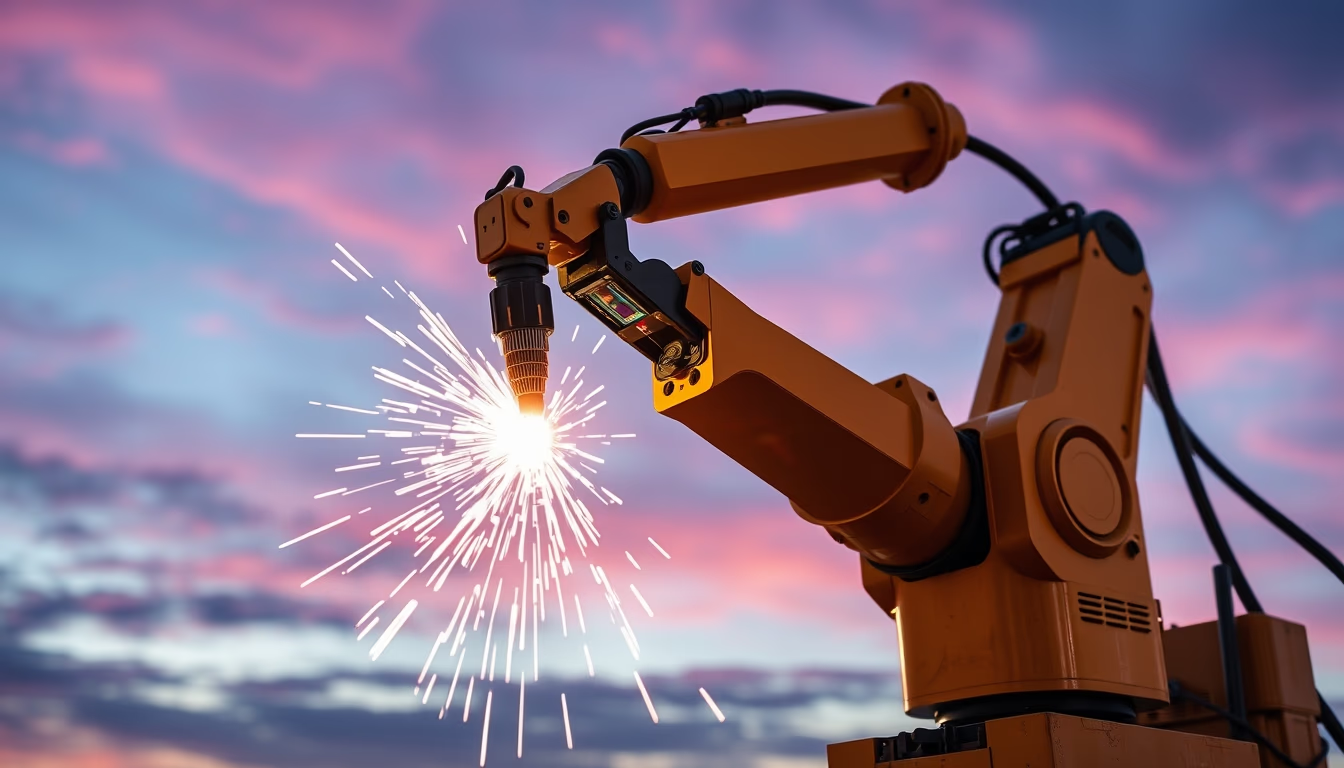
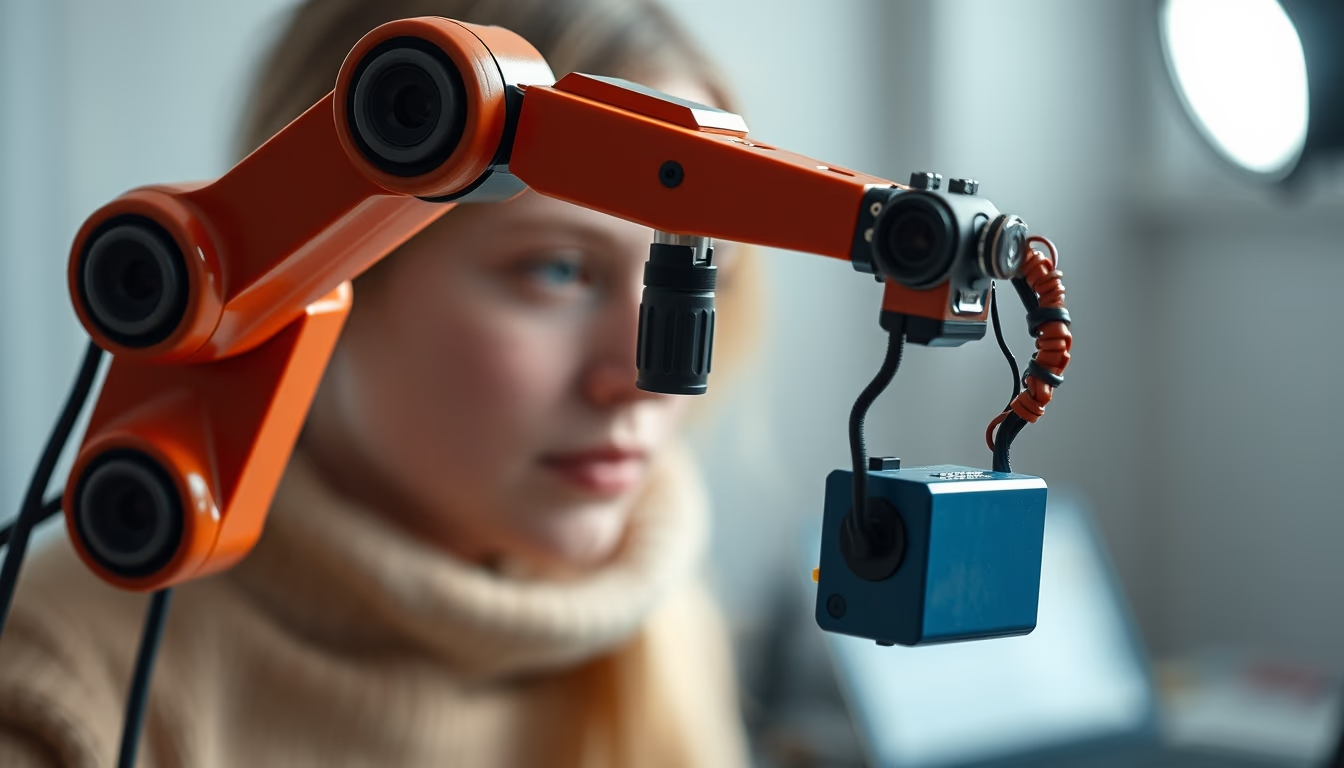
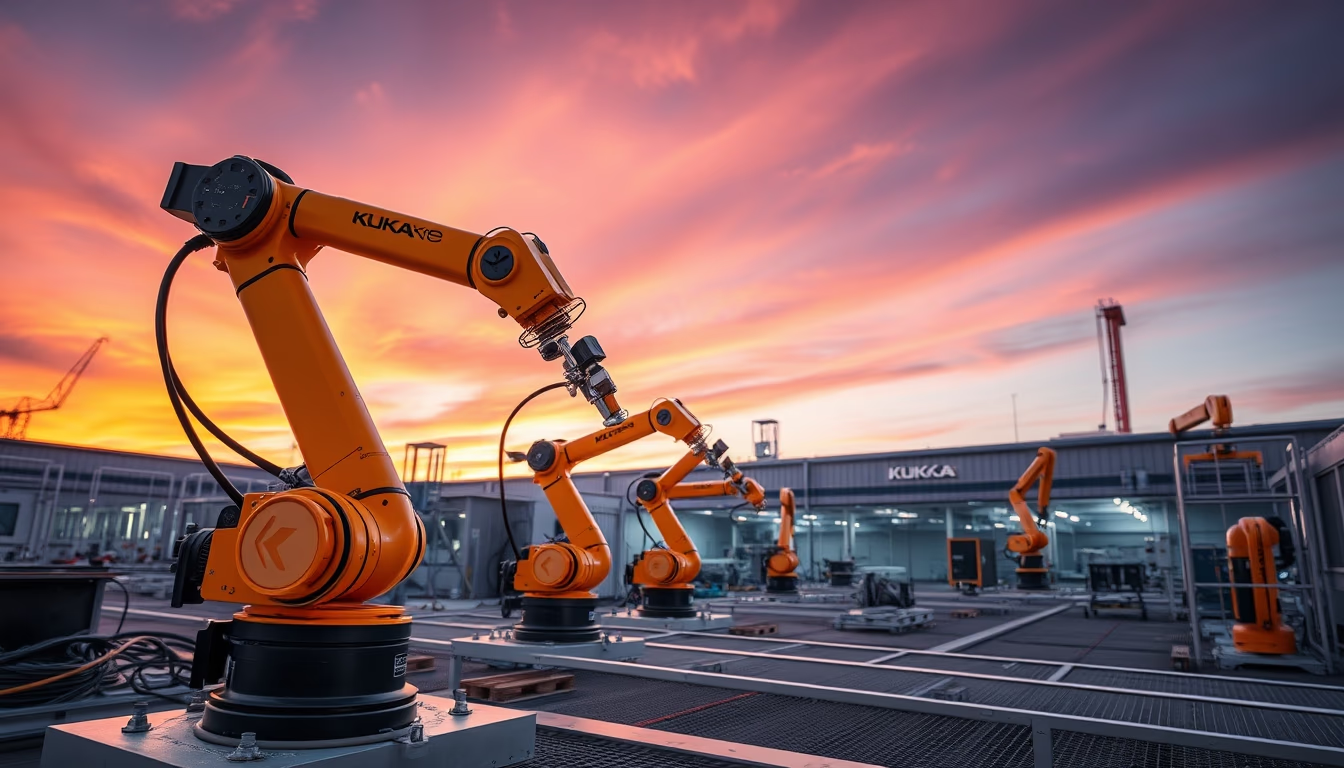
Industrial robot arms perform welding with precision and repeatability, revolutionizing modern manufacturing.
About this subject
Robotic welding is a central application of industrial automation, where programmable mechanical arms perform metal joining with high accuracy. These robots use sensors, such as cameras and lasers, to monitor the weld bead in real time, adjusting parameters like current, speed, and torch angle. The technology relies on computer numerical control (CNC) systems and machine vision algorithms, enabling adaptation to part variations.
The use of robots in welding began in the 1960s, with General Motors installing the first models for automotive assembly lines. Today, sectors like aerospace, shipbuilding, and heavy equipment manufacturing employ welding robots to boost productivity and reduce worker risks. A robot can operate 24/7, maintaining consistency impossible manually.
The long exposure photograph of the electric arc reveals the continuous motion of the arm, highlighting the precise weld trajectory. This type of photography is used in technical manuals and marketing materials to illustrate process fluidity and control. Robotic welding reduces defects by up to 70% compared to manual welding, while also decreasing human exposure to toxic fumes and ultraviolet radiation.
Notably, programming welding robots has evolved from teach pendants to offline simulation in CAD software. This allows testing trajectories virtually before production, optimizing setup time. Companies like FANUC, ABB, and KUKA dominate the market, with arms handling payloads up to 500 kg and repeatability of 0.02 mm.
Frequently Asked Questions
What is the typical precision of an industrial welding robot arm?
Position repeatability can reach 0.02 mm, ensuring consistent welds even at high speeds.
Which industries benefit most from robotic welding?
Automotive, aerospace, shipbuilding, and heavy machinery manufacturing are the main sectors using welding robots.
How does long-exposure photography help in analyzing robotic welding?
It reveals the complete path of the electric arc, helping engineers verify movement uniformity and heat distribution.
Direct URL
https://pub-c7d6a6ea828543ac903a74a341ccb2e1.r2.dev/imagens/industrial-robot-arm-welding-long-exposure-p10.avifHow to credit
Include a visible link back to UtilizAí. Copy one of the snippets below:
<a href="https://xn--utiliza-eza.com/en/midia/imagens/industrial-robot-arm-welding-long-exposure-p10">Industrial robot arm welding</a> by <a href="https://xn--utiliza-eza.com">UtilizAí</a>, licensed under <a href="https://creativecommons.org/licenses/by/4.0/">CC BY 4.0</a>.
[Industrial robot arm welding](https://xn--utiliza-eza.com/en/midia/imagens/industrial-robot-arm-welding-long-exposure-p10) by [UtilizAí](https://xn--utiliza-eza.com), CC BY 4.0
License: CC-BY-4.0