Holi powder colors
1344×768 · AVIF · CC BY 4.0
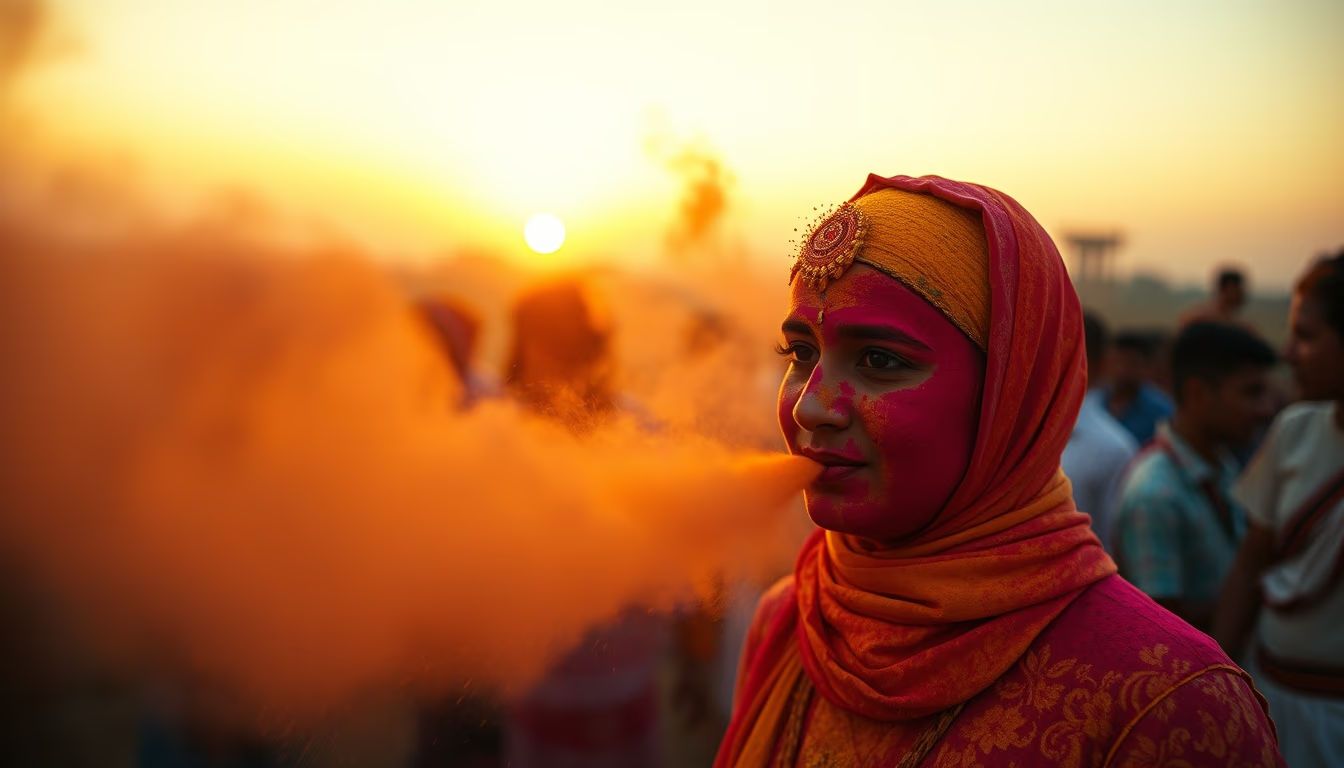
Holi, the festival of colors, is celebrated in India and worldwide with vibrant powders symbolizing joy, unity, and the triumph of good over evil.
About this subject
The colored powders of Holi, called gulal, are central to the Hindu festival of colors celebrated in spring across the Indian subcontinent. Traditionally made from plants like turmeric (yellow), beetroot (pink), and indigo (blue), these powders symbolize vitality and renewal. During the festival, people dance in the streets, throw colored powder at each other, and share sweets. Holi marks the end of winter and the beginning of spring, and commemorates the legend of Holika and Prahlad, symbolizing the triumph of devotion over evil.
The use of colored powders dates back to ancient times, mentioned in Sanskrit texts like the Garga Samhita. Today, the festival is celebrated globally, especially in the Indian diaspora. In cities like Vrindavan and Mathura (Uttar Pradesh), celebrations last for days and attract thousands of tourists. Although modern gulal often contains synthetic substances, there is a growing movement back to natural ingredients for health and environmental reasons.
Interestingly, the word Holi comes from 'Holika,' the demoness sister of King Hiranyakashipu in Hindu mythology. The night before Holi, Holika Dahan, involves bonfires that symbolize the destruction of evil. The colors of the following day represent the joy of liberation. Beyond its religious significance, Holi breaks social barriers: colors level caste, age, and gender, fostering a spirit of equality and brotherhood. This inclusive character has made the festival a global symbol of cultural diversity.
Frequently Asked Questions
What is the significance of colors in the Holi festival?
Each color has symbolism: red for love and fertility, blue for divine Krishna, yellow for turmeric (purification), and green for nature. Overall, colors express joy at the arrival of spring.
Is Holi powder dangerous for the skin?
Natural gulal from plants is safe, but synthetic versions with chemical dyes can cause allergies or irritation. It is recommended to apply oil on skin before playing with synthetic colors and wash with lukewarm water after the festival.
How is Holi celebrated outside India?
In many countries like the US, UK, Brazil, and Australia, Indian communities organize celebrations with music, dance, and color throwing. There are also public events open to all cultures, popularizing the festival as a day of fun and unity.
Direct URL
https://pub-c7d6a6ea828543ac903a74a341ccb2e1.r2.dev/imagens/holi-powder-colors-cinematic-wide-shot-fresh10.avifHow to credit
Include a visible link back to UtilizAí. Copy one of the snippets below:
<a href="https://xn--utiliza-eza.com/en/midia/imagens/holi-powder-colors-cinematic-wide-shot-fresh10">Holi powder colors</a> by <a href="https://xn--utiliza-eza.com">UtilizAí</a>, licensed under <a href="https://creativecommons.org/licenses/by/4.0/">CC BY 4.0</a>.
[Holi powder colors](https://xn--utiliza-eza.com/en/midia/imagens/holi-powder-colors-cinematic-wide-shot-fresh10) by [UtilizAí](https://xn--utiliza-eza.com), CC BY 4.0
License: CC-BY-4.0