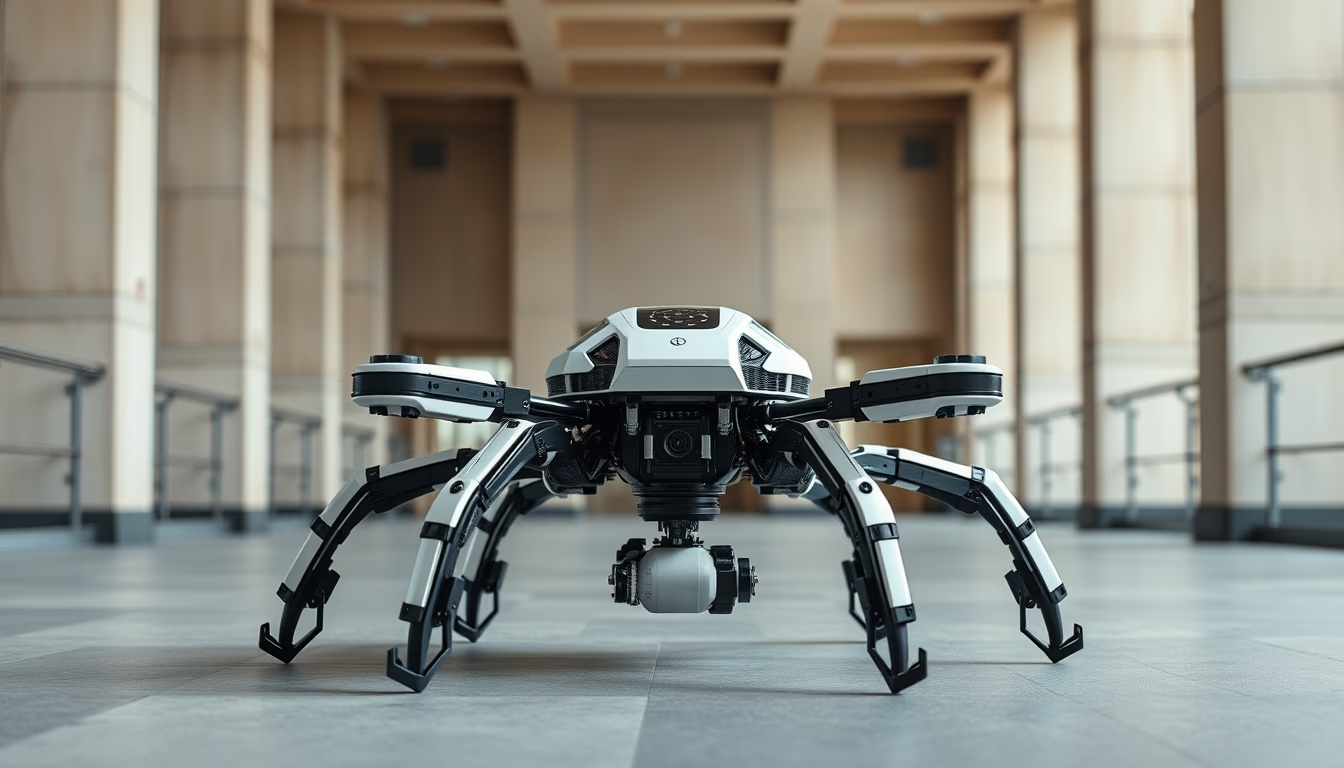
Hexapod robot moving
1344×768 · AVIF · CC BY 4.0
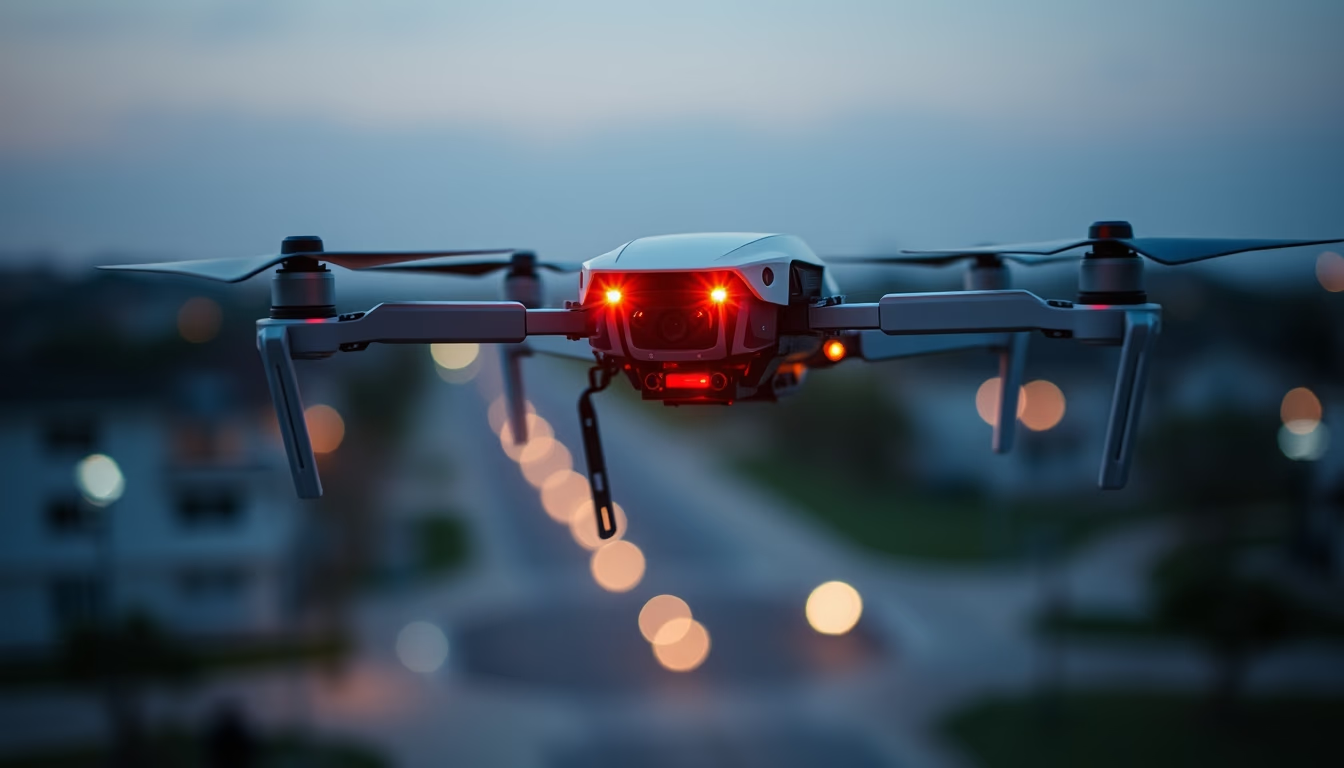
Robôs hexápodes, com seis pernas inspiradas em insetos, oferecem estabilidade e mobilidade em terrenos acidentados para aplicações como exploração e resgate.
Sobre o tema
Robôs hexápodes são máquinas com seis pernas, projetadas para se mover de forma estável em superfícies irregulares. Inspirados em insetos como baratas e formigas, esses robôs podem andar, escalar e até mesmo pular em ambientes hostis. Diferente de robôs com rodas ou esteiras, eles têm melhor tração em terrenos acidentados, como escombros ou regiões rochosas. Sua arquitetura permite que mantenham equilíbrio mesmo se uma ou mais pernas falharem, o que os torna redundantes e robustos.
O desenvolvimento de hexápodes começou em laboratórios de pesquisa, como o MIT com o robô Genghis nos anos 1980, um dos primeiros a demonstrar locomoção com seis pernas. Posteriormente, surgiram modelos como o RHex, da Boston Dynamics, que se tornou famoso por sua capacidade de se mover rapidamente em terrenos difíceis, além de projetos como o RoboTerra, usado em exploração subaquática. Atualmente, universidades e empresas criam hexápodes para fins educacionais, como os kits de robótica baseados em Arduino e Raspberry Pi.
A locomoção de um hexápode é controlada por algoritmos que definem a sequência de movimentos das pernas, chamadas de marchas. As marchas mais comuns são a marcha tripé, onde dois triângulos de pernas se alternam, e a marcha ondulatória, mais lenta mas mais estável. Sensores inerciais e de contato ajudam o robô a ajustar a postura em tempo real. O maior desafio é o consumo de energia, já que cada perna exige atuadores precisos, e o controle computacional precisa ser rápido para evitar tombamentos.
Na prática, hexápodes são usados em missões de busca e salvamento em desastres, inspeção de dutos e tubulações, exploração planetária (como protótipos da NASA para Marte) e estudos de biomecânica. Eles também são populares em competições de robótica e como plataformas de pesquisa para inteligência artificial. Com o avanço de sensores e baterias, espera-se que esses robôs se tornem mais autônomos e acessíveis para aplicações comerciais.
Perguntas frequentes
O que diferencia um robô hexápode de outros robôs móveis?
A principal diferença são as seis pernas, que oferecem maior estabilidade em terrenos acidentados e redundância de movimento. Diferente de robôs com rodas ou duas pernas, eles podem superar obstáculos maiores e continuar operando mesmo com uma perna danificada.
Quais são as principais aplicações dos robôs hexápodes?
Eles são usados em busca e salvamento em desastres, inspeção de tubulações, exploração planetária (como em protótipos da NASA), estudos de biomecânica e competições de robótica.
Como os robôs hexápodes controlam o equilíbrio em terrenos acidentados?
Utilizam sensores inerciais e de contato para detectar inclinações e ajustar a postura em tempo real. Algoritmos de marcha, como a marcha tripé, distribuem o peso de forma a manter o centro de gravidade dentro da base de sustentação.
URL direta
https://pub-c7d6a6ea828543ac903a74a341ccb2e1.r2.dev/imagens/hexapod-robot-moving-aerial-drone-shot-p3.avifComo creditar
Inclua um link visível de volta pro UtilizAí. Copie um dos snippets abaixo:
<a href="https://xn--utiliza-eza.com/midia/imagens/hexapod-robot-moving-aerial-drone-shot-p3">Hexapod robot moving</a> by <a href="https://xn--utiliza-eza.com">UtilizAí</a>, licensed under <a href="https://creativecommons.org/licenses/by/4.0/">CC BY 4.0</a>.
[Hexapod robot moving](https://xn--utiliza-eza.com/midia/imagens/hexapod-robot-moving-aerial-drone-shot-p3) by [UtilizAí](https://xn--utiliza-eza.com), CC BY 4.0
Licença: CC-BY-4.0