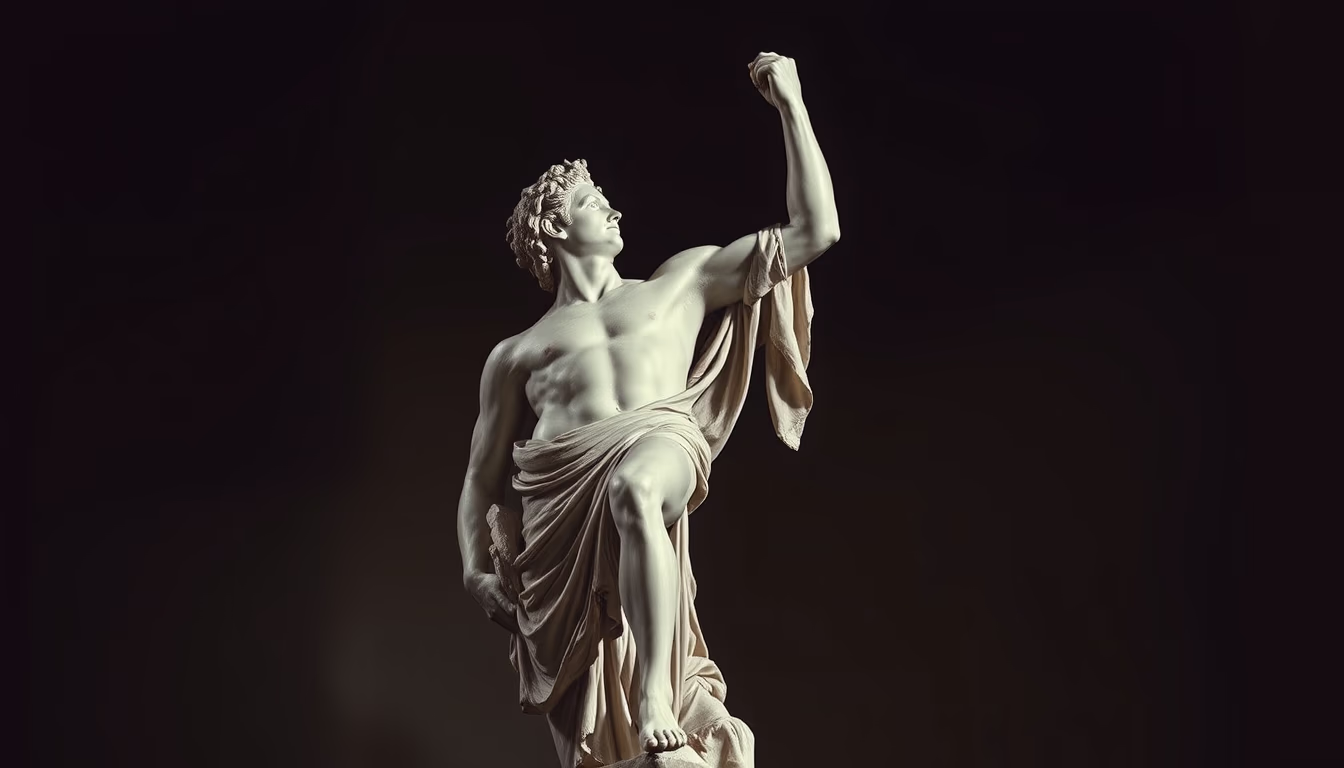
Henry moore abstract
1344×768 · AVIF · CC BY 4.0
Henry Moore transformou a escultura abstrata com formas orgânicas e vazados, influenciado pela natureza e pelo corpo humano.
Sobre o tema
Henry Moore (1898-1986) foi um dos mais influentes escultores britânicos do século XX, conhecido por suas obras abstratas que exploram a relação entre forma e espaço. Nascido em Castleford, Yorkshire, Moore estudou no Leeds College of Art e no Royal College of Art. Sua escala monumental e o uso de materiais como bronze e pedra marcaram o modernismo. Ele desenvolveu um estilo único com figuras reclinadas, perfuradas por cavidades que integram o vazio como elemento ativo.
O conceito de 'forma aberta' de Moore permitia que o entorno dialogasse com a escultura, criando uma experiência tridimensional dinâmica. Suas obras foram inspiradas por artefatos pré-colombianos, máscaras africanas e pela paisagem inglesa, como as colinas de Hertfordshire. Peças emblemáticas como 'Figura Reclinada' (1951) no Conselho de Educação de Londres e 'Forma de Ovo' (1960) demonstram sua obsessão pelo equilíbrio entre abstração e figuração. Moore também se interessou pela tensão entre o natural e o artificial, visível em suas curvas suaves e superfícies texturizadas.
Moore recebeu encomendas para espaços públicos ao redor do mundo, incluindo o Parque da Escultura de Yorkshire e o Campus da UNESCO em Paris. Ele defendia que a abstração não precisava ser fria: suas peças evocam maternidade, repouso e energia telúrica. O uso de furos e reentrâncias, como em 'Cavidade Dupla' (1966), convida o espectador a percorrer a obra, descobrindo ângulos inesperados. Apesar de sua fama, Moore manteve uma vida simples, trabalhando em Perry Green até sua morte.
O legado de Moore influenciou gerações de escultores, como Anthony Caro e Richard Serra, ao provar que a abstração pode dialogar com emoções primárias. Suas obras estão em coleções permanentes do MoMA, Tate Modern e Museu de Arte de São Paulo. Críticos destacam que sua contribuição principal foi libertar a escultura do pedestal, integrando-a ao espaço vivido. Moore continua sendo um pilar do abstractionismo orgânico, combinando intuição formal com profundo conhecimento anatômico.
Perguntas frequentes
Qual é a principal característica das esculturas de Henry Moore?
As esculturas de Henry Moore são conhecidas por suas formas abstratas e orgânicas, com aberturas e vazados que integram o espaço ao redor da obra.
O que inspirou o estilo de Henry Moore?
Moore foi influenciado por artefatos pré-colombianos, máscaras africanas, paisagens inglesas e o corpo humano. Ele também se interessou pelo surrealismo e pela arte primitiva.
Onde posso encontrar obras de Henry Moore no Brasil?
O Museu de Arte de São Paulo (MASP) possui uma obra de Henry Moore em seu acervo, além de outras coleções particulares e exposições temporárias.
URL direta
https://pub-c7d6a6ea828543ac903a74a341ccb2e1.r2.dev/imagens/henry-moore-abstract-lo-fi-disposable-camera-p11.avifComo creditar
Inclua um link visível de volta pro UtilizAí. Copie um dos snippets abaixo:
<a href="https://xn--utiliza-eza.com/midia/imagens/henry-moore-abstract-lo-fi-disposable-camera-p11">Henry moore abstract</a> by <a href="https://xn--utiliza-eza.com">UtilizAí</a>, licensed under <a href="https://creativecommons.org/licenses/by/4.0/">CC BY 4.0</a>.
[Henry moore abstract](https://xn--utiliza-eza.com/midia/imagens/henry-moore-abstract-lo-fi-disposable-camera-p11) by [UtilizAí](https://xn--utiliza-eza.com), CC BY 4.0
Licença: CC-BY-4.0