Hawk training glove
1344×768 · AVIF · CC BY 4.0
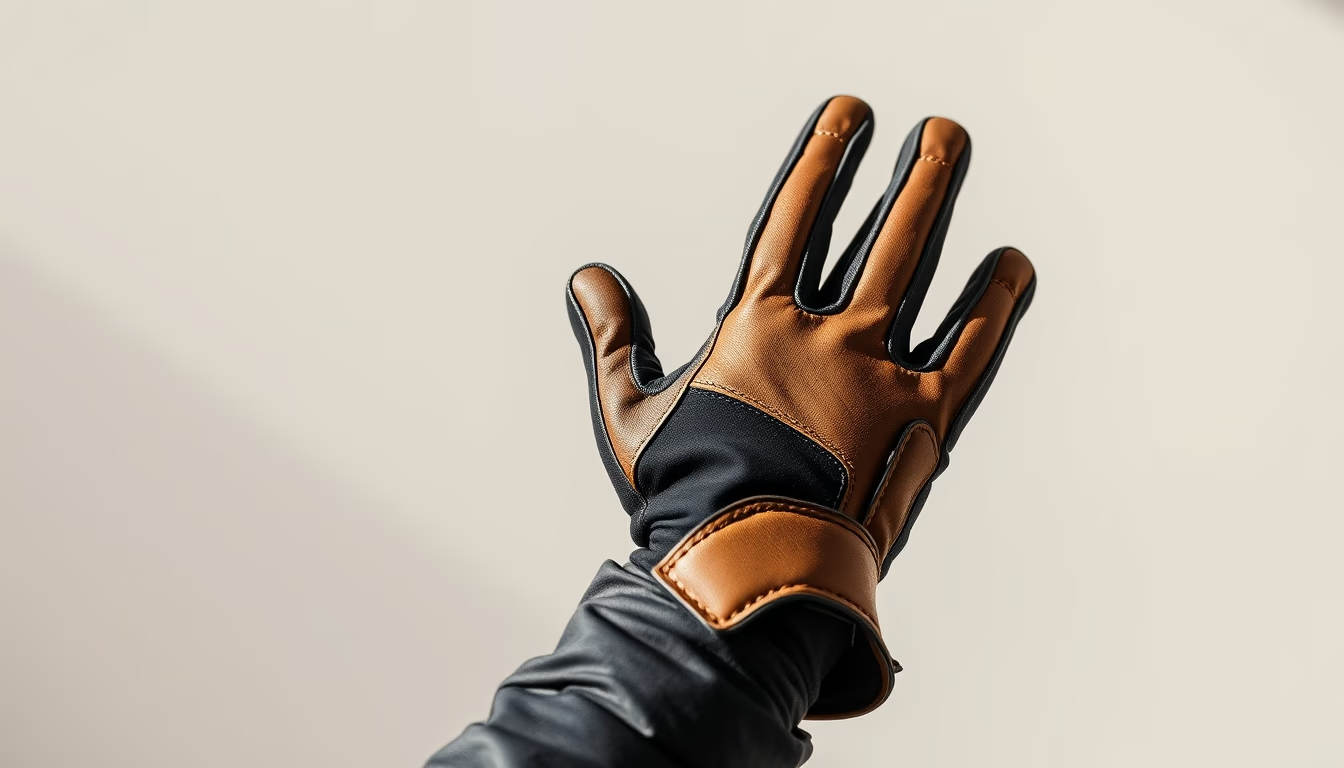
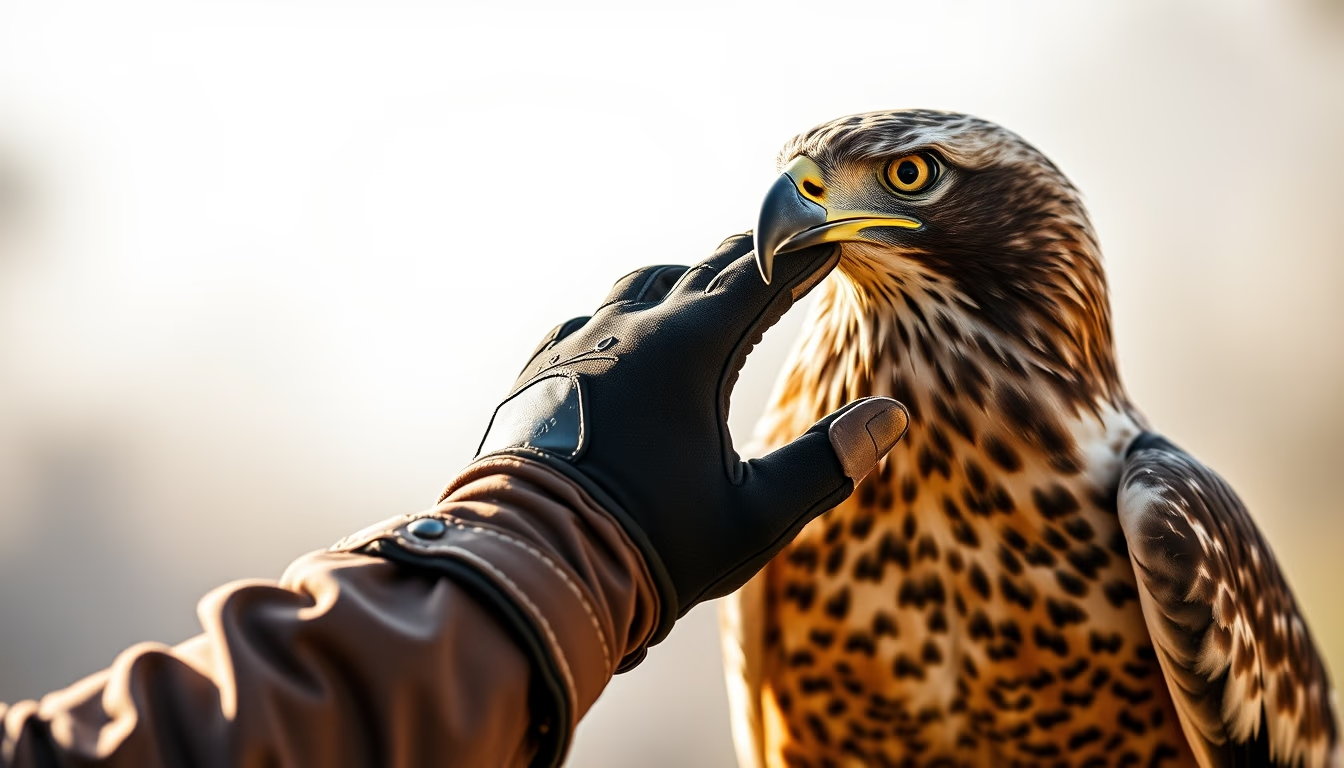
The hawk training glove is essential falconry equipment, protecting the falconer from sharp talons while allowing safe handling of the bird.
About this subject
The hawk training glove, also known as a gauntlet, is traditionally made from tough leather such as cowhide or goatskin, designed to withstand the talons of birds of prey. Its extended cuff covers the forearm, preventing injuries during handling. In falconry, the glove is almost exclusively worn on the left hand, leaving the right free to tie prey or hold equipment.
Falconry dates back over 4,000 years, originating in Central Asia, and the glove has always been an indispensable tool. Different cultures developed variations: Mongolian gloves are shorter, while medieval European versions were padded. Today, synthetic materials like Kevlar are used for greater durability and puncture resistance, without sacrificing the flexibility needed for a secure grip.
Choosing the right glove depends on the species, hawks and goshawks require thicker protection, and climate. In warm regions, perforated models aid ventilation. A proper fit is crucial: the glove must not slip but allow precise finger movements. Maintenance includes cleaning with mild soap and periodic conditioning to prevent leather cracks.
Interestingly, glove use extends beyond falconry. In recreational hawking, it symbolizes the bond between human and bird, and training with the glove is the first step in associating the falconer with a food source. Thus, the glove is often baited with meat or lures to reinforce positive bonding.
Frequently Asked Questions
Why is the training glove made of leather?
Leather provides natural puncture and cut resistance, flexibility, and durability. Cowhide is most common because it is thick yet pliable, protecting the falconer from talons without restricting movement.
What is the historical origin of the falconry glove?
The falconry glove originated in Central Asia over 4,000 years ago and spread to Europe, the Middle East, and Asia. Each region adapted the design: medieval European gloves were padded for extra protection, while Mongolian ones emphasized lightness.
How do I choose the correct glove size?
The glove should fit snugly around the wrist and forearm without slipping, yet allow free finger movement. Measure hand circumference and forearm length, and consider the bird species, larger birds require thicker gloves.
Direct URL
https://pub-c7d6a6ea828543ac903a74a341ccb2e1.r2.dev/imagens/hawk-training-glove-minimalist-composition-fresh3.avifHow to credit
Include a visible link back to UtilizAí. Copy one of the snippets below:
<a href="https://xn--utiliza-eza.com/en/midia/imagens/hawk-training-glove-minimalist-composition-fresh3">Hawk training glove</a> by <a href="https://xn--utiliza-eza.com">UtilizAí</a>, licensed under <a href="https://creativecommons.org/licenses/by/4.0/">CC BY 4.0</a>.
[Hawk training glove](https://xn--utiliza-eza.com/en/midia/imagens/hawk-training-glove-minimalist-composition-fresh3) by [UtilizAí](https://xn--utiliza-eza.com), CC BY 4.0
License: CC-BY-4.0