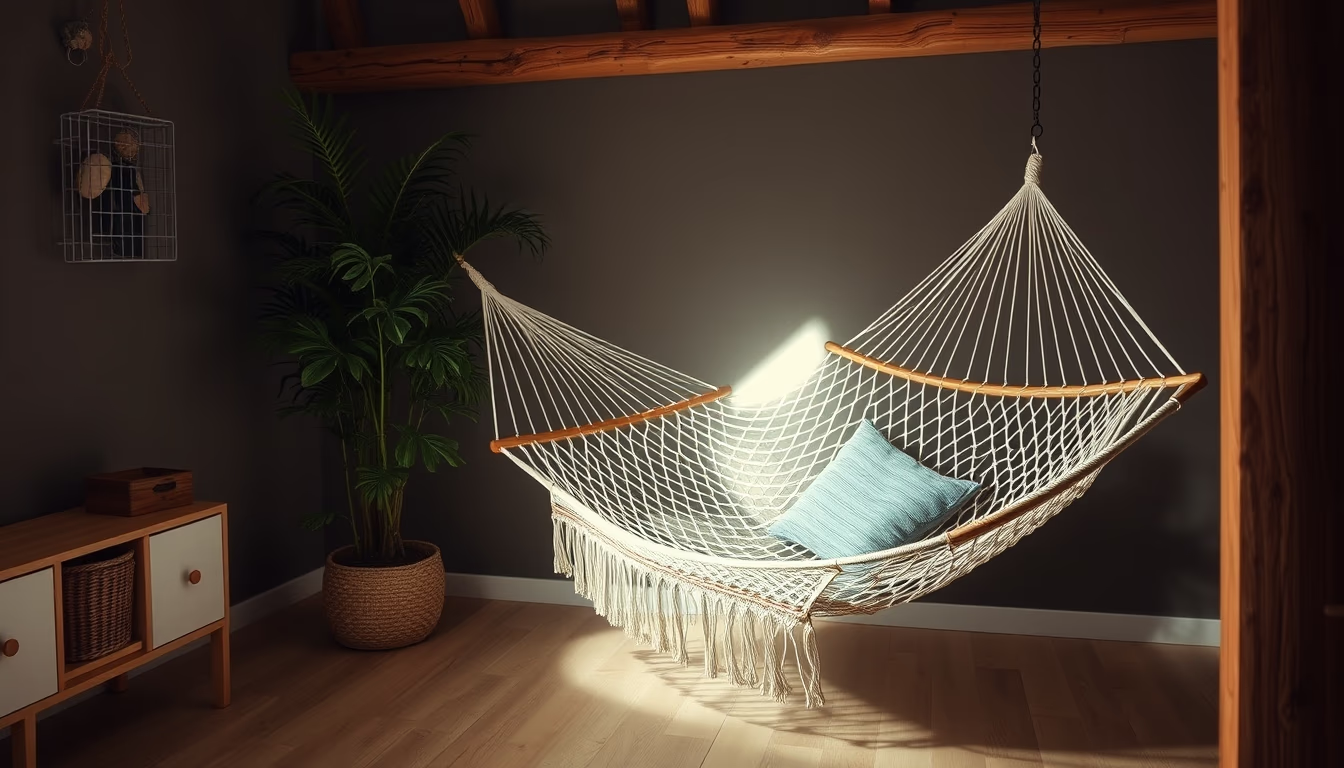
Hammock between palm trees
1344×768 · AVIF · CC BY 4.0

Hammock between palm trees: a tropical relaxation icon merging indigenous culture, design, and high fashion.
About this subject
The hammock, originally called 'hamaca' by the Taíno people of the Caribbean, is one of the oldest sleeping devices used by humans. Indigenous tribes in Central and South America developed complex weaving techniques using plant fibers like henequen or cotton. In Brazil, the hammock is deeply rooted in the culture of the Amazon and the Northeast, where it is still used as a primary bed in many homes. Placing a hammock between palm trees is a classic tropical scene that suggests relaxation, shelter, and harmony with nature.
Palm trees are essential in tropical landscapes worldwide. The coconut palm (Cocos nucifera) is perhaps the most recognized, providing both shade and fruit. Other species like the date palm (Phoenix dactylifera) or the royal palm (Roystonea regia) are also popular in resort settings. The choice of palm affects the hammock's placement: taller palms allow for longer hanging distances, while shorter ones create a more intimate nook. In botany, palm trees are actually monocots related to grasses, not true trees, which makes them unique in their growth pattern.
In high fashion editorials, the hammock between palm trees is a visual shorthand for escapism and luxury. Designers often treat the hammock as a prop that conveys effortless elegance. The image has appeared in campaigns for brands like Versace and Ralph Lauren, pairing the rustic hammock with haute couture garments. This juxtaposition highlights a tension between natural simplicity and manufactured beauty. Moreover, the hammock itself has been reinterpreted by contemporary artists and designers as a piece of furniture that can be both functional and sculptural, as seen in exhibitions at the Museum of Modern Art in New York.
Frequently Asked Questions
What is the origin of the hammock?
Hammocks originated with the Taíno people of the Caribbean and other indigenous tribes in Central and South America. They were woven from plant fibers and used for sleeping and sitting, later adopted by European sailors and colonists.
Which palm trees are best for hanging a hammock?
Straight-stemmed, sturdy palms like the coconut palm (Cocos nucifera), royal palm (Roystonea regia), and Bismarck palm (Bismarckia nobilis) work well. They need to be at least 10 feet apart and have healthy trunks to support the weight.
How is the hammock between palm trees used in fashion?
In fashion editorials, the hammock and palm combination represents natural luxury and tropical escape. High-end brands use it as a backdrop for summer collections, evoking exclusivity and a relaxed lifestyle.
Direct URL
https://pub-c7d6a6ea828543ac903a74a341ccb2e1.r2.dev/imagens/hammock-between-palm-trees-high-fashion-editorial-fresh17.avifHow to credit
Include a visible link back to UtilizAí. Copy one of the snippets below:
<a href="https://xn--utiliza-eza.com/en/midia/imagens/hammock-between-palm-trees-high-fashion-editorial-fresh17">Hammock between palm trees</a> by <a href="https://xn--utiliza-eza.com">UtilizAí</a>, licensed under <a href="https://creativecommons.org/licenses/by/4.0/">CC BY 4.0</a>.
[Hammock between palm trees](https://xn--utiliza-eza.com/en/midia/imagens/hammock-between-palm-trees-high-fashion-editorial-fresh17) by [UtilizAí](https://xn--utiliza-eza.com), CC BY 4.0
License: CC-BY-4.0