Hammer claw on wood
1344×768 · AVIF · CC BY 4.0
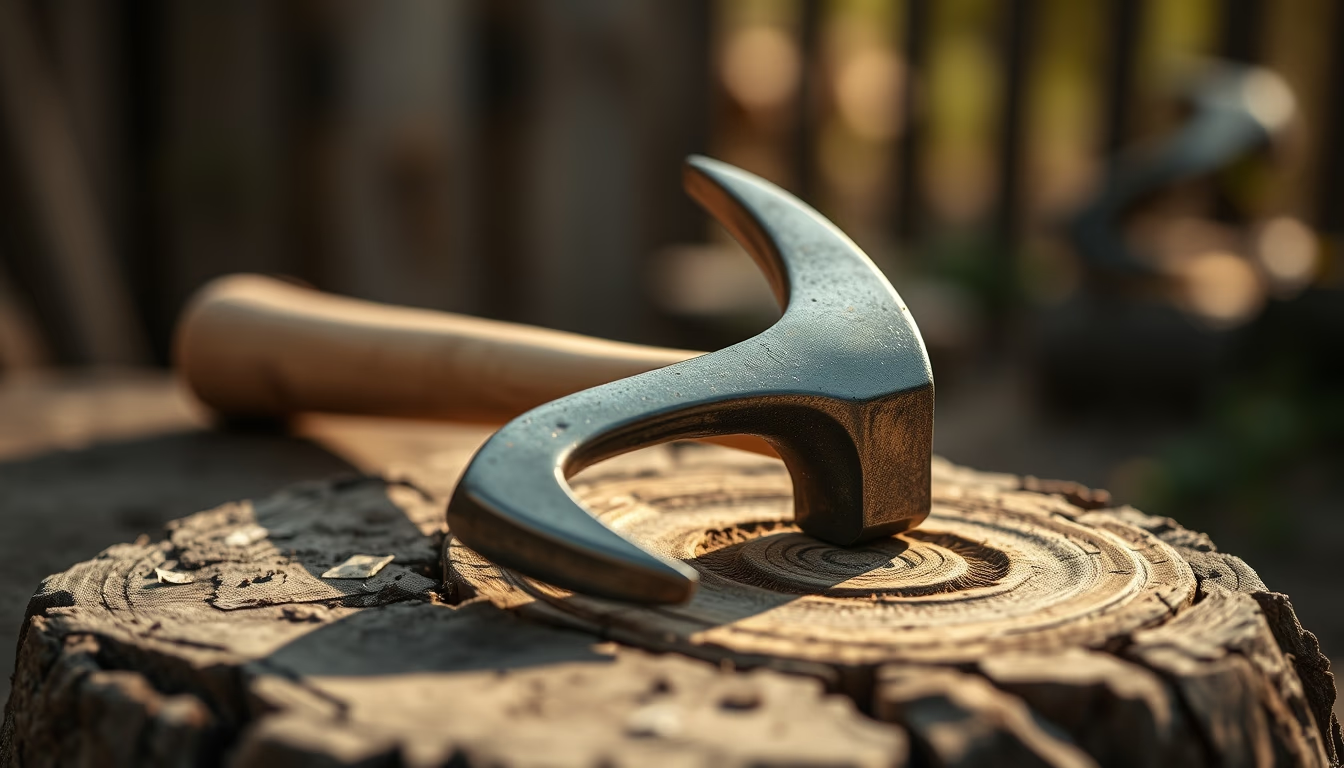
Hammer claw on wood: a versatile tool used in carpentry and construction for driving nails and prying pieces.
About this subject
The claw hammer is one of the most recognizable hand tools, consisting of a steel head with two ends: a flat face for striking and a curved claw for removing nails. The claw, usually V-shaped or split, allows the user to pry embedded nails, pulling them out efficiently. This feature makes it indispensable in carpentry, construction, and home renovation.
The hammer's design has evolved over millennia, from stone hammers in the Stone Age to modern versions with wood, fiberglass, or steel handles. The claw hammer specifically became popular in the 19th century with the mass production of steel nails. Before that, nails were hand-forged and valuable, so tools for extracting them were essential.
There are specialized variations: the carpenter's hammer has a more pronounced claw for roofing nails; the electrician's hammer has an insulated claw for safety. Head weight ranges from 7 to 20 ounces (about 200 to 570 grams), with the 16-ounce (454-gram) hammer being most common for general work. Wood handles made of hickory or walnut absorb vibration, while fiberglass handles offer greater impact resistance.
Fun fact: the hammer claw can also be used as a lever to open paint cans or as a nail puller for concrete formwork. Proper technique involves placing the claw under the nail head and pulling the handle backward, using the wood edge as a fulcrum.
Frequently Asked Questions
What is the difference between a claw hammer and a ball-peen hammer?
A claw hammer has a curved claw for removing nails, while a ball-peen hammer has a rounded end used in metalworking for shaping metals and rivets.
How to properly use the claw of a hammer?
Position the claw under the nail head, rest the base of the claw on the wood surface, and pull the handle backward, using the wood as a fulcrum to pry the nail out.
What is the best material for a hammer handle?
Wood handles (hickory or walnut) offer good vibration absorption, while fiberglass handles are more durable and impact-resistant. Steel handles are robust but transmit more vibration.
Direct URL
https://pub-c7d6a6ea828543ac903a74a341ccb2e1.r2.dev/imagens/hammer-claw-on-wood-documentary-photography-p2.avifHow to credit
Include a visible link back to UtilizAí. Copy one of the snippets below:
<a href="https://xn--utiliza-eza.com/en/midia/imagens/hammer-claw-on-wood-documentary-photography-p2">Hammer claw on wood</a> by <a href="https://xn--utiliza-eza.com">UtilizAí</a>, licensed under <a href="https://creativecommons.org/licenses/by/4.0/">CC BY 4.0</a>.
[Hammer claw on wood](https://xn--utiliza-eza.com/en/midia/imagens/hammer-claw-on-wood-documentary-photography-p2) by [UtilizAí](https://xn--utiliza-eza.com), CC BY 4.0
License: CC-BY-4.0