Gyrfalcon white snow
1344×768 · AVIF · CC BY 4.0
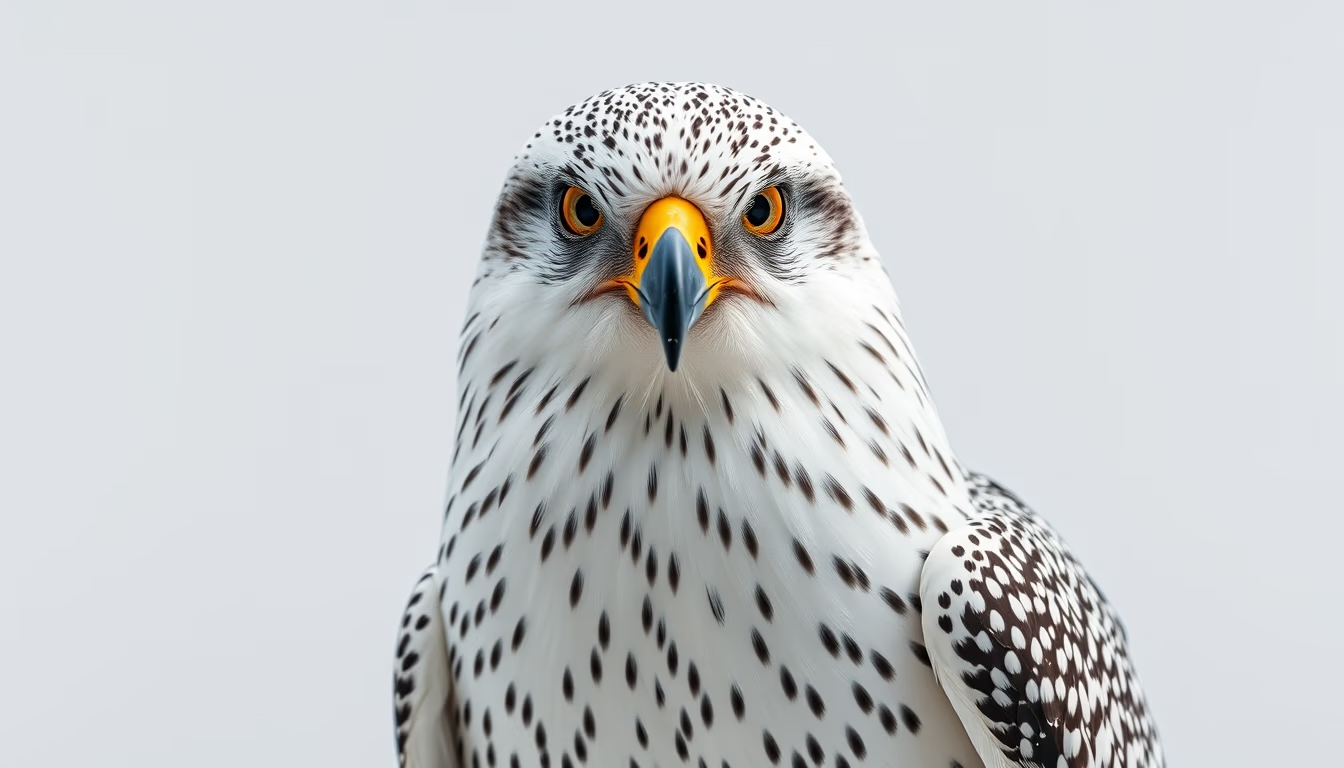
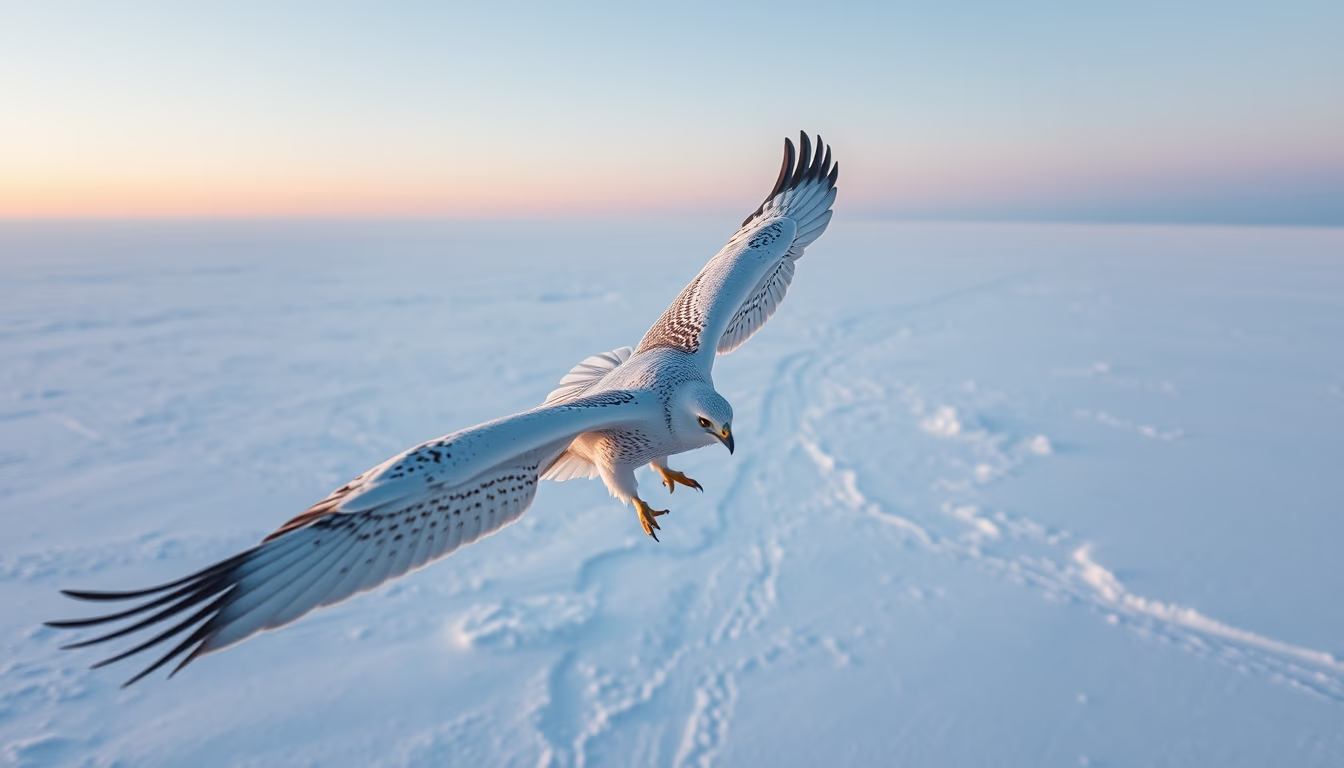
The Gyrfalcon (Falco rusticolus) is the largest falcon in the world, an Arctic inhabitant known for its white plumage that camouflages it in snow.
About this subject
The Gyrfalcon (Falco rusticolus) is the largest member of the falcon family, reaching up to 65 cm in length with a wingspan of up to 160 cm. Its plumage ranges from pure white to dark gray, with the white morph being most common in the Arctic populations of Canada and Greenland. This coloration is not merely aesthetic: it serves as effective camouflage against snow and ice, both for hunting and for hiding from predators.
This bird of prey is a top predator in the Arctic tundra. It primarily feeds on birds such as ptarmigan and ducks, but also catches mammals like lemmings and hares. Unlike other falcons that dive at high speed, the Gyrfalcon often flies low and fast, using rugged terrain to ambush prey. Its strength is such that it can bring down animals larger than itself.
The Gyrfalcon has historical significance in falconry. In the Middle Ages, it was reserved for kings and emperors due to its rarity and hunting prowess. In Europe, it was once worth more than gold and was a status symbol. Today, although protected in many countries, it is still used in modern falconry, especially in countries like Canada and the United Arab Emirates, where captive breeding programs help preserve the species.
Its circumpolar distribution covers the northernmost regions of the planet: Alaska, Canada, Greenland, Iceland, Norway, Sweden, and Russia. During winter, some individuals migrate to lower latitudes, but most remain in the Arctic. Interestingly, recent studies suggest that white populations are increasing in response to global warming, as snow cover remains in some areas, favoring their camouflage.
Frequently Asked Questions
What is the difference between a Gyrfalcon and a Peregrine Falcon?
The Gyrfalcon is larger, with a wingspan up to 160 cm, while the Peregrine Falcon reaches up to 120 cm. The Gyrfalcon inhabits the Arctic and has variable plumage (white to gray), while the Peregrine is more slender and occurs globally. The Gyrfalcon hunts by flying low and fast, whereas the Peregrine uses high-speed dives.
Is the white Gyrfalcon a separate species?
No, the white Gyrfalcon is a color morph of the same species Falco rusticolus. The white coloration is more common in Arctic populations, especially in Greenland and Canada, due to natural selection for camouflage in snow.
Is the Gyrfalcon endangered?
Currently, the Gyrfalcon is classified as 'Least Concern' by the IUCN, but it faces threats such as climate change, human disturbance, and illegal capture for falconry. Populations are monitored, and captive breeding programs help ensure its conservation.
Direct URL
https://pub-c7d6a6ea828543ac903a74a341ccb2e1.r2.dev/imagens/gyrfalcon-white-snow-studio-editorial-portrait-fresh17.avifHow to credit
Include a visible link back to UtilizAí. Copy one of the snippets below:
<a href="https://xn--utiliza-eza.com/en/midia/imagens/gyrfalcon-white-snow-studio-editorial-portrait-fresh17">Gyrfalcon white snow</a> by <a href="https://xn--utiliza-eza.com">UtilizAí</a>, licensed under <a href="https://creativecommons.org/licenses/by/4.0/">CC BY 4.0</a>.
[Gyrfalcon white snow](https://xn--utiliza-eza.com/en/midia/imagens/gyrfalcon-white-snow-studio-editorial-portrait-fresh17) by [UtilizAí](https://xn--utiliza-eza.com), CC BY 4.0
License: CC-BY-4.0