Gutenberg bible page
1344×768 · AVIF · CC BY 4.0

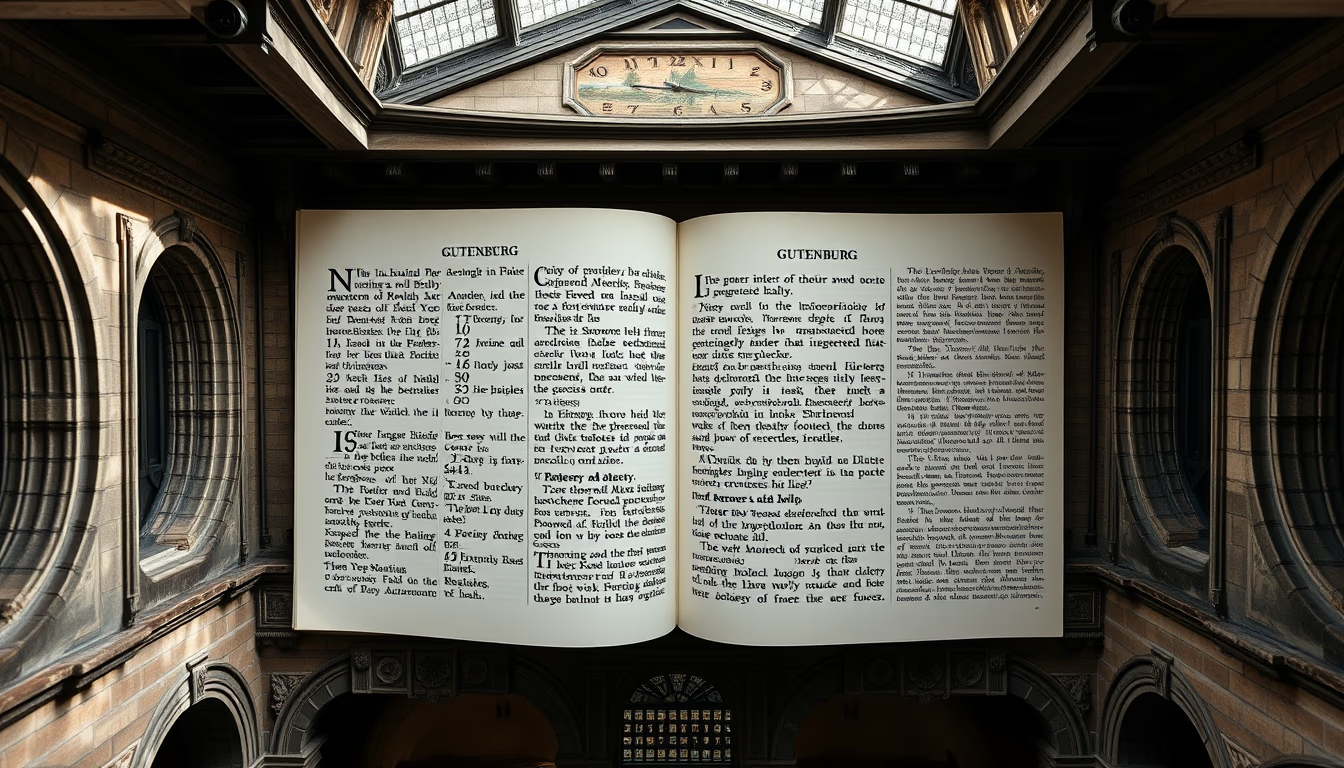
A page from the Gutenberg Bible, printed by Johannes Gutenberg in the 15th century, marks the dawn of printing and the democratization of knowledge.
About this subject
The Gutenberg Bible, also known as the 42-line Bible, was the first major book printed in Europe using movable metal type. Produced by Johannes Gutenberg in Mainz, Germany, around 1455, it marked the beginning of the Printing Revolution. Each page was printed in black ink, with spaces left for hand-illuminated initials, blending new technology with traditional manuscript art. Of the approximately 180 original copies, only 49 survive today, many incomplete, preserved in libraries and museums worldwide.
Gutenberg's printing process involved creating a metal alloy for the type, an oil-based ink, and a press adapted from wine presses. Each page required manual composition of about 2,600 characters, making the work monumental. The Gutenberg Bible directly influenced the Protestant Reformation and the spread of scientific knowledge, as books became more accessible and affordable. Before it, producing a single Bible copy took months of scribal work; with the press, hundreds of copies could be made in far less time.
Interestingly, the Gutenberg Bible was not the first book printed with movable type in Asia, China had used wood and metal type centuries earlier, but it was the first in the West to systematically employ this technique. Its aesthetic quality and typographic precision set standards that endure today. Original pages are extremely rare and valuable, often auctioned for millions of dollars. In 2024, a fragment of a page sold for over $200,000.
The cultural importance of the Gutenberg Bible transcends religion: it symbolizes the transition from the Middle Ages to the Modern Era, the rise of literacy, and the dissemination of ideas. Each surviving page stands as a testament to human ingenuity and the power of written communication. Scholars continue to analyze its ink, paper, and binding to better understand the production techniques of the time.
Frequently Asked Questions
How many pages does the Gutenberg Bible have?
The Gutenberg Bible has 1,282 pages, printed in two volumes. Each volume contains about 641 pages, with text in Latin from the Vulgate.
What is the value of an original page from the Gutenberg Bible?
A single page can be worth tens of thousands to hundreds of thousands of dollars. In 2024, a page fragment sold for over $200,000 at auction.
Where can I see a Gutenberg Bible?
Complete or partial copies are held at institutions such as the Library of Congress (USA), the British Library, the National Library of France, and the University of Göttingen in Germany.
Direct URL
https://pub-c7d6a6ea828543ac903a74a341ccb2e1.r2.dev/imagens/gutenberg-bible-page-cinematic-wide-shot-fresh8.avifHow to credit
Include a visible link back to UtilizAí. Copy one of the snippets below:
<a href="https://xn--utiliza-eza.com/en/midia/imagens/gutenberg-bible-page-cinematic-wide-shot-fresh8">Gutenberg bible page</a> by <a href="https://xn--utiliza-eza.com">UtilizAí</a>, licensed under <a href="https://creativecommons.org/licenses/by/4.0/">CC BY 4.0</a>.
[Gutenberg bible page](https://xn--utiliza-eza.com/en/midia/imagens/gutenberg-bible-page-cinematic-wide-shot-fresh8) by [UtilizAí](https://xn--utiliza-eza.com), CC BY 4.0
License: CC-BY-4.0