Gondola venice canal
1344×768 · AVIF · CC BY 4.0
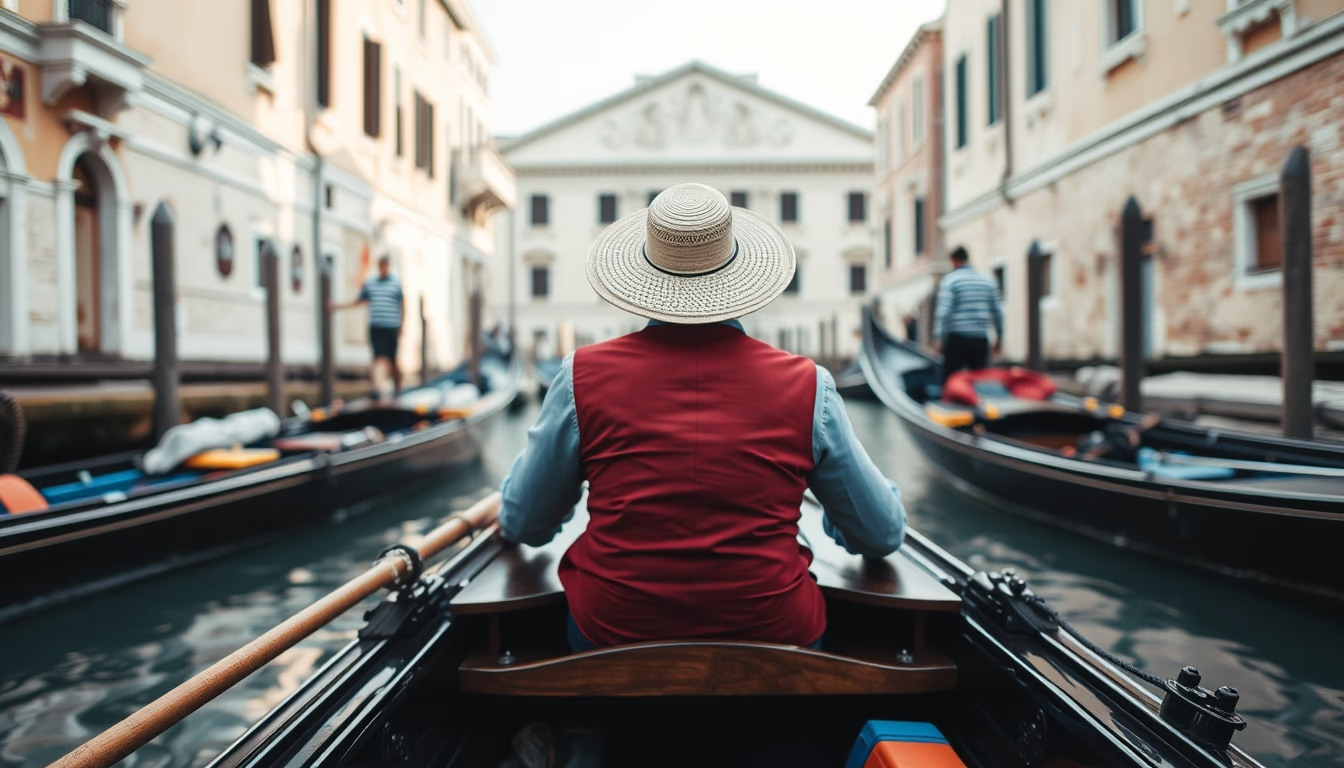
A Venetian gondola glides through the historic canals of Venice, a symbol of centuries-old navigation and romance in the city of water.
About this subject
The gondola is a traditional Venetian boat used for centuries as a means of transportation through the canals of Venice, Italy. Its origins date back to the 11th century, when the first references to long, narrow boats appeared in the lagoon. Over time, the design evolved into the current asymmetric shape, about 11 meters long and weighing approximately 400 kilograms. The asymmetry compensates for the lateral thrust generated by the gondolier, who rows with a single oar at the stern.
Building a gondola is a handmade process that takes months, using eight different types of wood such as oak, mahogany, and walnut. Each piece is carved and assembled by hand in traditional shipyards called squeri. The iron bow ornament, known as ferro di prua, features six forward-facing teeth representing Venice's six sestieri (districts), Cannaregio, Castello, Dorsoduro, San Marco, San Polo, and Santa Croce, plus an additional tooth symbolizing the island of Giudecca. The S-shape of the iron also recalls the Grand Canal.
In the 20th century, the number of gondolas in circulation sharply declined with the advent of motorboats. Today, about 400 gondolas remain in active use, almost all dedicated to tourism. Gondoliers require a special license, usually passed down from father to son, and undergo rigorous training. Venice, built on 118 islands connected by over 400 bridges, is a UNESCO World Heritage site, and its canals face threats such as rising sea levels and overtourism.
Frequently Asked Questions
Why are gondolas asymmetrical?
The hull's asymmetry counteracts the lateral thrust generated by the gondolier rowing with a single oar at the stern, keeping the boat straight.
How many gondolas exist in Venice today?
There are about 400 gondolas in active use, mostly for tourism.
What do the teeth on the gondola's bow iron represent?
The six main teeth represent Venice's six sestieri (districts), and an additional tooth symbolizes the island of Giudecca.
Direct URL
https://pub-c7d6a6ea828543ac903a74a341ccb2e1.r2.dev/imagens/gondola-venice-canal-documentary-photography-p7.avifHow to credit
Include a visible link back to UtilizAí. Copy one of the snippets below:
<a href="https://xn--utiliza-eza.com/en/midia/imagens/gondola-venice-canal-documentary-photography-p7">Gondola venice canal</a> by <a href="https://xn--utiliza-eza.com">UtilizAí</a>, licensed under <a href="https://creativecommons.org/licenses/by/4.0/">CC BY 4.0</a>.
[Gondola venice canal](https://xn--utiliza-eza.com/en/midia/imagens/gondola-venice-canal-documentary-photography-p7) by [UtilizAí](https://xn--utiliza-eza.com), CC BY 4.0
License: CC-BY-4.0