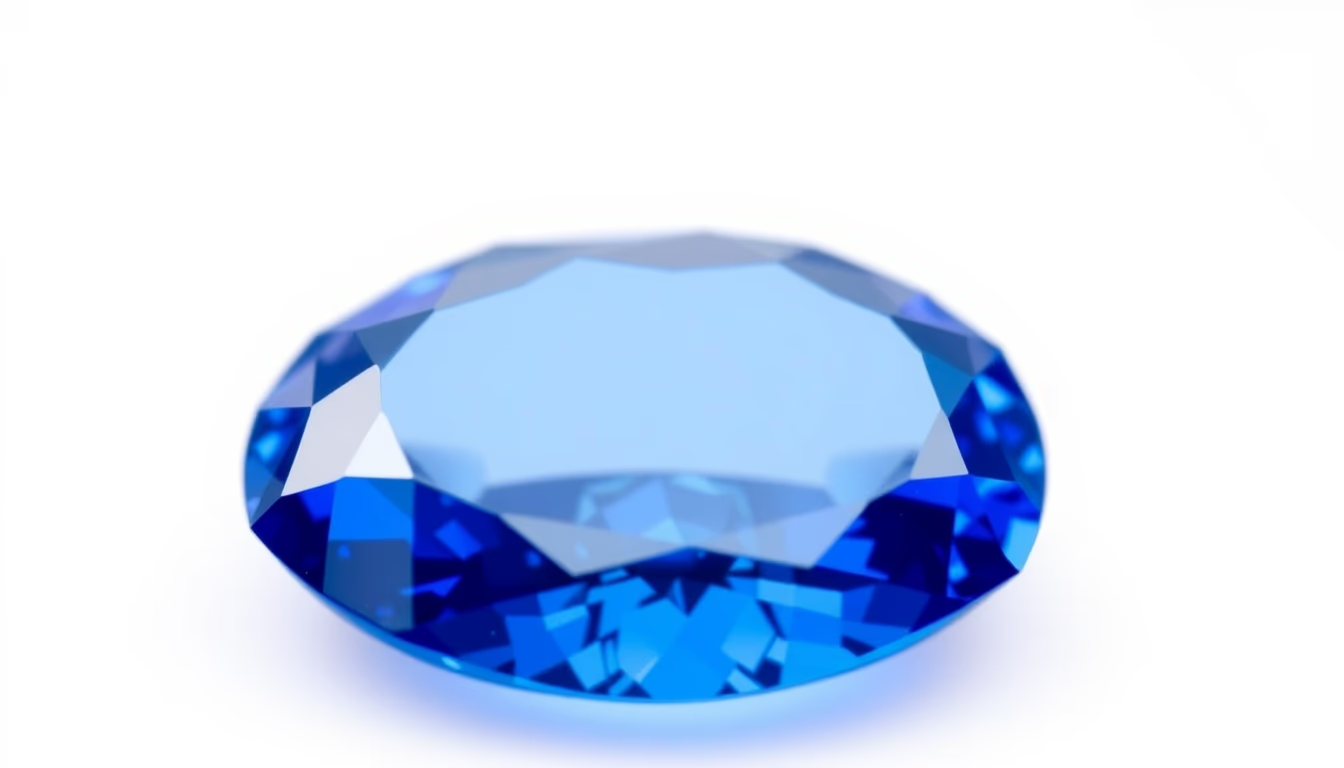
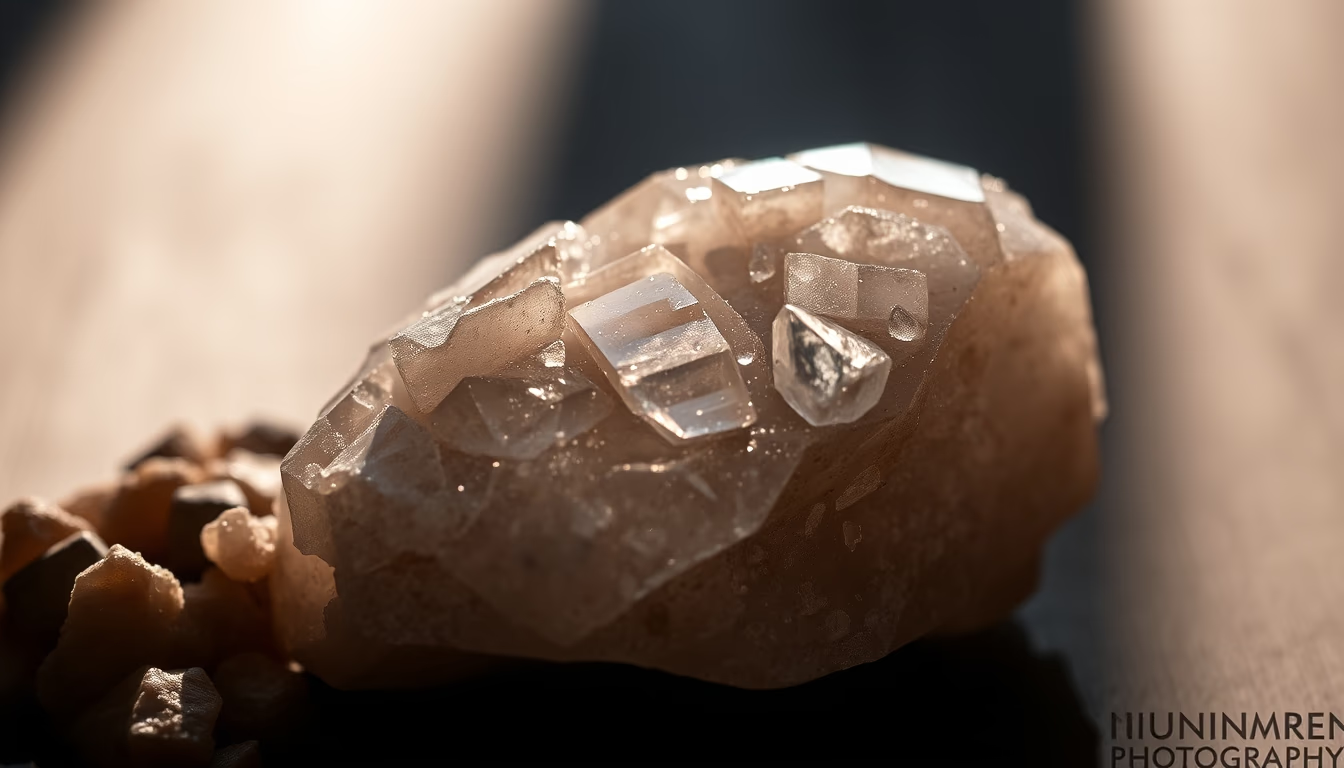
Fluorite cubes octahedral
1344×768 · AVIF · CC BY 4.0
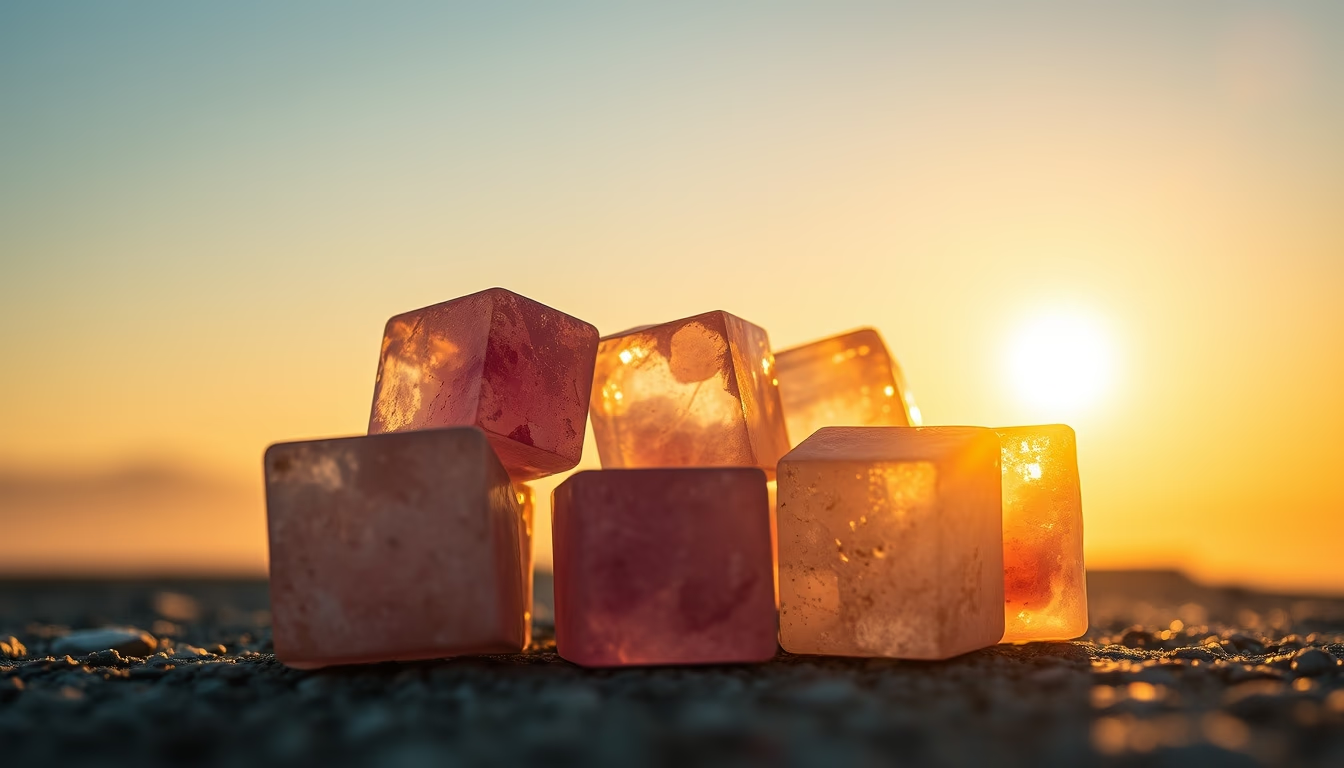
Fluorite is a calcium fluoride mineral, renowned for its cubic and octahedral crystals in a variety of colors, used in industry and as a gemstone.
About this subject
Fluorite (CaF2) is a halide mineral that crystallizes in the cubic system, often forming perfect cubic crystals or octahedra, as well as combinations like cubes with truncated corners (cuboctahedra). Its color varies widely: colorless, green, purple, blue, yellow, pink, among others, often zoned or banded. This chromatic diversity arises from impurities, crystal lattice defects, or exposure to radiation. Fluorite occurs in hydrothermal veins, especially associated with lead, zinc, and barite deposits.
In Brazil, notable occurrences include the Vale do Ribeira mines (SP/PR), producing high-quality green and purple crystals, and deposits in Santa Catarina and Minas Gerais. Worldwide, classic localities are England (Derbyshire, famous for "Blue John"), the United States (Illinois, Kentucky), China, and Mexico. Fluorite has a hardness of 4 on the Mohs scale, making it relatively soft, and perfect octahedral cleavage, which makes it fragile for jewelry use, though faceted as a gemstone for collectors.
Industrially, fluorite is crucial for producing hydrofluoric acid (HF) and as a flux in steelmaking. It is also used in optical lenses (due to low dispersion) and in the manufacture of glass and enamel. Its fluorescence under UV light (origin of the name) is striking, with some specimens displaying strong blue or violet luminescence. For collectors, fluorite is a staple mineral, prized for its symmetry, transparency, and color range. The term "octahedral cubes" refers to crystal habits where cube and octahedron faces combine, forming truncated polyhedra.
Frequently Asked Questions
Is fluorite the same as fluorspar?
Yes, fluorite and fluorspar are synonyms. Fluorspar is an older term used in mining.
Why does fluorite have so many different colors?
The colors of fluorite are caused by impurities like rare earth elements (yttrium, cerium), color centers from radiation, or crystal lattice defects. Purple, for example, can be due to strontium traces.
Where can I find fluorite in Brazil?
Occurrences include the Ribeira Valley (SP/PR), Santa Catarina (Lages), and Minas Gerais (Brumado district). Some mines produce collector-quality crystals.
Direct URL
https://pub-c7d6a6ea828543ac903a74a341ccb2e1.r2.dev/imagens/fluorite-cubes-octahedral-travel-photography-p5.avifHow to credit
Include a visible link back to UtilizAí. Copy one of the snippets below:
<a href="https://xn--utiliza-eza.com/en/midia/imagens/fluorite-cubes-octahedral-travel-photography-p5">Fluorite cubes octahedral</a> by <a href="https://xn--utiliza-eza.com">UtilizAí</a>, licensed under <a href="https://creativecommons.org/licenses/by/4.0/">CC BY 4.0</a>.
[Fluorite cubes octahedral](https://xn--utiliza-eza.com/en/midia/imagens/fluorite-cubes-octahedral-travel-photography-p5) by [UtilizAí](https://xn--utiliza-eza.com), CC BY 4.0
License: CC-BY-4.0