Eyjafjallajökull volcano
1344×768 · AVIF · CC BY 4.0
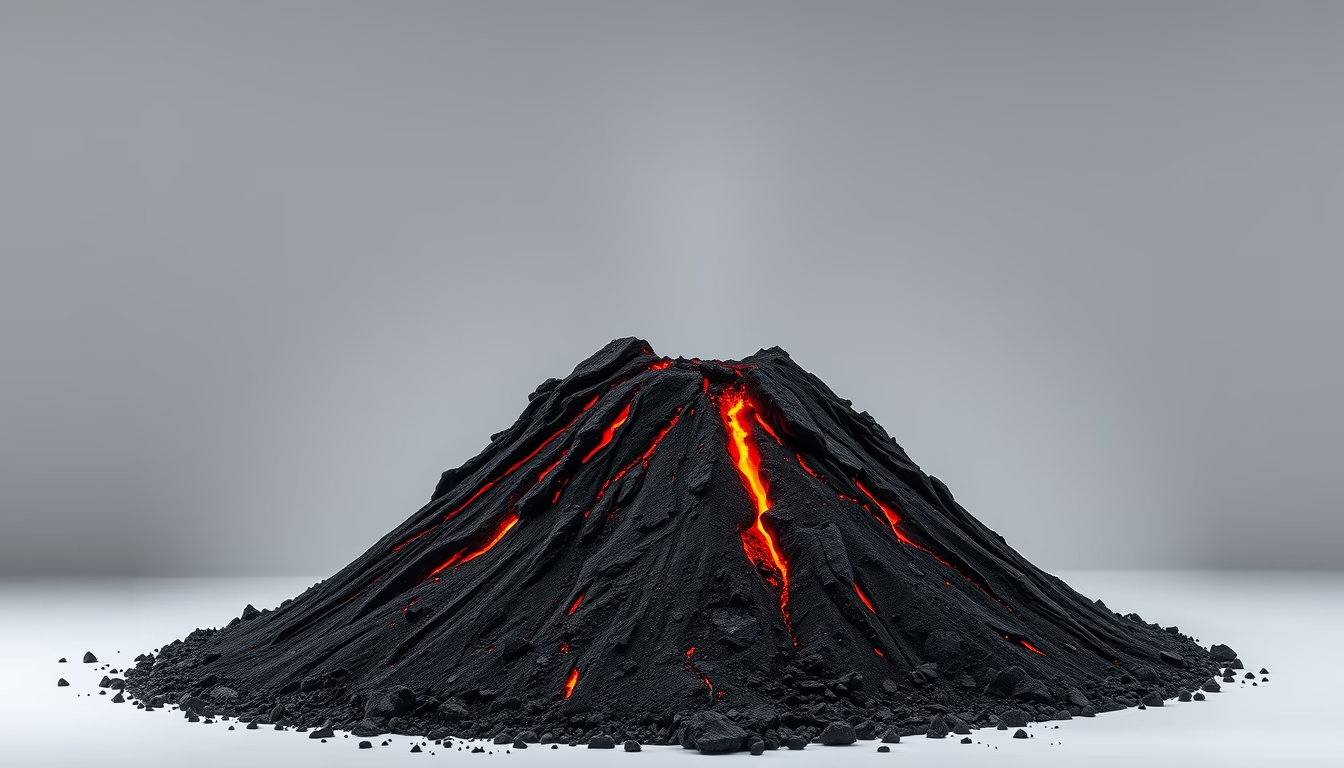
Eyjafjallajökull, a subglacial volcano in Iceland, became world-famous for its 2010 eruption that paralyzed European air traffic.
About this subject
Eyjafjallajökull is a subglacial volcano located in southern Iceland, beneath the glacier of the same name. With an elevation of 1,666 meters and a caldera approximately 2.5 km in diameter, it belongs to the North Atlantic volcanic belt. Its most recent eruption, which began on March 20, 2010, was preceded by months of seismic activity and caused partial melting of the glacier, resulting in glacial floods (jökulhlaups) that damaged bridges and roads. The ash cloud, composed of fine silica particles, reached the stratosphere and spread across much of northern Europe. The eruption is estimated to have released about 250 million cubic meters of pyroclastic material, disrupting over 100,000 flights and affecting 10 million passengers over six weeks. The event caused economic losses exceeding 1.3 billion euros and led to a global reassessment of aviation safety protocols in areas of volcanic activity. The name Eyjafjallajökull derives from Icelandic: 'eyja' (island), 'fjalla' (mountain), and 'jökull' (glacier), meaning 'glacier of the island mountains'. Although not one of Iceland's most active volcanoes, its location under a glacier and the silica-rich magma composition make its eruptions particularly explosive and prone to generating large amounts of ash. Since 2010, the volcano has become a symbol of how localized natural phenomena can unpredictably disrupt global infrastructure.
Frequently Asked Questions
Where is the Eyjafjallajökull volcano located?
Eyjafjallajökull is located in southern Iceland, under a glacier of the same name, about 125 km east of Reykjavík.
Why did the 2010 eruption cause such air travel chaos?
The eruption produced very fine silica-rich ash that poses a risk to aircraft engines. The ash cloud spread over Europe, leading to airspace closures for safety reasons.
What does the name Eyjafjallajökull mean?
The name combines the Icelandic words for 'island' (eyja), 'mountain' (fjalla), and 'glacier' (jökull), meaning 'glacier of the island mountains'.
Direct URL
https://pub-c7d6a6ea828543ac903a74a341ccb2e1.r2.dev/imagens/eyjafjallajokull-volcano-studio-still-life-p10.avifHow to credit
Include a visible link back to UtilizAí. Copy one of the snippets below:
<a href="https://xn--utiliza-eza.com/en/midia/imagens/eyjafjallajokull-volcano-studio-still-life-p10">Eyjafjallajökull volcano</a> by <a href="https://xn--utiliza-eza.com">UtilizAí</a>, licensed under <a href="https://creativecommons.org/licenses/by/4.0/">CC BY 4.0</a>.
[Eyjafjallajökull volcano](https://xn--utiliza-eza.com/en/midia/imagens/eyjafjallajokull-volcano-studio-still-life-p10) by [UtilizAí](https://xn--utiliza-eza.com), CC BY 4.0
License: CC-BY-4.0