Exoplanet earth-like
1344×768 · AVIF · CC BY 4.0
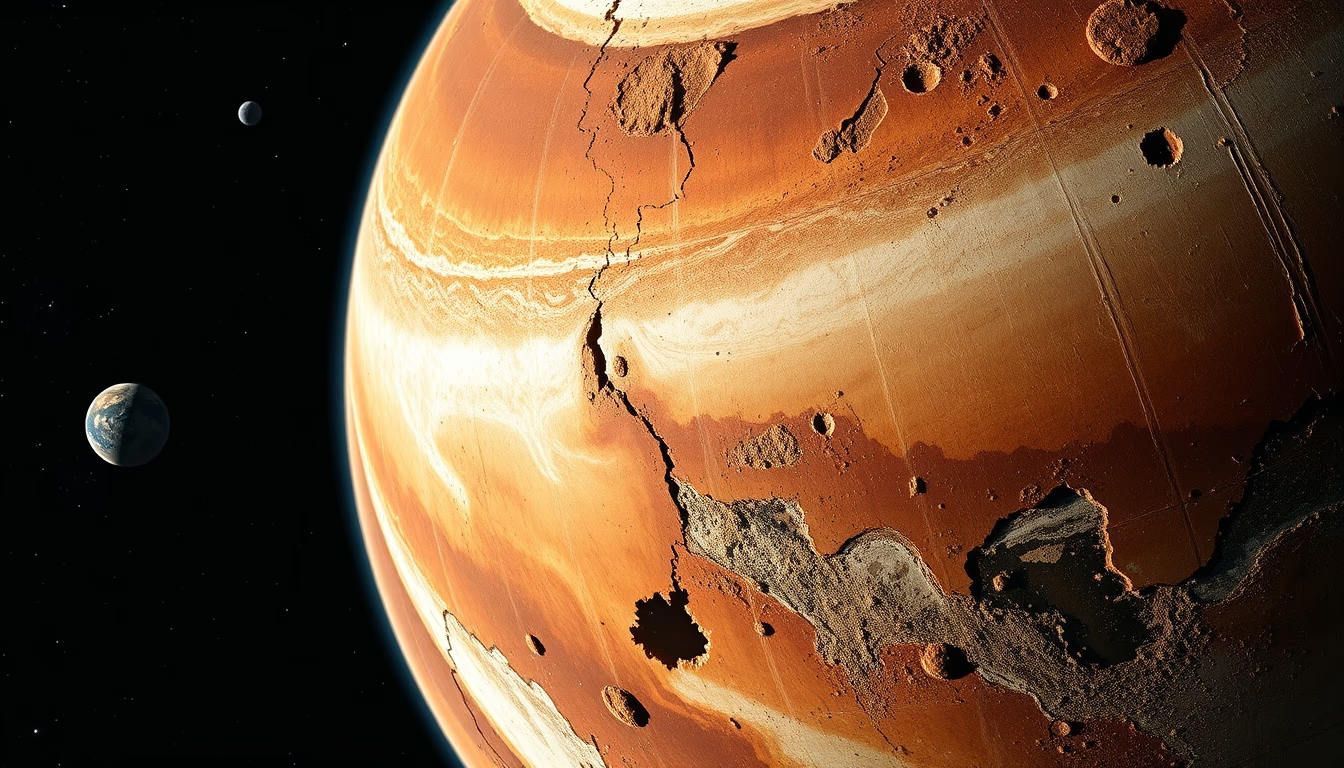
Descobertas de exoplanetas semelhantes à Terra ampliam nosso entendimento sobre a possibilidade de vida além do sistema solar.
Sobre o tema
Exoplanetas são planetas que orbitam estrelas diferentes do Sol. Desde a primeira confirmação em 1995, mais de 5.000 exoplanetas foram catalogados, usando métodos como o trânsito (detecção de diminuições periódicas no brilho estelar) e a velocidade radial (medida de oscilações na estrela causadas pela gravidade planetária). Entre esses mundos, os mais intrigantes são os de tamanho rochoso, similares à Terra, localizados na chamada zona habitável, região onde a temperatura permite a existência de água líquida na superfície.
Exemplos notáveis incluem Proxima Centauri b, a apenas 4,2 anos-luz de distância, e os sete planetas do sistema TRAPPIST-1, três dos quais estão na zona habitável. Kepler-452b, descoberto em 2015, é frequentemente chamado de “primo da Terra” por seu tamanho e órbita semelhantes. Esses planetas são alvos prioritários na busca por sinais de vida, como a presença de oxigênio, metano e vapor d'água em suas atmosferas, que podem ser detectados por telescópios como o James Webb.
A astrobiologia se beneficia diretamente dessas descobertas. Cada novo exoplaneta terrestre fornece pistas sobre a frequência de mundos habitáveis na galáxia e sobre os processos de formação planetária. A zona habitável varia conforme o tipo estelar: estrelas anãs vermelhas, como Proxima, têm zonas mais próximas, enquanto estrelas como o Sol as têm mais afastadas. O estudo desses sistemas ajuda a refinar modelos climáticos e atmosféricos, essenciais para interpretar futuras observações.
Curiosidade: o primeiro exoplaneta descoberto orbitando uma estrela similar ao Sol, 51 Pegasi b, era um gigante gasoso quente, bem diferente da Terra. Apenas com o avanço tecnológico foi possível detectar planetas rochosos menores. Hoje, missões como TESS e PLATO continuam a escanear o céu, aumentando nosso catálogo de candidatos a “exo-Terras” e aproximando-nos de responder se estamos sozinhos no universo.
Perguntas frequentes
O que é um exoplaneta semelhante à Terra?
É um planeta rochoso com tamanho e temperatura similares aos da Terra, orbitando na zona habitável de sua estrela, onde água líquida pode existir na superfície.
Quantos exoplanetas terrestres já foram descobertos?
Mais de 5.000 exoplanetas foram confirmados, dos quais algumas dezenas são rochosos e estão na zona habitável de suas estrelas.
Como detectamos exoplanetas?
Principalmente pelos métodos de trânsito (queda periódica no brilho da estrela) e velocidade radial (oscilação da estrela causada pela gravidade do planeta).
URL direta
https://pub-c7d6a6ea828543ac903a74a341ccb2e1.r2.dev/imagens/exoplanet-earth-like-national-geographic-style-p10.avifComo creditar
Inclua um link visível de volta pro UtilizAí. Copie um dos snippets abaixo:
<a href="https://xn--utiliza-eza.com/midia/imagens/exoplanet-earth-like-national-geographic-style-p10">Exoplanet earth-like</a> by <a href="https://xn--utiliza-eza.com">UtilizAí</a>, licensed under <a href="https://creativecommons.org/licenses/by/4.0/">CC BY 4.0</a>.
[Exoplanet earth-like](https://xn--utiliza-eza.com/midia/imagens/exoplanet-earth-like-national-geographic-style-p10) by [UtilizAí](https://xn--utiliza-eza.com), CC BY 4.0
Licença: CC-BY-4.0