Diving regulator detail
1344×768 · AVIF · CC BY 4.0
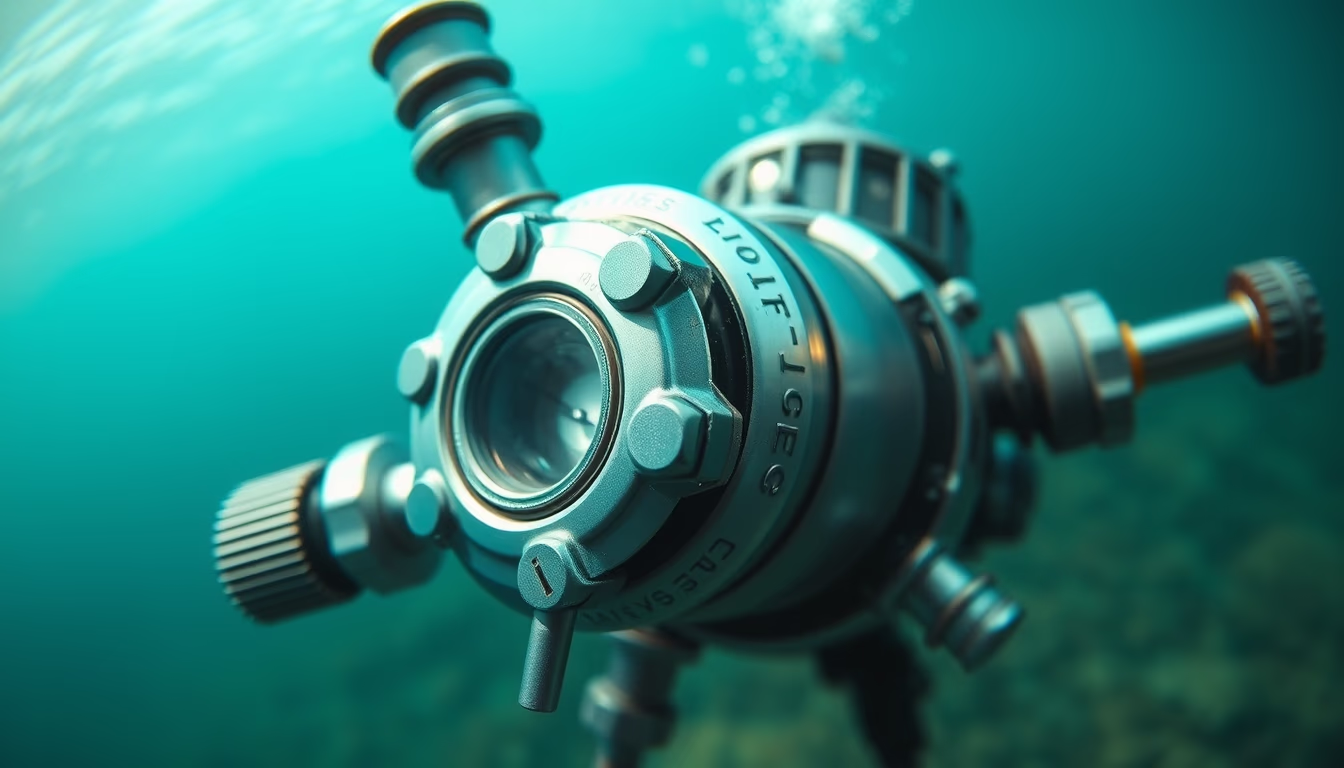
Technical details of a diving regulator, the essential device that reduces cylinder air pressure to ambient pressure for underwater breathing.
About this subject
The diving regulator is the device that allows a diver to breathe compressed air from the tank. It reduces the pressure from around 200 bar to ambient pressure, ensuring natural breathing at any depth. Invented in 1943 by Émile Gagnan and Jacques-Yves Cousteau, the modern regulator evolved from single-stage models to today's balanced two-stage systems.
The first stage attaches to the tank and reduces pressure to an intermediate value (ambient pressure + ~10 bar). The second stage, at the diver's mouth, completes the reduction to ambient pressure, releasing air on demand. Variations include piston and diaphragm regulators, each with advantages in reliability and cold-water performance.
Regular maintenance is crucial: seals and gaskets can dry out or crack, affecting performance. Well-maintained regulators can last decades. During World War II, early models were used by military divers for mine clearance. Today, they are certified under standards such as EN 250 and ANSI/ISO.
A lesser-known detail: the design of the second stage directly influences breathing effort. High-performance regulators use pneumatic balanced systems to smooth inhalation, essential for deep or current-heavy dives.
Frequently Asked Questions
How many stages does a diving regulator have?
Most modern regulators have two stages: the first stage reduces the high tank pressure to an intermediate pressure, and the second stage reduces it to ambient pressure at the diver's mouth.
What is the difference between a piston and diaphragm regulator?
Piston regulators have fewer moving parts and are more robust, but they may freeze more easily in cold water. Diaphragm regulators are sealed from the external environment, offering better performance in low temperatures and dirty water.
How often should I service my regulator?
The general recommendation is to service the regulator annually or every 100 dives, whichever comes first. Manufacturers like Scubapro and Aqualung provide specific intervals in their manuals.
Direct URL
https://pub-c7d6a6ea828543ac903a74a341ccb2e1.r2.dev/imagens/diving-regulator-detail-fish-eye-wide-angle-fresh18.avifHow to credit
Include a visible link back to UtilizAí. Copy one of the snippets below:
<a href="https://xn--utiliza-eza.com/en/midia/imagens/diving-regulator-detail-fish-eye-wide-angle-fresh18">Diving regulator detail</a> by <a href="https://xn--utiliza-eza.com">UtilizAí</a>, licensed under <a href="https://creativecommons.org/licenses/by/4.0/">CC BY 4.0</a>.
[Diving regulator detail](https://xn--utiliza-eza.com/en/midia/imagens/diving-regulator-detail-fish-eye-wide-angle-fresh18) by [UtilizAí](https://xn--utiliza-eza.com), CC BY 4.0
License: CC-BY-4.0