Corn cob fresh harvest in farmer hands
1344×768 · AVIF · CC BY 4.0
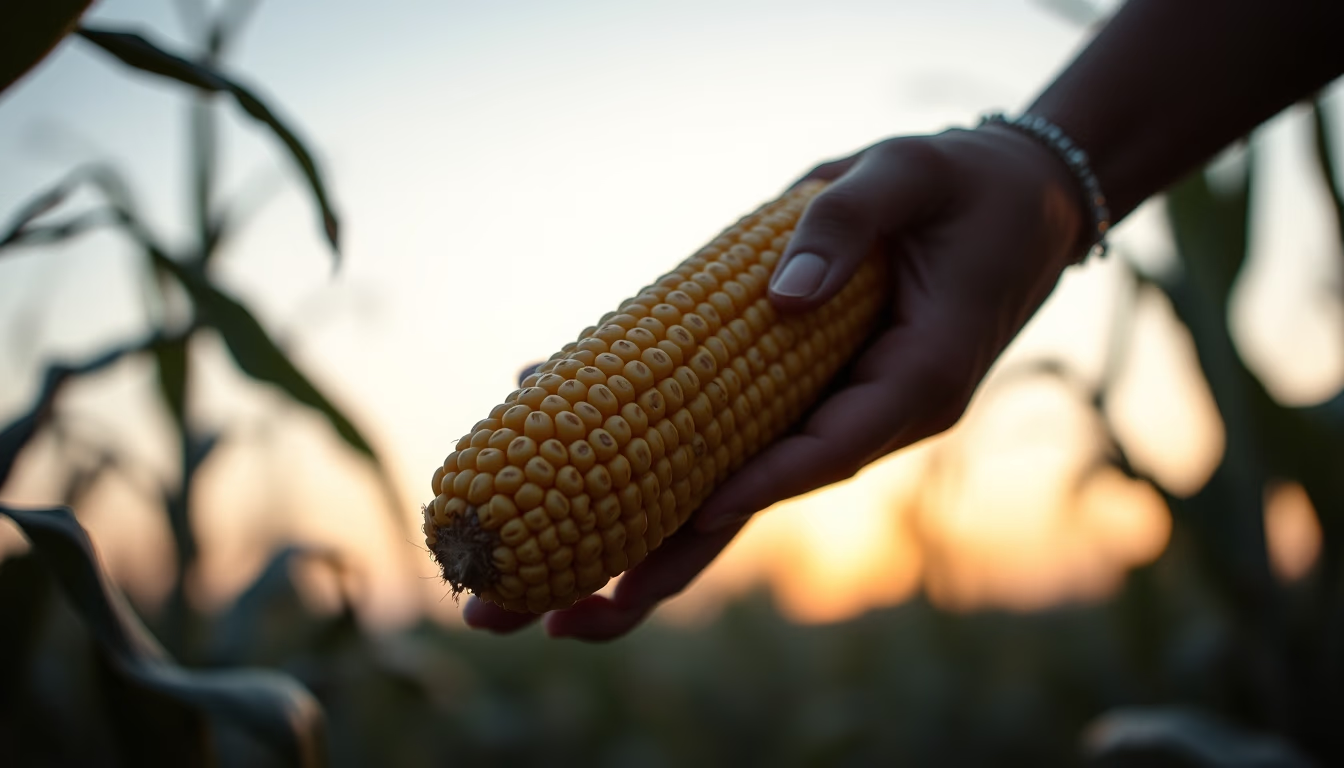
Farmer's hands hold a freshly harvested corn cob at twilight, symbol of the Brazilian crop that feeds the world.
About this subject
Corn (Zea mays) is one of Brazil's most important crops, with an estimated production of 100 million tons in the 2022/2023 harvest, according to Conab. The country is the third largest global producer, behind only the United States and China. Manual harvesting, depicted in the image, is still common in small family farms, especially in the South and Central-West regions, where family farming accounts for a significant portion of domestic supply.
The corn cob is rich in starch, fiber, and B vitamins, serving as a staple for both animal and human consumption. In Brazil, corn is eaten fresh, boiled or roasted, and also processed into flours, oils, and syrups. Harvesting at twilight is strategic: the milder sun reduces grain dehydration and thermal stress for rural workers.
Brazilian agribusiness accounts for about 25% of the national GDP, and corn is one of its pillars. The crop is grown in two annual cycles: the summer harvest and the second crop (safrinha), planted after soybeans. The image captures the exact moment of manual harvesting, a practice that coexists with large-scale mechanization but preserves traditional techniques and generates rural employment.
Interestingly, corn was domesticated about 9,000 years ago in Mexico and arrived in Brazil before European colonization, being cultivated by indigenous peoples such as the Tupi-Guarani. Today, Brazil exports corn to over 50 countries, with highlights including Iran, Japan, and Egypt.
Frequently Asked Questions
How important is corn to the Brazilian economy?
Corn is vital to agribusiness, accounting for about 25% of the national GDP. Brazil is the third largest global producer, with harvests supplying both the domestic market and exports to dozens of countries.
Why is manual corn harvesting still practiced?
In small family farms, manual harvesting is more affordable and creates jobs. It also allows for selecting ripe ears, reducing losses and maintaining grain quality.
Is corn native to Brazil?
No. Corn was domesticated in Mexico about 9,000 years ago and arrived in Brazil with indigenous peoples before European colonization. Today it is grown throughout the country, especially in the Central-West and South regions.
Direct URL
https://pub-c7d6a6ea828543ac903a74a341ccb2e1.r2.dev/imagens/corn-cob-fresh-harvest-in-farmer-hands-closeup-twilight-2.avifHow to credit
Include a visible link back to UtilizAí. Copy one of the snippets below:
<a href="https://xn--utiliza-eza.com/en/midia/imagens/corn-cob-fresh-harvest-in-farmer-hands-closeup-twilight-2">Corn cob fresh harvest in farmer hands</a> by <a href="https://xn--utiliza-eza.com">UtilizAí</a>, licensed under <a href="https://creativecommons.org/licenses/by/4.0/">CC BY 4.0</a>.
[Corn cob fresh harvest in farmer hands](https://xn--utiliza-eza.com/en/midia/imagens/corn-cob-fresh-harvest-in-farmer-hands-closeup-twilight-2) by [UtilizAí](https://xn--utiliza-eza.com), CC BY 4.0
License: CC-BY-4.0