Colosseum rome interior
1344×768 · AVIF · CC BY 4.0
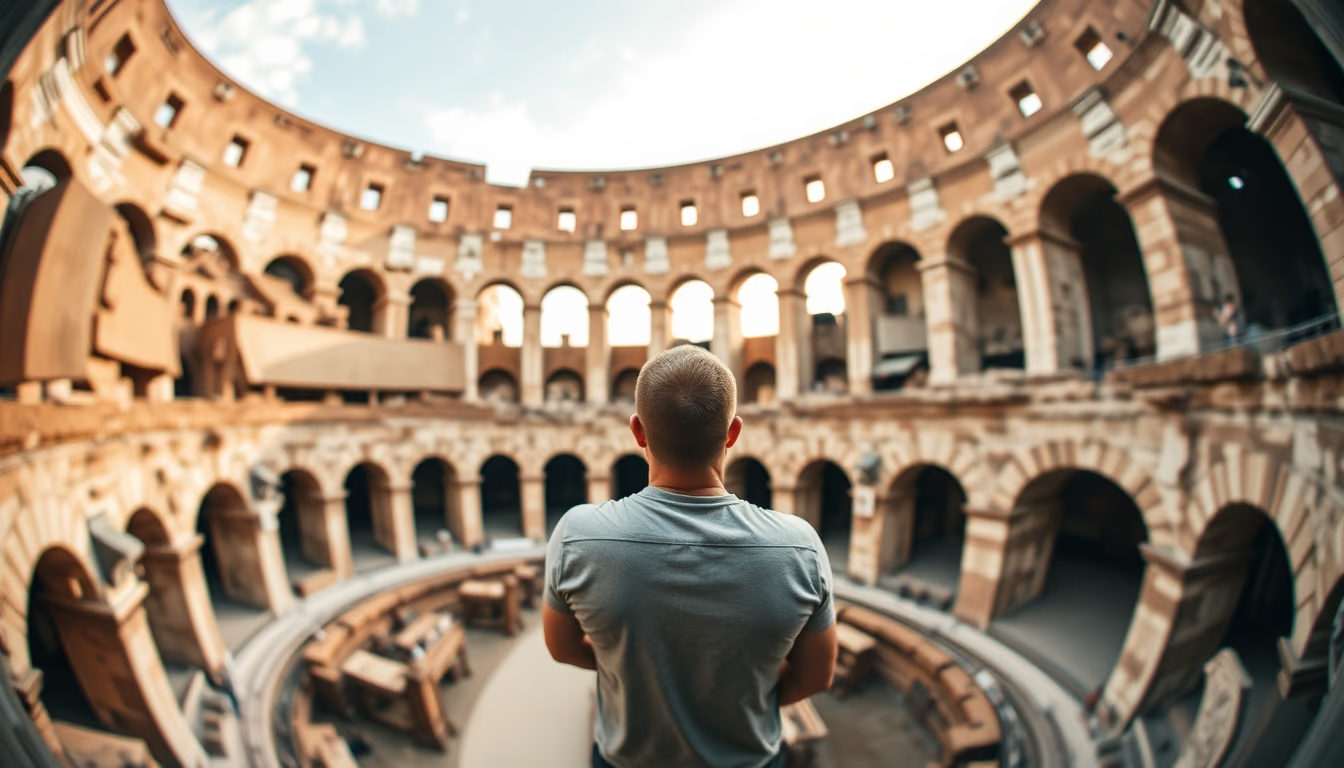
The Colosseum's interior showcases Roman engineering ingenuity, with complex corridors and tiers that once hosted spectacles for up to 50,000 spectators.
About this subject
The Colosseum, or Flavian Amphitheatre, was built between 70 and 80 AD under emperors Vespasian and Titus in the heart of Rome. Its elliptical structure measures 188 meters in length and 156 meters in width, with a height of 48 meters. The interior was organized into four seating tiers, divided by social class: the first row for senators, the middle for Roman citizens, and the top for women and slaves. The arena floor, now exposed, concealed a subterranean hypogeum with tunnels and cells for gladiators and animals, as well as elevator and trapdoor mechanisms that created dramatic effects during games.
Capacity reached 50,000 spectators, with strategic exits (vomitoria) allowing the amphitheatre to empty in minutes, a feat that inspired modern stadiums. For centuries, the Colosseum hosted gladiatorial combats, animal hunts (venationes), and public executions. After the fall of the Roman Empire, it suffered earthquakes and stone quarrying for other buildings, yet remains a symbol of ancient Rome.
Fascinatingly, the name "Colosseum" derives from the colossal statue of Nero that stood nearby. The structure has lost two-thirds of its original material, but still impresses with its grandeur and influence on Western architecture. Today, it is a UNESCO World Heritage Site and attracts millions of visitors annually, standing as one of the world's most iconic landmarks.
Frequently Asked Questions
How many gladiators died in the Colosseum?
No precise records exist, but it is estimated that thousands of gladiators and hundreds of thousands of animals perished during roughly 400 years of games.
What caused the Colosseum's deterioration?
Earthquakes in the 5th and 13th centuries damaged the structure, and during the Middle Ages its stones were quarried to build churches and palaces in Rome.
Was the Colosseum used for purposes other than games?
Yes, after the Roman period it served as a fortress, housing, a lime factory, and even a Christian shrine. Today it is a museum and venue for cultural events.
Direct URL
https://pub-c7d6a6ea828543ac903a74a341ccb2e1.r2.dev/imagens/colosseum-rome-interior-fish-eye-wide-angle-p8.avifHow to credit
Include a visible link back to UtilizAí. Copy one of the snippets below:
<a href="https://xn--utiliza-eza.com/en/midia/imagens/colosseum-rome-interior-fish-eye-wide-angle-p8">Colosseum rome interior</a> by <a href="https://xn--utiliza-eza.com">UtilizAí</a>, licensed under <a href="https://creativecommons.org/licenses/by/4.0/">CC BY 4.0</a>.
[Colosseum rome interior](https://xn--utiliza-eza.com/en/midia/imagens/colosseum-rome-interior-fish-eye-wide-angle-p8) by [UtilizAí](https://xn--utiliza-eza.com), CC BY 4.0
License: CC-BY-4.0