Cherry blossoms in wind
1344×768 · AVIF · CC BY 4.0
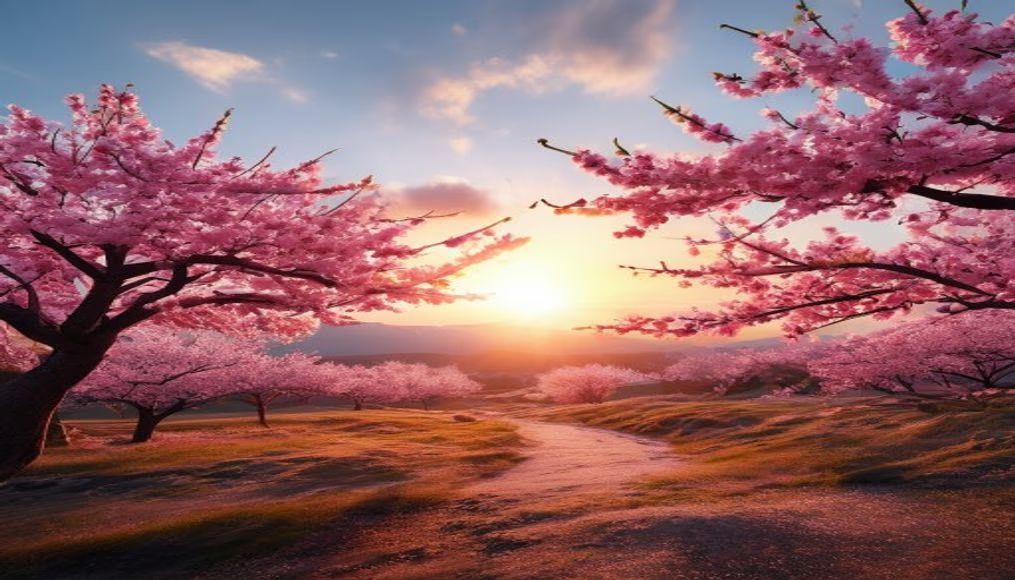
As cerejeiras em flor balançam ao vento, criando um espetáculo efêmero que atrai milhões de visitantes ao Japão e a outros países durante a primavera.
Sobre o tema
As cerejeiras em flor, conhecidas como sakura no Japão, são um símbolo cultural profundamente enraizado na tradição japonesa. A floração ocorre entre março e abril, dependendo da região e da variedade da árvore. O fenômeno é celebrado com o hanami, a prática de contemplar as flores, que inclui piqueniques sob as árvores floridas. O vento desempenha um papel importante nesse período: quando sopra, as pétalas caem como flocos de neve, em um fenômeno chamado sakura fubuki (tempestade de pétalas de cerejeira). Esse momento é considerado especialmente belo pelos japoneses, pois representa a transitoriedade da vida, um conceito central no budismo e na estética wabi-sabi.
As cerejeiras não são nativas apenas do Japão. Elas também florescem em países como Coreia do Sul, China, Estados Unidos (especialmente em Washington D.C., que recebeu mudas do Japão em 1912) e até no Brasil, onde municípios como Campos do Jordão (SP) e Monte Sião (MG) realizam festivais de sakura. Existem mais de 300 variedades de cerejeiras, mas a mais comum no Japão é a Somei Yoshino, que produz flores de cinco pétalas em tom rosa-claro quase branco. A duração da floração é curta, geralmente de uma a duas semanas, o que torna cada espetáculo único e urgente para quem deseja testemunhá-lo.
O vento afeta diretamente a experiência do hanami. Dias com brisa suave criam um cenário de pétalas dançando no ar, enquanto ventos fortes podem derrubar as flores precocemente, encurtando o período de observação. Por isso, os japoneses acompanham atentamente as previsões de floração e as condições climáticas, planejando suas viagens para aproveitar o pico da beleza. A imagem das cerejeiras ao vento é retratada em inúmeras obras de arte, haicais e fotografias, consolidando-se como um dos ícones mais reconhecíveis da cultura japonesa e do turismo internacional de primavera.
Perguntas frequentes
Qual é a melhor época para ver as cerejeiras em flor no Japão?
A temporada de floração geralmente ocorre de meados de março a meados de abril, começando pelo sul (Okinawa) e avançando para o norte (Hokkaido). A previsão exata varia a cada ano, por isso é recomendável acompanhar os boletins oficiais do Japan Meteorological Corporation.
Por que as pétalas de cerejeira caem com o vento?
As cerejeiras têm pétalas finas e leves, projetadas para se soltarem facilmente. Isso faz parte da estratégia de dispersão das sementes, mas também contribui para o espetáculo visual, já que o vento espalha as pétalas em um efeito conhecido como sakura fubuki.
Onde posso ver cerejeiras em flor no Brasil?
No Brasil, os melhores locais são Campos do Jordão (SP), Monte Sião (MG) e a cidade de Garça (SP), que possuem festivais de sakura. As flores geralmente aparecem entre julho e agosto, devido ao clima subtropical.
URL direta
https://pub-c7d6a6ea828543ac903a74a341ccb2e1.r2.dev/imagens/cherry-blossoms-in-wind-travel-photography-v10.avifComo creditar
Inclua um link visível de volta pro UtilizAí. Copie um dos snippets abaixo:
<a href="https://xn--utiliza-eza.com/midia/imagens/cherry-blossoms-in-wind-travel-photography-v10">Cherry blossoms in wind</a> by <a href="https://xn--utiliza-eza.com">UtilizAí</a>, licensed under <a href="https://creativecommons.org/licenses/by/4.0/">CC BY 4.0</a>.
[Cherry blossoms in wind](https://xn--utiliza-eza.com/midia/imagens/cherry-blossoms-in-wind-travel-photography-v10) by [UtilizAí](https://xn--utiliza-eza.com), CC BY 4.0
Licença: CC-BY-4.0