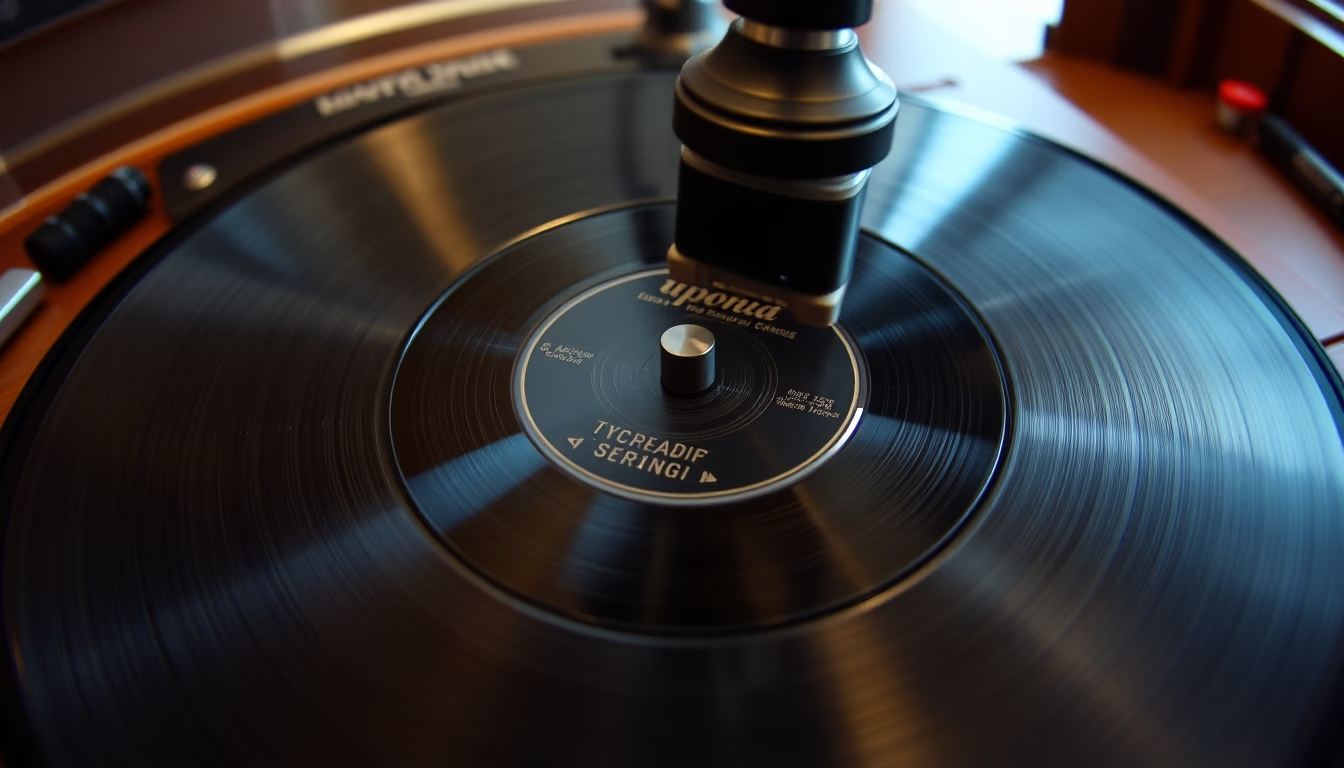
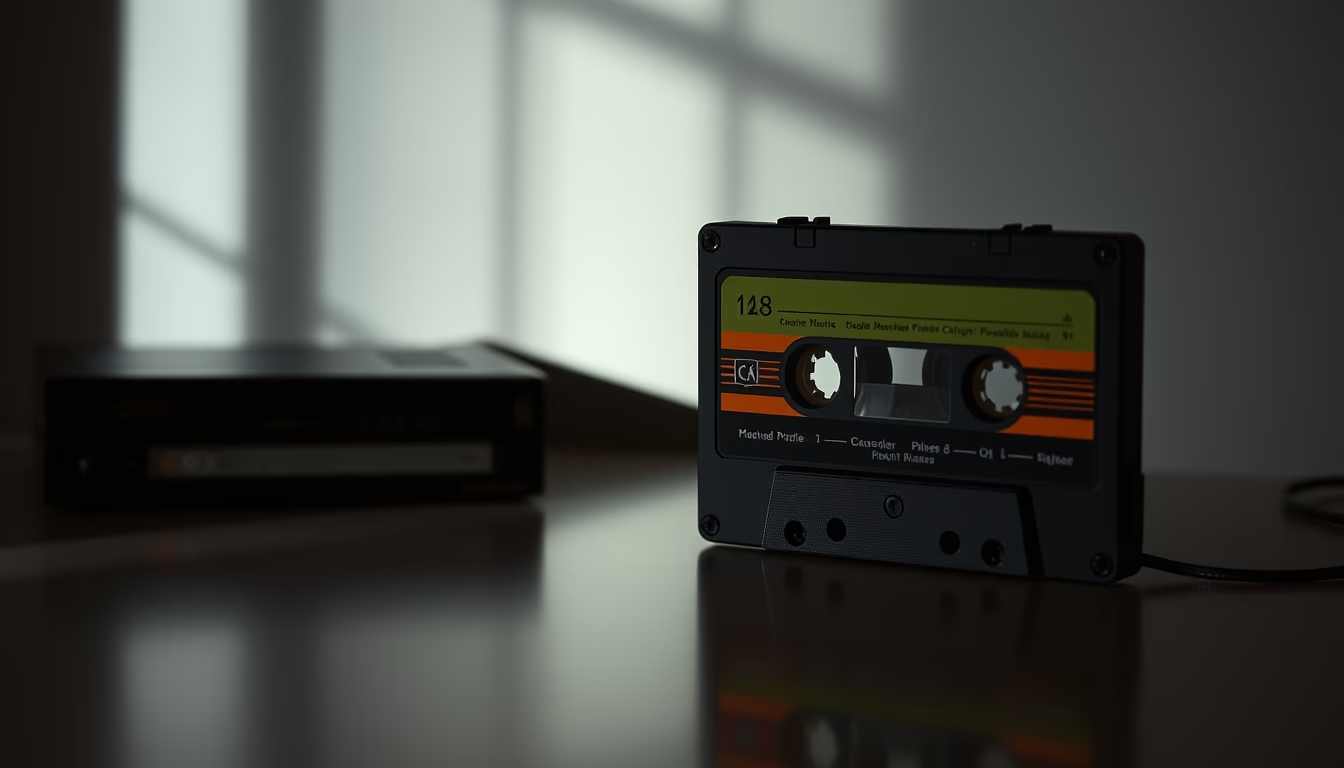
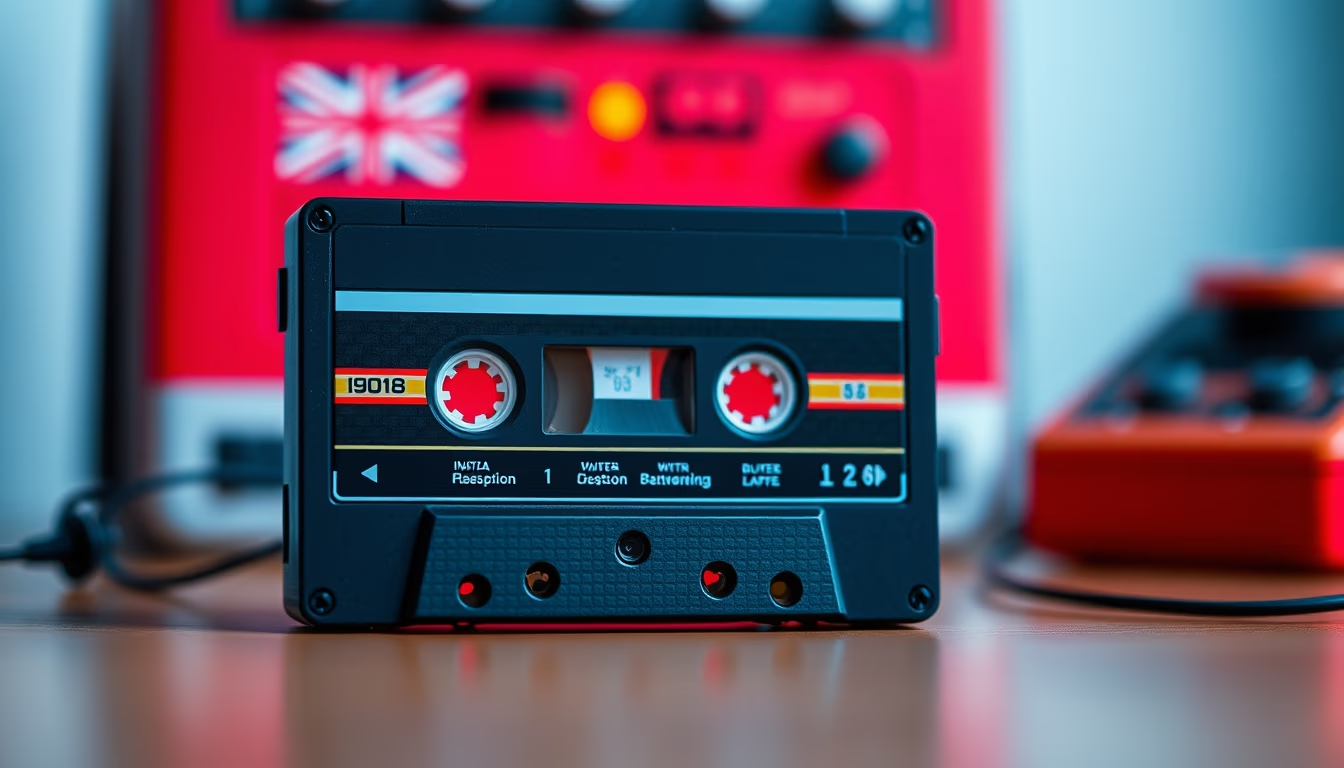
Cassette walkman 1980s
1344×768 · AVIF · CC BY 4.0
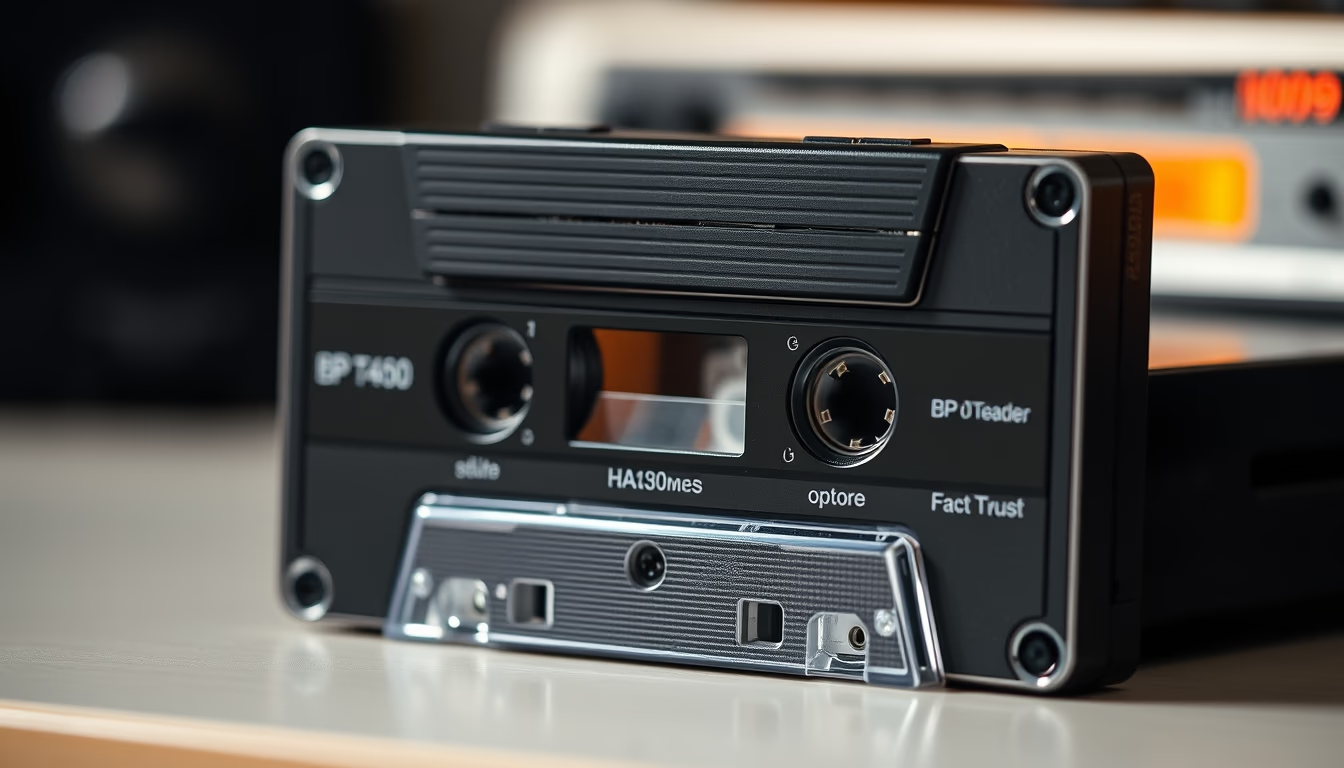
The Sony Walkman revolutionized portable music in the 1980s, making cassette tapes the favorite format for millions worldwide.
About this subject
The Walkman was launched by Sony in 1979 in Japan, under the model name TPS-L2. Created by engineers Nobutoshi Kihara and Masaru Ibuka, the device arose from the desire to listen to music on the go without disturbing others. The name was coined by Akio Morita, combining the words "walk" and "man." Success was immediate: within two years, Sony sold over 1.5 million units.
Throughout the 1980s, the Walkman became a cultural symbol. People of all ages used it in gyms, public transport, and while walking. By 1989, Sony had sold an estimated 50 million units worldwide. Competitors such as Aiwa, Panasonic, and Toshiba also released their own models, further popularizing the cassette format. The cassette tape, invented by Philips in 1963, experienced its commercial peak thanks to the Walkman.
Technologically, Walkmans evolved with features like auto-reverse, Dolby noise reduction, equalizers, and search controls. Cassette tapes offered between 60 and 90 minutes of playback per side, allowing the creation of personalized mix tapes, a practice that became a cultural phenomenon among youth. The compact size of the Walkman allowed it to fit in pockets or backpacks, contrasting with earlier portable tape recorders.
With the arrival of portable CD players in 1984 and later MP3 players in the late 1990s, the Walkman began to lose market share. Sony produced the last cassette model in 2010. Despite this, the Walkman remains an icon of 20th-century design and technology. Technology museums and pop culture exhibitions often display vintage models, and the term "Walkman" continues to be used generically for any portable music player.
Frequently Asked Questions
When was the first Walkman released?
The first Sony Walkman was launched on July 1, 1979, in Japan, as the model TPS-L2. It reached international markets in 1980.
How long did a Walkman's battery last in the 1980s?
Most models used two AA batteries, providing about 8 to 12 hours of continuous playback, depending on features like auto-reverse.
Why was the Walkman so revolutionary?
Before the Walkman, portable music was limited to larger transistor radios and tape players. The Walkman offered lightweight headphones and a compact design, allowing people to take their music anywhere without disturbing others.
Direct URL
https://pub-c7d6a6ea828543ac903a74a341ccb2e1.r2.dev/imagens/cassette-walkman-1980s-macro-closeup-fresh3.avifHow to credit
Include a visible link back to UtilizAí. Copy one of the snippets below:
<a href="https://xn--utiliza-eza.com/en/midia/imagens/cassette-walkman-1980s-macro-closeup-fresh3">Cassette walkman 1980s</a> by <a href="https://xn--utiliza-eza.com">UtilizAí</a>, licensed under <a href="https://creativecommons.org/licenses/by/4.0/">CC BY 4.0</a>.
[Cassette walkman 1980s](https://xn--utiliza-eza.com/en/midia/imagens/cassette-walkman-1980s-macro-closeup-fresh3) by [UtilizAí](https://xn--utiliza-eza.com), CC BY 4.0
License: CC-BY-4.0