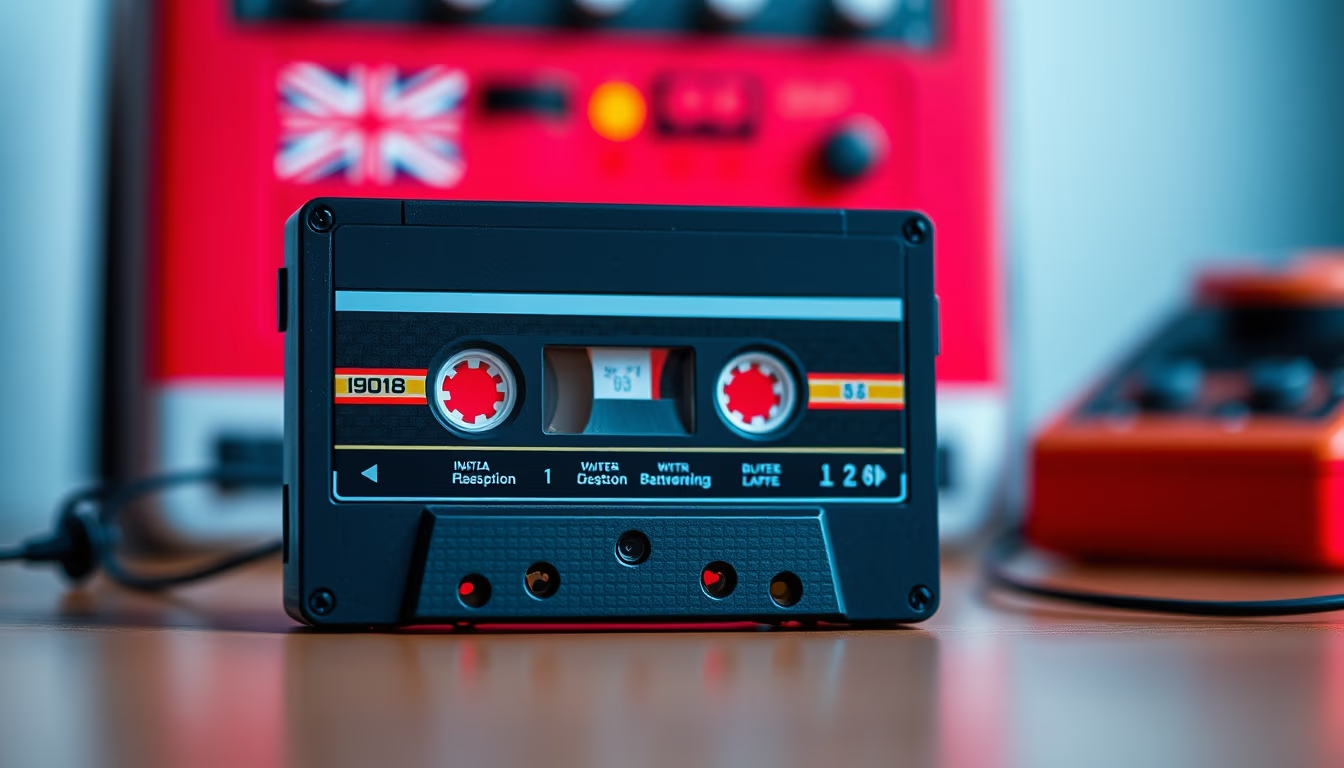
Cassette walkman 1980s
1344×768 · AVIF · CC BY 4.0
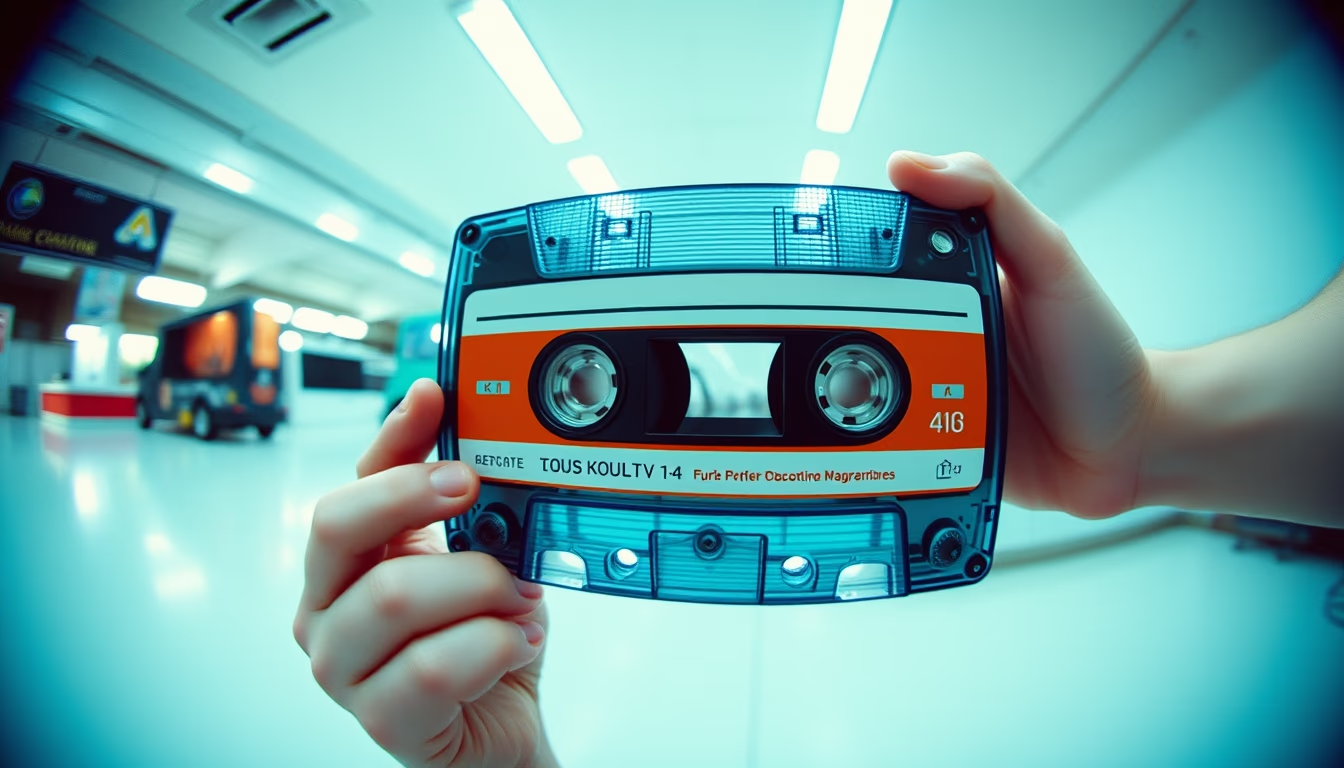
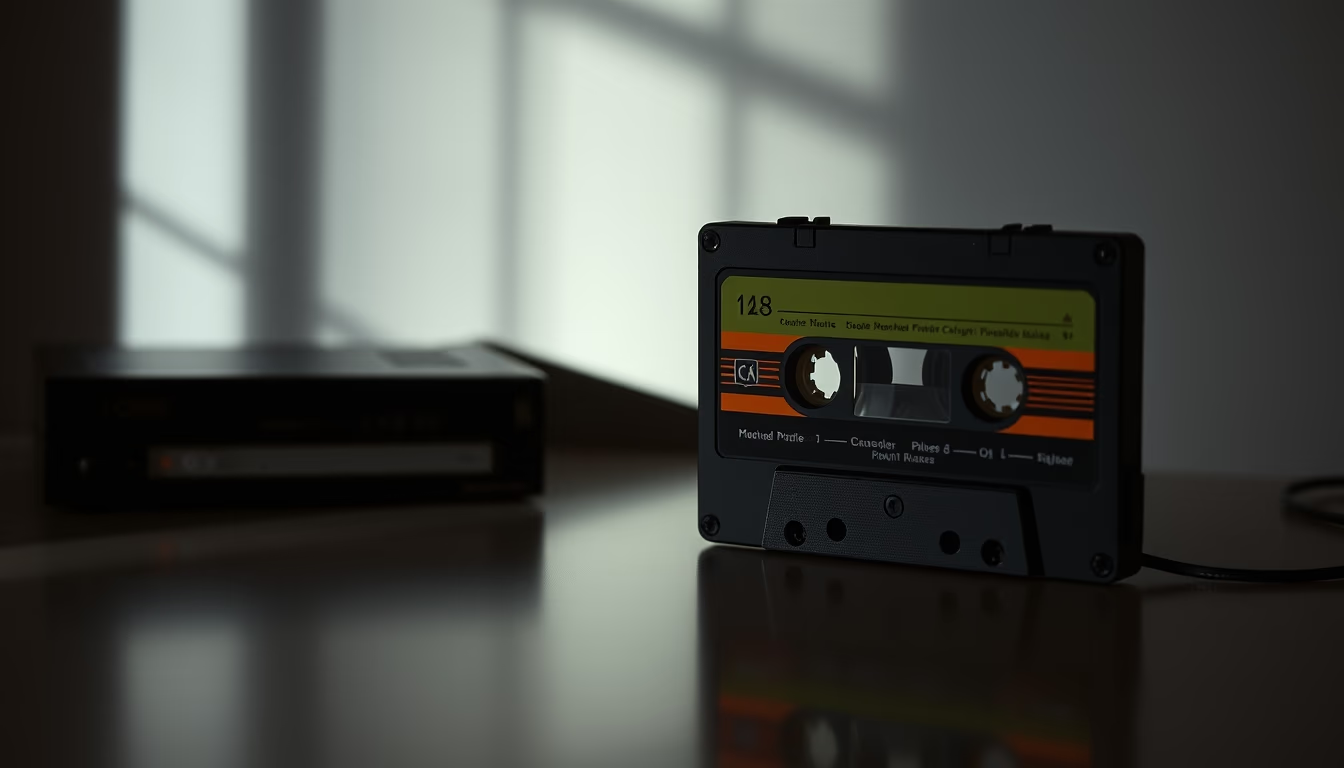
The cassette Walkman revolutionized music consumption in the 1980s, making audio personal and portable.
About this subject
Launched by Sony in 1979, the TPS-L2 Walkman was the world's first portable cassette player. Before it, listening to music outside required bulky radio-cassette players. The Walkman paired a compact cassette mechanism with lightweight headphones, allowing people to take their personal soundtrack anywhere. The name 'Walkman' was an accident: Sony planned to call it 'Soundabout' in the US and 'Stowaway' in the UK, but the Japanese name stuck.
Its cultural impact was immediate. The Walkman changed how people interacted with music and urban space. For the first time, one could walk, jog, or commute while immersed in a private audio bubble. This sparked debates about social isolation but also pioneered mobile music listening. Cassettes allowed home recordings and mixtapes, which became tokens of affection and creativity.
Technically, the Walkman used noise reduction like Dolby NR and miniaturized motors for stable playback. Early models required two AA batteries and had a rectangular design with mechanical buttons for play, pause, stop, rewind, and fast-forward. Later versions included built-in FM radio, auto-reverse, and remote controls. Audio quality, though inferior to vinyl, was acceptable for headphones and outdoor environments.
The Walkman sold over 200 million units by its final production year in 2010. It paved the way for the iPod and music streaming. While now obsolete, the Walkman remains a milestone in portable audio and the personalization of music listening.
Frequently Asked Questions
What was the first Walkman model released by Sony?
It was the TPS-L2, launched on July 1, 1979 in Japan. It featured two headphone jacks so two people could listen together.
Why did the name 'Walkman' stick even though it was a marketing mistake?
Sony used the provisional name 'Walkman' in Japan and, realizing it had already been trademarked, decided to keep it due to public recognition. In the US and UK, it was initially called 'Soundabout' and 'Stowaway', but the original term ultimately dominated.
What were mixtapes and why were they culturally significant?
Mixtapes were cassette tapes recorded with personally selected songs, often given as gifts. They represented a form of self-expression, affection, and musical curation, popularizing playlist sharing long before the digital age.
Direct URL
https://pub-c7d6a6ea828543ac903a74a341ccb2e1.r2.dev/imagens/cassette-walkman-1980s-fish-eye-wide-angle-fresh16.avifHow to credit
Include a visible link back to UtilizAí. Copy one of the snippets below:
<a href="https://xn--utiliza-eza.com/en/midia/imagens/cassette-walkman-1980s-fish-eye-wide-angle-fresh16">Cassette walkman 1980s</a> by <a href="https://xn--utiliza-eza.com">UtilizAí</a>, licensed under <a href="https://creativecommons.org/licenses/by/4.0/">CC BY 4.0</a>.
[Cassette walkman 1980s](https://xn--utiliza-eza.com/en/midia/imagens/cassette-walkman-1980s-fish-eye-wide-angle-fresh16) by [UtilizAí](https://xn--utiliza-eza.com), CC BY 4.0
License: CC-BY-4.0