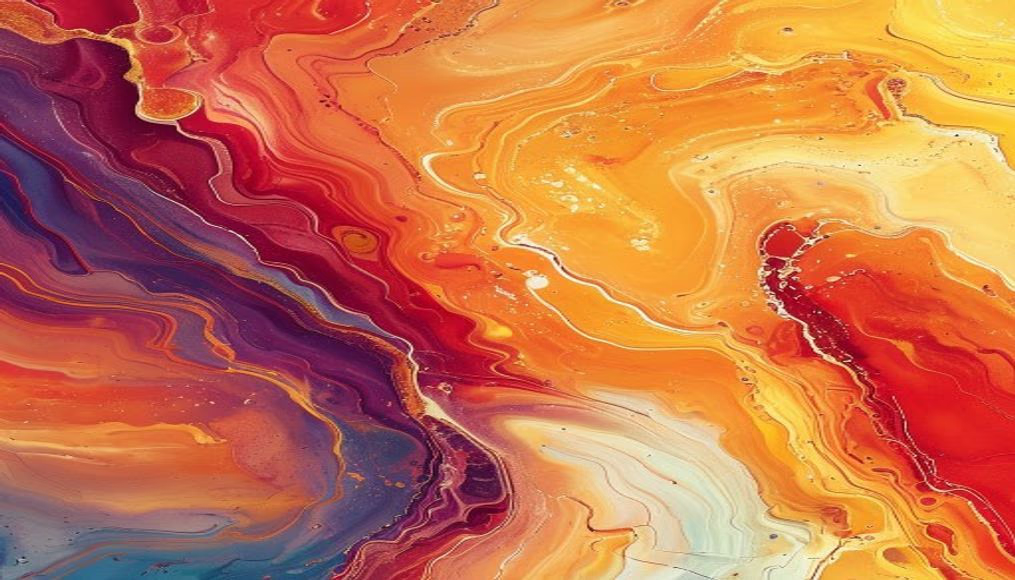
Bronze patina aged
1344×768 · AVIF · CC BY 4.0

The aged patina of bronze reveals layers of history and oxidation, transforming the metallic surface into a palette of greens, blues, and browns.
About this subject
Patina on bronze is the result of a natural oxidation process that occurs when copper, the main component of bronze, reacts with environmental elements such as oxygen, carbon dioxide, and chlorides. This chemical reaction forms a surface layer composed of copper carbonate, sulfates, and other compounds, creating colors that range from dark green to turquoise blue, passing through brownish tones. This layer not only provides aesthetic beauty to the piece but also acts as protection against deeper corrosion, stabilizing the metal over time.
Since antiquity, patina has been valued in bronze sculptures and objects. The Greeks and Romans already appreciated the dark tone that bronze acquired over time, and many Renaissance and Baroque artists used patina as a deliberate finish. The most iconic example is the Statue of Liberty, whose green patina results from the oxidation of copper in its external structure. In Brazil, monuments like the Monumento às Bandeiras by Victor Brecheret in São Paulo exhibit patina that has developed over decades, blending history and art.
The speed and color of patina depend on environmental factors such as humidity, pollution, and temperature. In urban areas with high pollution, patina tends to be darker due to the presence of sulfur. In coastal environments, chlorides can generate bluish tones. Besides natural aging, artists and restorers can artificially induce patina using chemical solutions, a common technique in contemporary sculpture to create decorative effects. Conservation of patinated pieces requires care, such as avoiding abrasive products, to prevent removing this historical layer.
Frequently Asked Questions
What causes patina on bronze?
Patina is caused by the oxidation of copper in bronze when reacting with oxygen, carbon dioxide, sulfur, and chlorides in the environment. This reaction forms compounds like copper carbonate, which give the characteristic color.
Does patina damage bronze?
No, patina generally protects bronze by creating a stable barrier that prevents deeper corrosion. Removing it can expose the metal to damage. Only in cases of extreme pollution can patina become harmful.
How can patina be artificially induced?
Artists use chemical solutions such as potassium sulfide or diluted acids applied on heated bronze to induce patina. Alternatively, the piece can be buried or exposed to ammonia fumes. The process requires skill to avoid damage.
Direct URL
https://pub-c7d6a6ea828543ac903a74a341ccb2e1.r2.dev/imagens/bronze-patina-aged-cinematic-wide-shot-p5.avifHow to credit
Include a visible link back to UtilizAí. Copy one of the snippets below:
<a href="https://xn--utiliza-eza.com/en/midia/imagens/bronze-patina-aged-cinematic-wide-shot-p5">Bronze patina aged</a> by <a href="https://xn--utiliza-eza.com">UtilizAí</a>, licensed under <a href="https://creativecommons.org/licenses/by/4.0/">CC BY 4.0</a>.
[Bronze patina aged](https://xn--utiliza-eza.com/en/midia/imagens/bronze-patina-aged-cinematic-wide-shot-p5) by [UtilizAí](https://xn--utiliza-eza.com), CC BY 4.0
License: CC-BY-4.0