Brandenburg gate berlin
1344×768 · AVIF · CC BY 4.0
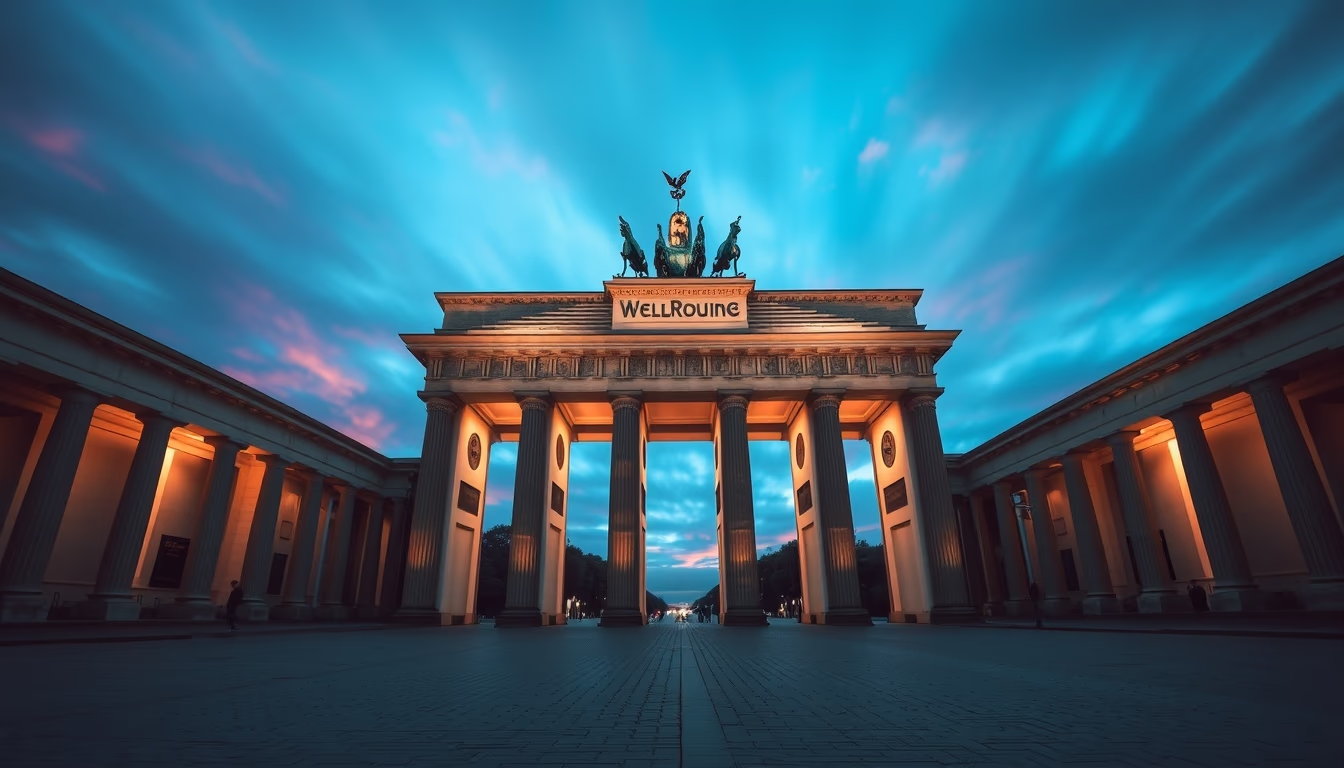
The Brandenburg Gate is Berlin's most iconic landmark, a neoclassical monument from the 18th century that witnessed Germany's division and reunification.
About this subject
The Brandenburg Gate, located at Pariser Platz, is one of the largest and most famous landmarks in Germany. Built between 1788 and 1791 by order of Prussian King Frederick William II, the gate was designed by Carl Gotthard Langhans in the neoclassical style, inspired by the Propylaea of the Athenian Acropolis. The structure stands 26 meters high, 65 meters wide, and 11 meters deep, with twelve Doric columns creating five passageways. Atop the gate, the Quadriga, a 6-meter bronze statue depicting the goddess Victoria in a chariot pulled by four horses, was sculpted by Johann Gottfried Schadow.
The gate was damaged during World War II but restored. During the Cold War, it sat in the border strip between East and West Berlin, becoming a symbol of division. After the fall of the Berlin Wall in 1989, the Brandenburg Gate transformed into the emblem of German reunification. Thousands gathered there to celebrate, and since then it has been the venue for major events, such as New Year's Eve celebrations and the arrival of Olympic athletes.
The original Quadriga was taken to Paris by Napoleon in 1806 and returned in 1814. During post-war restoration, replicas were used. In 2000, the gate underwent an 18-month major renovation with an investment of 5.6 million euros, restoring its original sandy color. Today, it is one of the most visited tourist attractions in Europe, drawing approximately 12 million visitors annually.
Frequently Asked Questions
When was the Brandenburg Gate built?
It was built between 1788 and 1791 by order of Prussian King Frederick William II.
What does the Quadriga on top of the gate represent?
The Quadriga is a bronze statue of the goddess Victoria in a chariot pulled by four horses, symbolizing peace and victory.
What is the historical significance of the gate during the Cold War?
It stood on the border between East and West Berlin, becoming a symbol of division. After the Wall fell, it came to represent reunification.
Direct URL
https://pub-c7d6a6ea828543ac903a74a341ccb2e1.r2.dev/imagens/brandenburg-gate-berlin-long-exposure-p8.avifHow to credit
Include a visible link back to UtilizAí. Copy one of the snippets below:
<a href="https://xn--utiliza-eza.com/en/midia/imagens/brandenburg-gate-berlin-long-exposure-p8">Brandenburg gate berlin</a> by <a href="https://xn--utiliza-eza.com">UtilizAí</a>, licensed under <a href="https://creativecommons.org/licenses/by/4.0/">CC BY 4.0</a>.
[Brandenburg gate berlin](https://xn--utiliza-eza.com/en/midia/imagens/brandenburg-gate-berlin-long-exposure-p8) by [UtilizAí](https://xn--utiliza-eza.com), CC BY 4.0
License: CC-BY-4.0