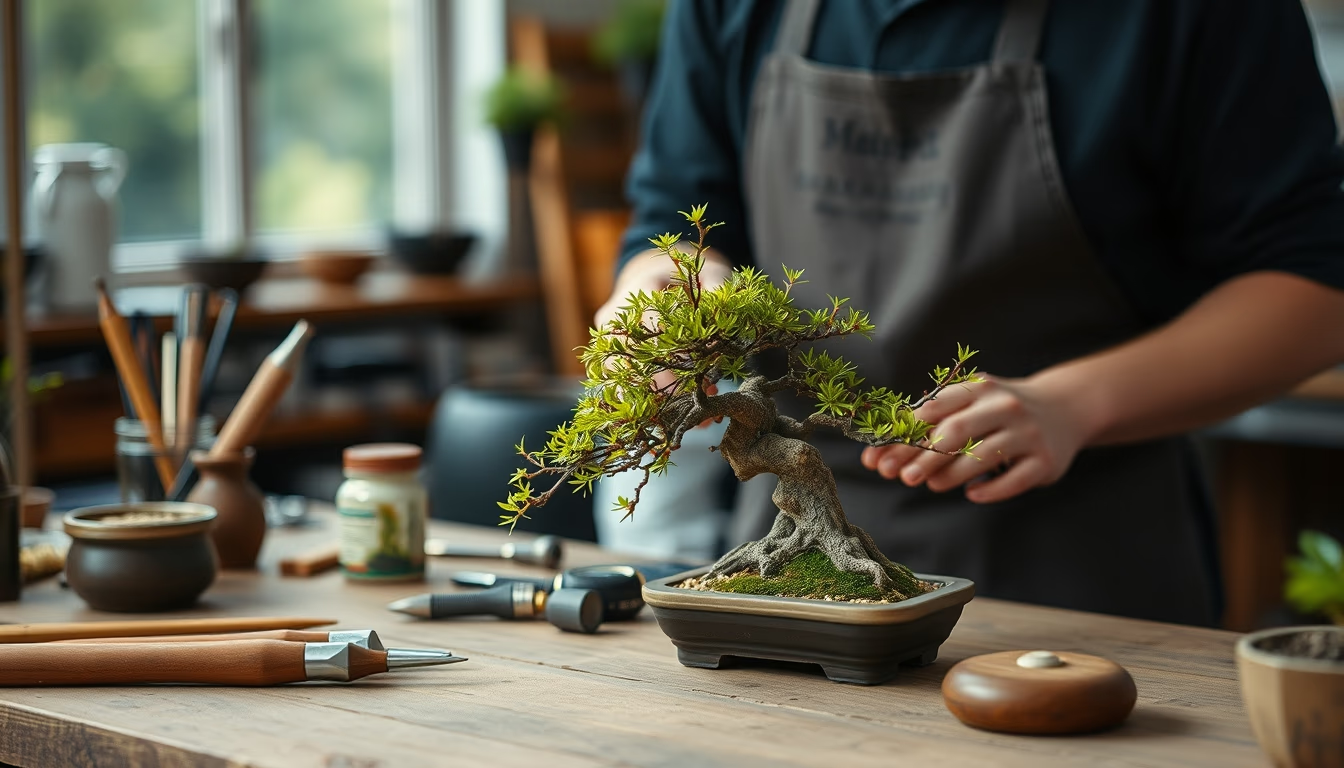
Bonsai tools workshop
1344×768 · AVIF · CC BY 4.0
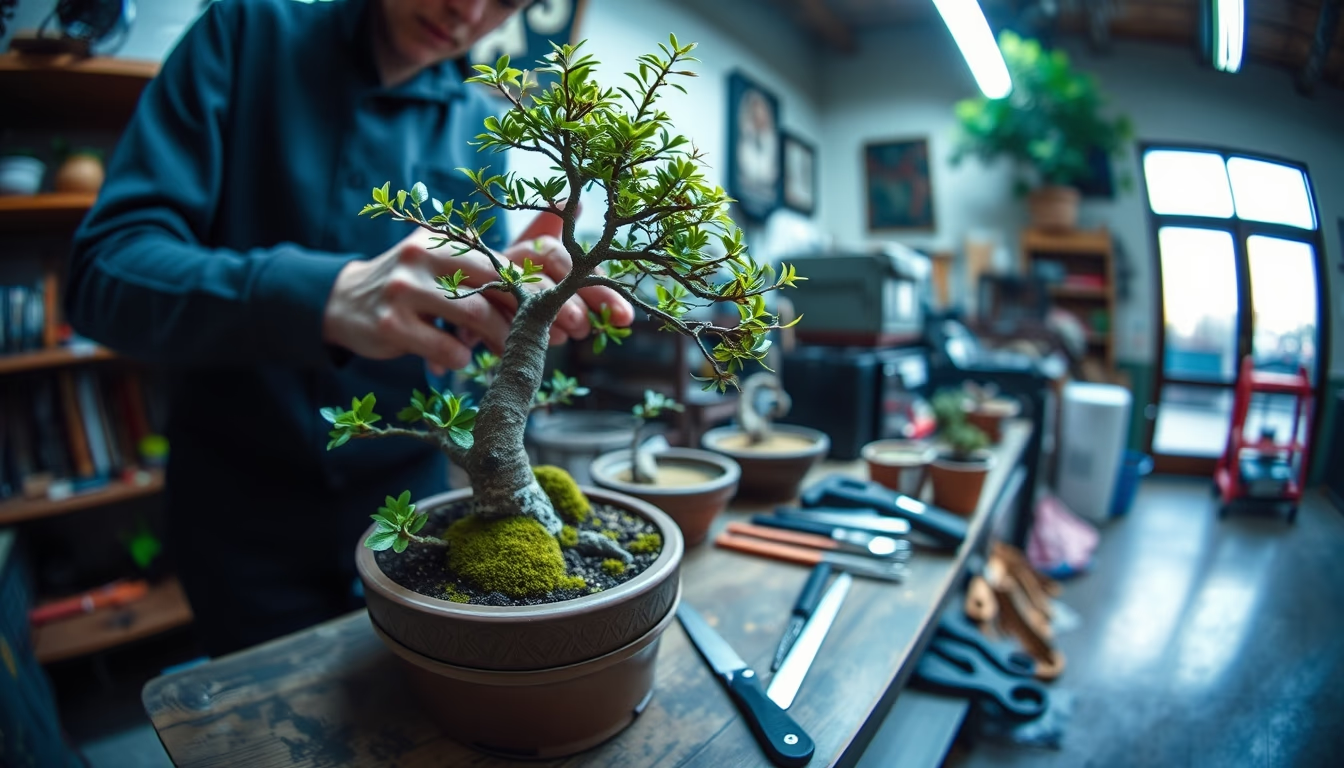
Bonsai tool workshops teach pruning, shaping, and maintenance techniques to enthusiasts of the ancient art.
About this subject
Bonsai tool workshops are dedicated spaces for hands-on learning about the essential instruments for cultivating and styling miniature trees. Participants discover the function of each tool: concave cutters for wounds that heal quickly, branch cutters for removing unwanted shoots, pruning saws for thicker branches, and aluminum or copper wire for shaping. Choosing the right tool prevents damage and ensures precision, a key aspect of bonsai art.
The workshop typically covers tool maintenance, such as sharpening and cleaning, to extend lifespan and avoid contamination. Instructors also explain differences between Western and Japanese tools, the latter being made from high-carbon steel and heat-treated for durability. Traditional brands like Masakuni and Kaneshin are benchmarks, with hand-forged blades requiring specific care.
Practice in workshops is especially useful for beginners, who can handle tools under supervision and receive immediate feedback. Many events take place in nurseries, bonsai associations, or specialized fairs. In Brazil, groups like the Brazilian Bonsai Association hold regular meetings. A curious fact: the concave cutter was invented by Saburō Katō in the 1920s, revolutionizing wound recovery.
Ergonomics is also discussed: longer handles reduce effort, while gardening gloves protect hands. Some workshops include demonstrations of traditional styles, such as “Moyogi” (informal upright) or “Shakan” (slanted trunk), showing how each tool contributes to the final result. Knowledge gained in a workshop allows practitioners to better care for their trees and advance to more complex techniques, like creating jin (deadwood) or shari (stripped bark).
Frequently Asked Questions
What are the essential tools to start in bonsai?
Basic tools include concave cutters, branch cutters, a pruning saw, aluminum wire, and a rake for soil cleaning. It's advisable to start with a quality affordable kit.
Where can I find bonsai tool workshops in the US?
Bonsai clubs, specialized nurseries, and garden centers often host workshops. National organizations like the Bonsai Society of America list events on their websites.
What is the difference between Japanese and Western bonsai tools?
Japanese tools are usually high-carbon steel, hand-forged, with thinner, more precise blades. Western tools are stainless steel, more rust-resistant, cheaper, but less durable.
Direct URL
https://pub-c7d6a6ea828543ac903a74a341ccb2e1.r2.dev/imagens/bonsai-tools-workshop-fish-eye-wide-angle-fresh3.avifHow to credit
Include a visible link back to UtilizAí. Copy one of the snippets below:
<a href="https://xn--utiliza-eza.com/en/midia/imagens/bonsai-tools-workshop-fish-eye-wide-angle-fresh3">Bonsai tools workshop</a> by <a href="https://xn--utiliza-eza.com">UtilizAí</a>, licensed under <a href="https://creativecommons.org/licenses/by/4.0/">CC BY 4.0</a>.
[Bonsai tools workshop](https://xn--utiliza-eza.com/en/midia/imagens/bonsai-tools-workshop-fish-eye-wide-angle-fresh3) by [UtilizAí](https://xn--utiliza-eza.com), CC BY 4.0
License: CC-BY-4.0