Biometric scan finger
1344×768 · AVIF · CC BY 4.0
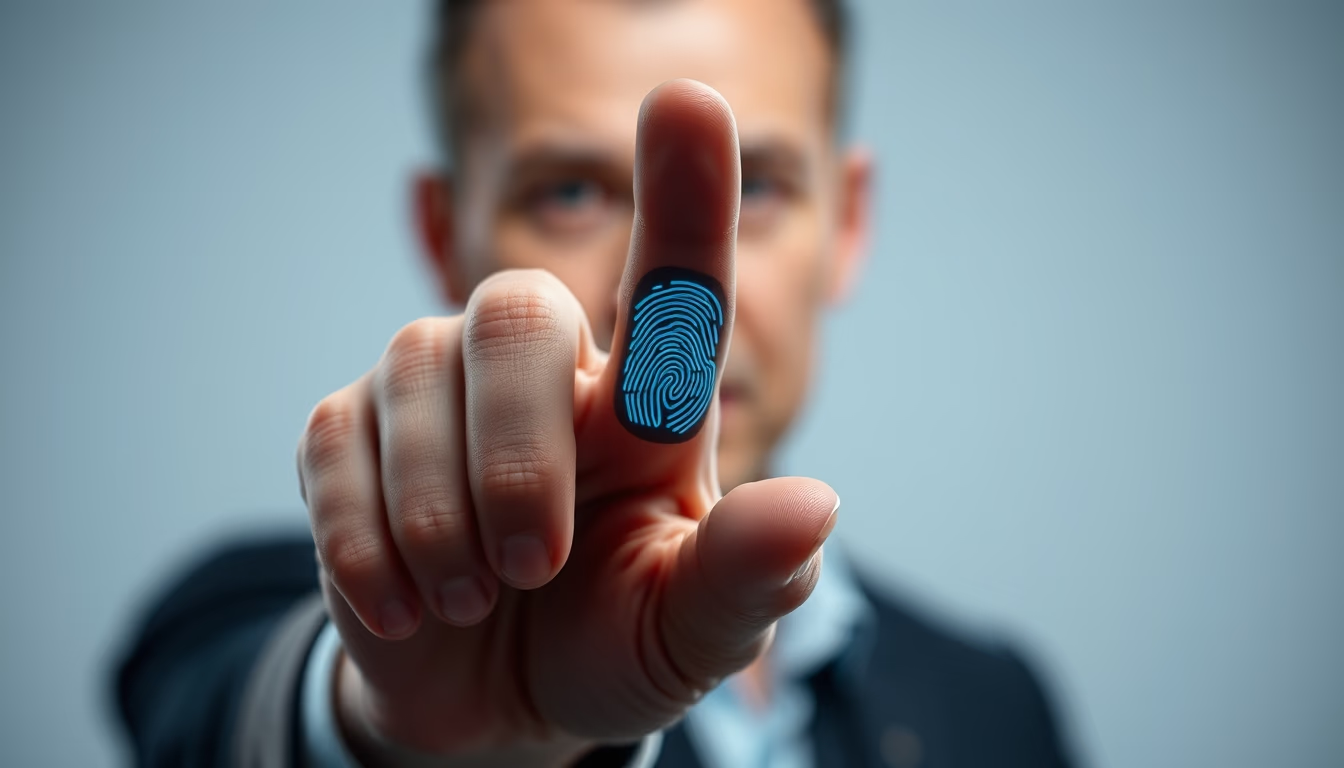
Digital biometrics, such as fingerprint scanning, have become key to global cybersecurity, providing fast and accurate authentication.
About this subject
Fingerprint biometric scanning is an authentication technology that uses the unique patterns of ridges and valleys on fingertips to verify identity. Capacitive sensors, the most common in smartphones, measure capacitance differences between ridges and valleys to generate a digital image. Optical sensors capture a photo of the fingerprint, while ultrasonic sensors use sound waves to map the three-dimensional structure of the skin, offering greater resistance to spoofing.
In cybersecurity, fingerprint biometrics replace traditional passwords, reducing phishing risks and credential leaks. According to the FIDO Alliance, nearly 80% of modern smartphones have fingerprint readers, and the technology is widely used in physical access control, mobile payments, and banking systems. An IBM study indicated that biometric authentication can reduce fraud by up to 70%.
Despite its convenience, challenges remain. Latent fingerprints left on surfaces can be copied, and low-quality sensors are vulnerable to attacks using gelatin or 3D-printed replicas. To mitigate risks, liveness detection is implemented, checking for signs such as blood flow or electrical conductivity. The global trend is to combine multiple biometric factors, pairing fingerprints with facial or iris recognition.
By 2026, advances in under-display sensors and AI algorithms promise to make biometrics even more secure and discreet. The technology not only speeds up authentication but also supports compliance with regulations like Brazil's LGPD by reducing centralized password storage.
Frequently Asked Questions
Are fingerprint scanners secure?
Yes, when combined with liveness detection and high-quality sensors. Although latent prints can be copied, multi-factor biometrics significantly reduce fraud risk.
How do ultrasonic fingerprint sensors work?
They emit high-frequency sound waves that penetrate the skin and reflect back, mapping the three-dimensional structure of ridges and valleys. This makes them harder to spoof than optical or capacitive sensors.
Can biometrics completely replace passwords?
Not entirely, as they are still used as a secondary factor in many systems. However, the trend is toward passwordless authentication, combining biometrics with other factors like hardware tokens.
Direct URL
https://pub-c7d6a6ea828543ac903a74a341ccb2e1.r2.dev/imagens/biometric-scan-finger-studio-editorial-portrait-p6.avifHow to credit
Include a visible link back to UtilizAí. Copy one of the snippets below:
<a href="https://xn--utiliza-eza.com/en/midia/imagens/biometric-scan-finger-studio-editorial-portrait-p6">Biometric scan finger</a> by <a href="https://xn--utiliza-eza.com">UtilizAí</a>, licensed under <a href="https://creativecommons.org/licenses/by/4.0/">CC BY 4.0</a>.
[Biometric scan finger](https://xn--utiliza-eza.com/en/midia/imagens/biometric-scan-finger-studio-editorial-portrait-p6) by [UtilizAí](https://xn--utiliza-eza.com), CC BY 4.0
License: CC-BY-4.0