Bamboo forest panda
1344×768 · AVIF · CC BY 4.0
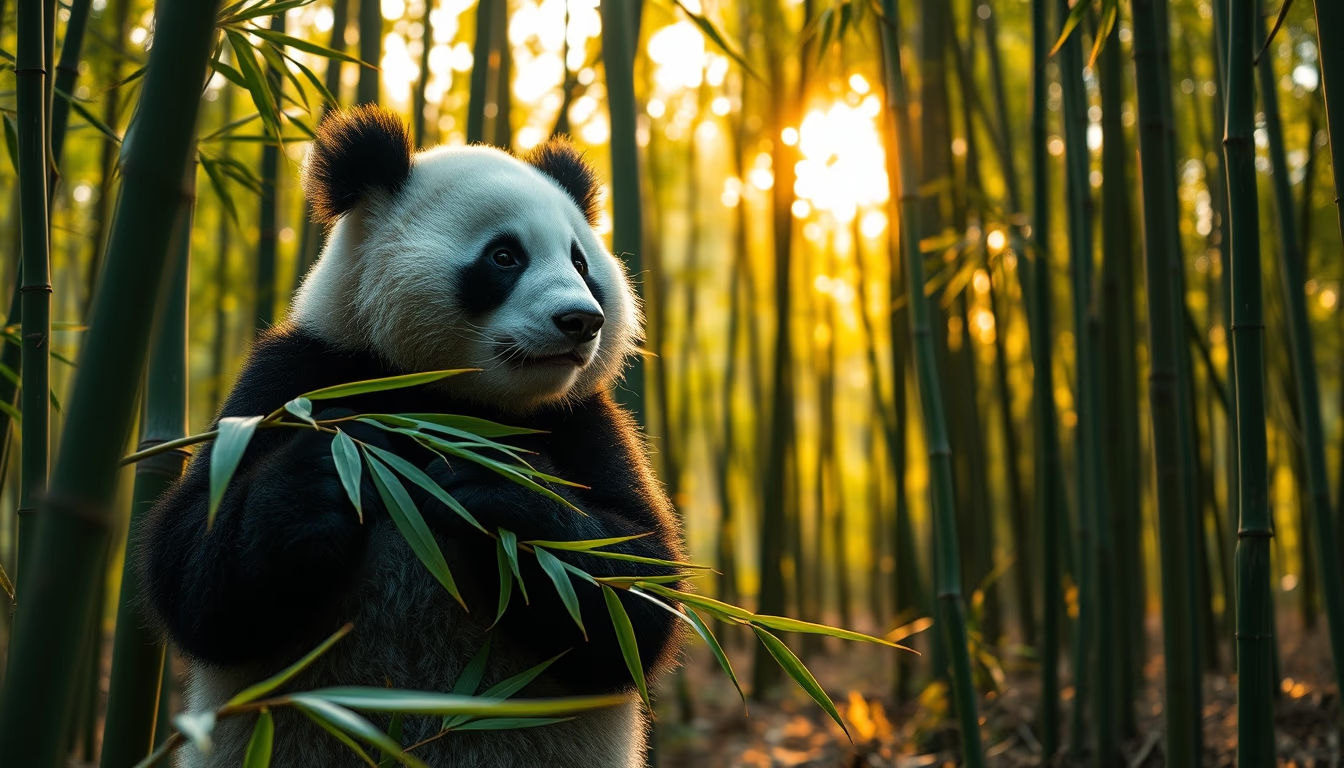
Giant pandas inhabit bamboo forests in the mountains of China, where bamboo makes up 99% of their diet.
About this subject
The giant panda (Ailuropoda melanoleuca) is a mammal native to the mountainous regions of south-central China, mainly in Sichuan, Shaanxi, and Gansu provinces. These animals live in temperate bamboo forests at altitudes between 1,200 and 3,400 meters. Bamboo makes up 99% of their diet: an adult panda consumes 12 to 38 kg of bamboo daily, spending about 14 hours a day eating.
Although classified as carnivores, pandas have evolved a specialized herbivorous diet. Their digestive system remains that of a carnivore, but they have adaptations such as a modified wrist bone that acts as an opposable thumb, allowing them to hold and peel bamboo efficiently. Low reproduction rates and habitat loss have made the species vulnerable. In 2016, the International Union for Conservation of Nature (IUCN) reclassified the panda from "endangered" to "vulnerable" thanks to conservation efforts.
Bamboo forests are home not only to pandas but also to other species like the Sichuan golden monkey and the takin. Bamboo has a peculiar life cycle: many species flower simultaneously over large areas every 30 to 120 years, then die. This can cause food shortages for pandas, which then need to migrate to other areas. Conservation programs in China have established ecological corridors to facilitate these movements.
Interestingly, the giant panda is a national symbol of China and appears on coins and postage stamps. The name "panda" may come from the Nepali word "ponya", meaning "bamboo eater". The animal is also known as "cat-bear" due to its vertical pupils, similar to those of felines. In captivity, pandas can live up to 30 years, while in the wild their life expectancy is about 20 years.
Frequently Asked Questions
Why do pandas eat so much bamboo?
Bamboo is low in nutrients, so pandas need to consume large amounts to get enough energy. They spend up to 14 hours a day eating.
Where do giant pandas live in the wild?
They live in bamboo forests in the mountains of China's Sichuan, Shaanxi, and Gansu provinces, at altitudes between 1,200 and 3,400 meters.
Are pandas still endangered?
Since 2016, the IUCN classifies the panda as 'vulnerable', no longer 'endangered'. The wild population is estimated at about 1,800 individuals, thanks to conservation efforts.
Direct URL
https://pub-c7d6a6ea828543ac903a74a341ccb2e1.r2.dev/imagens/bamboo-forest-panda-cinematic-wide-shot-v2.avifHow to credit
Include a visible link back to UtilizAí. Copy one of the snippets below:
<a href="https://xn--utiliza-eza.com/en/midia/imagens/bamboo-forest-panda-cinematic-wide-shot-v2">Bamboo forest panda</a> by <a href="https://xn--utiliza-eza.com">UtilizAí</a>, licensed under <a href="https://creativecommons.org/licenses/by/4.0/">CC BY 4.0</a>.
[Bamboo forest panda](https://xn--utiliza-eza.com/en/midia/imagens/bamboo-forest-panda-cinematic-wide-shot-v2) by [UtilizAí](https://xn--utiliza-eza.com), CC BY 4.0
License: CC-BY-4.0