Bamboo forest panda
1344×768 · AVIF · CC BY 4.0
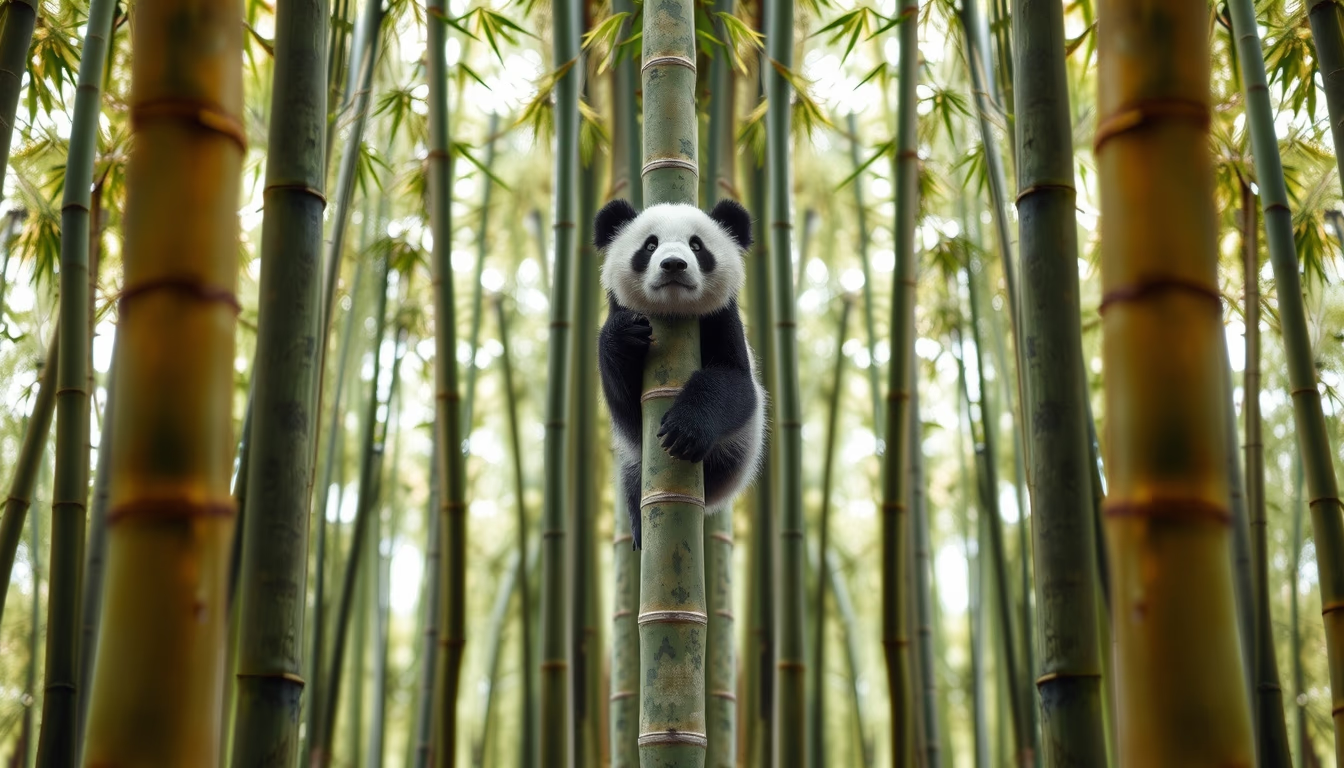
Giant pandas live in bamboo forests in the mountains of China, where bamboo is their main food source.
About this subject
The giant panda (Ailuropoda melanoleuca) is a mammal native to the bamboo forests in the mountainous regions of south-central China, particularly in the provinces of Sichuan, Shaanxi, and Gansu. These bamboo forests are unique ecosystems characterized by dense bamboo thickets that provide shelter and food for these animals. It is estimated that there are about 1,800 giant pandas in the wild, and habitat loss is one of the main threats to their survival.
Bamboo makes up more than 99% of the panda's diet, and they consume up to 38 kg per day. Despite being classified as a carnivore, the panda has developed adaptations to digest bamboo, such as a modified wrist bone that functions as an opposable thumb for holding stems. The bamboo forests where they live are also home to other endangered species, such as the snow leopard and the golden monkey.
Giant panda conservation has been a remarkable success: in 2021, the International Union for Conservation of Nature (IUCN) reclassified the species from "endangered" to "vulnerable," thanks to decades of protection and habitat restoration efforts. Bamboo forests are protected in nature reserves, such as the Wolong National Nature Reserve in Sichuan, which hosts one of the largest populations of wild pandas.
Interestingly, bamboo has a synchronized flowering cycle that occurs every 30 to 120 years, depending on the species. When a large area of bamboo flowers and dies, pandas may face food shortages, but they are able to migrate to other areas. This natural phenomenon is one of the challenges pandas face in their native habitat.
Frequently Asked Questions
Why do pandas eat so much bamboo?
Bamboo is low in nutrients, so pandas need to consume large amounts to get enough energy. They spend up to 14 hours a day eating.
Where do giant pandas live in the wild?
They live in bamboo forests in the mountains of south-central China, mainly in Sichuan, Shaanxi, and Gansu.
Are pandas endangered?
Currently, pandas are classified as vulnerable by the IUCN, but they still face threats such as habitat loss and low reproduction rates.
Direct URL
https://pub-c7d6a6ea828543ac903a74a341ccb2e1.r2.dev/imagens/bamboo-forest-panda-architectural-photography.avifHow to credit
Include a visible link back to UtilizAí. Copy one of the snippets below:
<a href="https://xn--utiliza-eza.com/en/midia/imagens/bamboo-forest-panda-architectural-photography">Bamboo forest panda</a> by <a href="https://xn--utiliza-eza.com">UtilizAí</a>, licensed under <a href="https://creativecommons.org/licenses/by/4.0/">CC BY 4.0</a>.
[Bamboo forest panda](https://xn--utiliza-eza.com/en/midia/imagens/bamboo-forest-panda-architectural-photography) by [UtilizAí](https://xn--utiliza-eza.com), CC BY 4.0
License: CC-BY-4.0