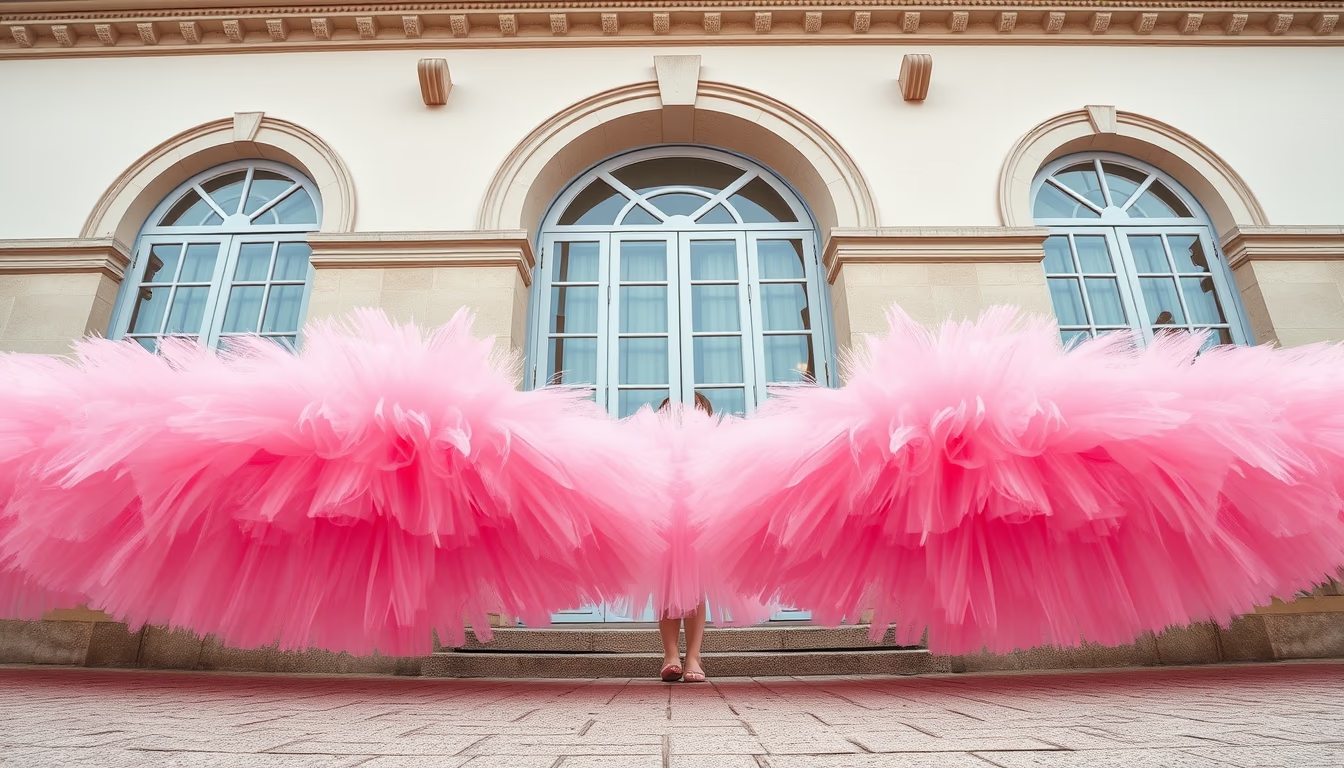
Ballet shoes pointe pink
1344×768 · AVIF · CC BY 4.0
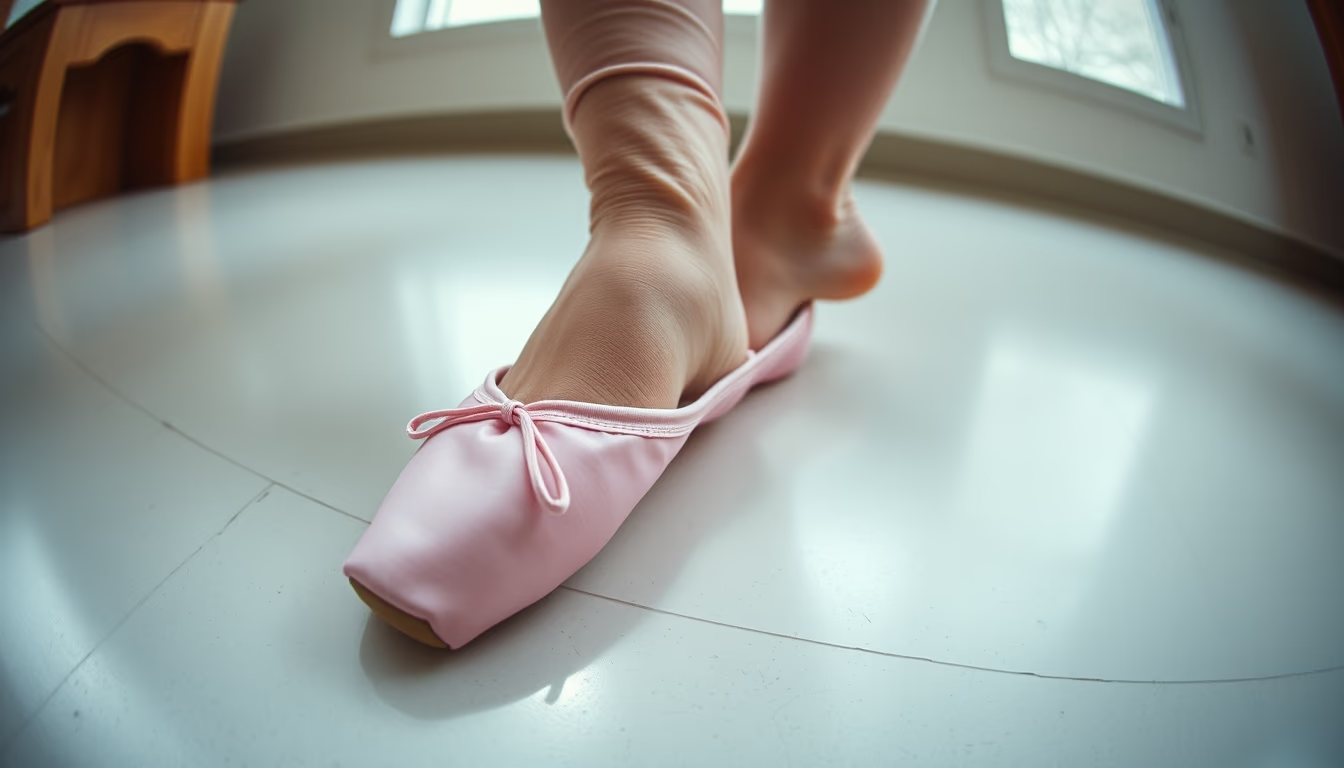
Pink pointe shoes are the essential footwear of classical ballet, enabling dancers to dance on the tips of their toes with technique and grace.
About this subject
Pointe shoes, also known as toe shoes, are a hallmark of classical ballet, allowing dancers to perform on the tips of their toes, creating an ethereal and weightless appearance. The traditional pink color matches the dancer's skin tone, making the legs appear longer and more elegant on stage. The construction of these shoes is highly specialized: the box, made from layers of cardboard, fabric, and glue, hardens to support the dancer's weight, while the leather sole provides flexibility and durability. Each dancer customizes their shoes, often breaking them in or sewing ribbons to achieve a perfect fit.
The history of pointe shoes dates back to the early 19th century, with the pioneering ballerina Marie Taglioni who wore felt-padded slippers for her performance in 'La Sylphide' in 1832. Over time, pointe shoe technology evolved to improve safety and comfort. Today, brands like Bloch, Freed, and Gaynor Minden are renowned for their quality. In Brazil, ballet has a strong tradition, with institutions such as the Dance School of the Teatro Municipal do Rio de Janeiro nurturing generations of dancers.
Interestingly, pointe shoes have a short lifespan, often lasting only a few hours of intense use. Professional dancers may go through multiple pairs per week, or even change shoes during a performance. The distinct sound of the toe box hitting the floor is called 'battering' and is an integral part of ballet's musicality. While pink is the most iconic color, pointe shoes are also available in other shades like peach, brown, or even bright colors for contemporary or themed performances. Nevertheless, the classic pink pointe shoe remains a timeless symbol of ballet's grace and discipline.
Frequently Asked Questions
When were pointe shoes invented?
Modern pointe shoes began to evolve in the early 19th century. Ballerina Marie Taglioni is credited with using felt-padded slippers in 1832, but the contemporary design with a reinforced toe box emerged around 1900.
How long do pointe shoes last?
Durability varies, but typically a pair lasts from a few hours to a few days. Professional dancers replace them frequently, sometimes after every performance, as the toe box quickly loses its stiffness.
Why are pointe shoes pink?
The traditional pink color was chosen to match the skin tone of white dancers, creating a visual line that elongates the legs. Today, shades like 'peach' or 'brown' exist for different ethnicities, but classic pink remains the most popular.
Direct URL
https://pub-c7d6a6ea828543ac903a74a341ccb2e1.r2.dev/imagens/ballet-shoes-pointe-pink-fish-eye-wide-angle-fresh9.avifHow to credit
Include a visible link back to UtilizAí. Copy one of the snippets below:
<a href="https://xn--utiliza-eza.com/en/midia/imagens/ballet-shoes-pointe-pink-fish-eye-wide-angle-fresh9">Ballet shoes pointe pink</a> by <a href="https://xn--utiliza-eza.com">UtilizAí</a>, licensed under <a href="https://creativecommons.org/licenses/by/4.0/">CC BY 4.0</a>.
[Ballet shoes pointe pink](https://xn--utiliza-eza.com/en/midia/imagens/ballet-shoes-pointe-pink-fish-eye-wide-angle-fresh9) by [UtilizAí](https://xn--utiliza-eza.com), CC BY 4.0
License: CC-BY-4.0