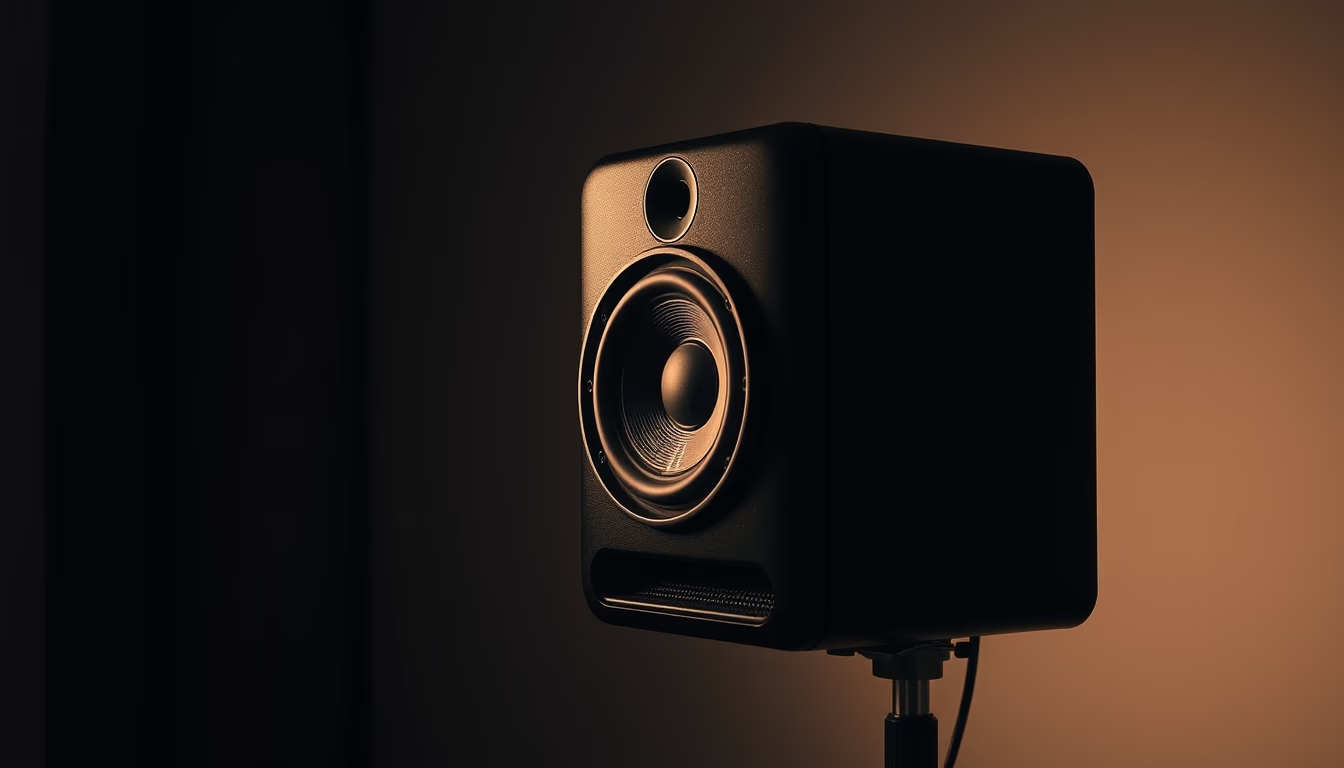
Audio interface knobs
1344×768 · AVIF · CC BY 4.0

Audio interface knobs are critical components for precise control of gain, EQ, and monitoring in professional and home recording setups.
About this subject
On an audio interface, knobs serve as physical controls to adjust parameters such as input gain, output level, headphone volume, and monitor mix. They can be implemented as analog potentiometers, offering continuous rotation with linear or logarithmic taper, or as digital rotary encoders, which generate electrical pulses interpreted by firmware. The latter type often includes detents (clicks) to provide tactile feedback for each step, making them common on modern interfaces for controlling digital parameters like EQ and panning.
Knob construction varies by manufacturer and price range. Entry-level models like the Focusrite Scarlett use plastic potentiometers with metal shafts, while premium interfaces like the Universal Audio Apollo employ rotary encoders with metal bodies and rubberized grips for better traction. Durability is rated in rotation cycles (typically 10,000 to 50,000 rotations), and torque resistance can be adjusted through mechanical design, influencing the user's perception of precision.
In studio settings, knobs allow quick adjustments without relying on software, reducing latency and distractions. In live environments, they enable instant gain changes to prevent feedback. Many interfaces also feature LED rings around knobs to indicate current values, combining visual and tactile feedback. The spacing between controls is designed to avoid accidental adjustments, following ergonomic standards such as a minimum distance of 19 mm between shafts.
Interestingly, the term 'knob' is preferred in the audio industry over 'dial' used in consumer electronics, reflecting the heritage of rack-mount gear and analog consoles. The choice between potentiometers and encoders involves trade-offs: the former offer instant analog response, while the latter allow saving and recalling settings. Brands like RME and SSL combine both types in their products to balance usability and functionality.
Frequently Asked Questions
What is the difference between a potentiometer and a rotary encoder in audio interfaces?
A potentiometer is an analog component that changes resistance with rotation, offering continuous control and instant response. A rotary encoder is digital, generating pulses interpreted by software; it allows infinite rotation and may include detents for discrete steps, as well as enabling save and recall of settings.
How to clean audio interface knobs without damaging them?
Turn off the equipment and disconnect cables. Use compressed air to blow dust around the shafts. For persistent dirt, apply isopropyl alcohol (70% or higher) on a cotton swab and rotate the knob gently. Avoid contact sprays that may leave conductive residues. Consult the manufacturer's manual for specific recommendations.
Why do some knobs have detents (clicks) while others are smooth?
Knobs with detents are used for digital controls to provide tactile feedback for each step, ensuring precision in adjustments like EQ and panning. Smooth knobs are typical for analog potentiometers for gain and volume, where continuous variation is desired and the value can be monitored visually or via software.
Direct URL
https://pub-c7d6a6ea828543ac903a74a341ccb2e1.r2.dev/imagens/audio-interface-knobs-magazine-editorial-fresh2.avifHow to credit
Include a visible link back to UtilizAí. Copy one of the snippets below:
<a href="https://xn--utiliza-eza.com/en/midia/imagens/audio-interface-knobs-magazine-editorial-fresh2">Audio interface knobs</a> by <a href="https://xn--utiliza-eza.com">UtilizAí</a>, licensed under <a href="https://creativecommons.org/licenses/by/4.0/">CC BY 4.0</a>.
[Audio interface knobs](https://xn--utiliza-eza.com/en/midia/imagens/audio-interface-knobs-magazine-editorial-fresh2) by [UtilizAí](https://xn--utiliza-eza.com), CC BY 4.0
License: CC-BY-4.0