Audio interface knobs
1344×768 · AVIF · CC BY 4.0
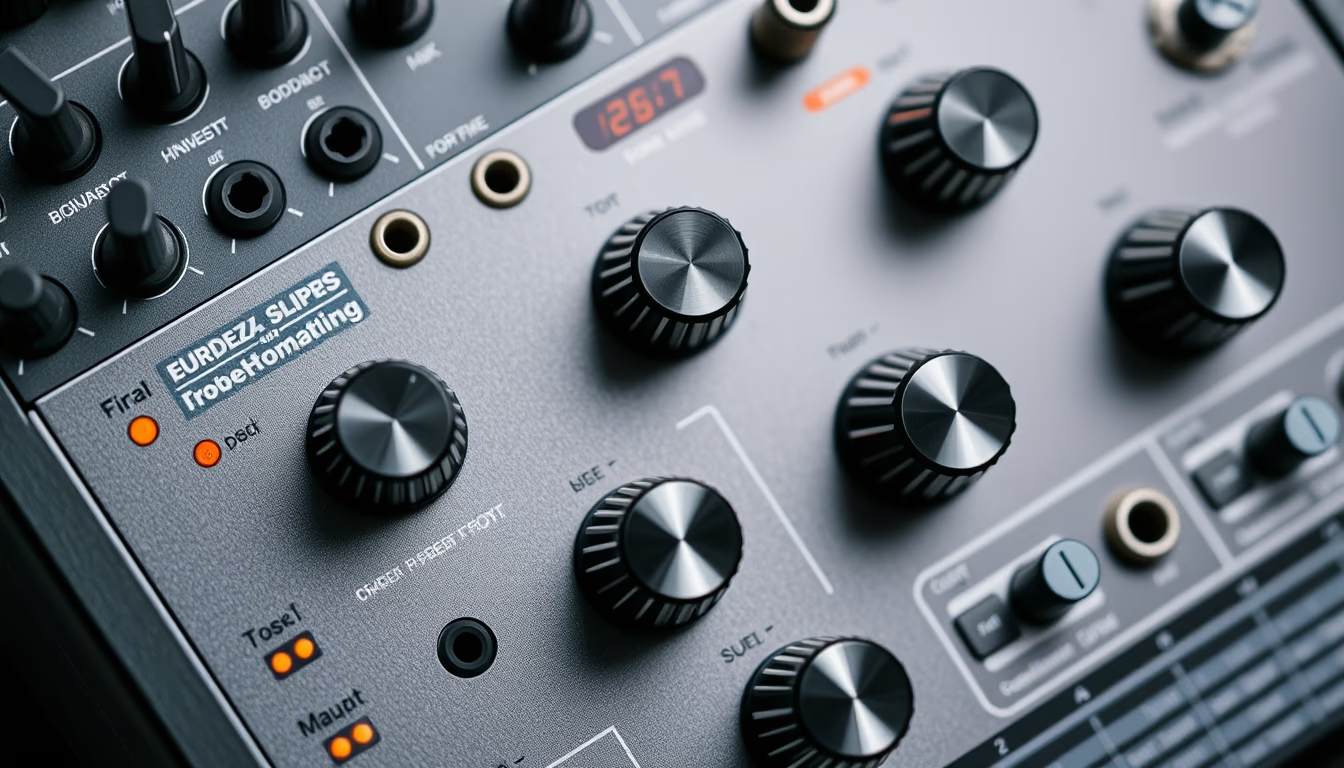
Audio interface knobs are essential controls for adjusting gain, EQ, and monitoring in home and professional studios.
About this subject
Modern audio interfaces feature various knobs that allow music producers and sound engineers to control critical parameters in a tactile and immediate way. The most common knob is the gain control, which adjusts the input sensitivity of a microphone or instrument, preventing distortion and ensuring proper recording level. Other typical knobs include headphone volume, direct-to-processed signal blend (mix), and channel equalizers.
The layout and design of these knobs vary by manufacturer and model. Brands like Focusrite, Universal Audio, Behringer, and PreSonus use knobs with different textures, sizes, and colors to facilitate visual and tactile identification during use. Knobs with ridges or LED rings provide additional feedback on the set level. In professional studios, the quality of potentiometers is crucial for precision and durability, as they are subject to mechanical wear.
Beyond technical functionality, knobs also carry aesthetic and ergonomic value. Many users prefer interfaces with large, well-spaced knobs that allow fine adjustments without interfering with other controls. In isometric or flat lay layouts, like in this image, knobs are often arranged to highlight the symmetry and industrial design of the equipment, which frequently follows rack standards (1U or 2U) for studio installation.
Interestingly, the term knob dates back to early radios and vacuum tube amplifiers, where rotary controls were the only interface. Today, despite the popularity of digital controls in software, physical knobs remain indispensable for musicians seeking fluidity during recording and mixing sessions, especially in live situations or studios without large control surfaces.
Frequently Asked Questions
What is the main function of gain knobs on an audio interface?
The gain knob adjusts the input level of the signal from a microphone or instrument, ensuring it is loud enough without distorting (clipping). It is the first stage of control in the audio chain.
Why do some interfaces have knobs with LED rings around them?
The LEDs around the knob visually indicate the current level (e.g., green for healthy signal, yellow near limit, red for distortion). This allows quick monitoring without looking away from the interface.
How to choose an audio interface with good knobs for studio use?
Look for interfaces with sturdy knobs made of metal or high-quality plastic, with smooth travel and good tactile feel. Also check the spacing between knobs to avoid accidental adjustments.
Direct URL
https://pub-c7d6a6ea828543ac903a74a341ccb2e1.r2.dev/imagens/audio-interface-knobs-isometric-flat-lay-fresh11.avifHow to credit
Include a visible link back to UtilizAí. Copy one of the snippets below:
<a href="https://xn--utiliza-eza.com/en/midia/imagens/audio-interface-knobs-isometric-flat-lay-fresh11">Audio interface knobs</a> by <a href="https://xn--utiliza-eza.com">UtilizAí</a>, licensed under <a href="https://creativecommons.org/licenses/by/4.0/">CC BY 4.0</a>.
[Audio interface knobs](https://xn--utiliza-eza.com/en/midia/imagens/audio-interface-knobs-isometric-flat-lay-fresh11) by [UtilizAí](https://xn--utiliza-eza.com), CC BY 4.0
License: CC-BY-4.0