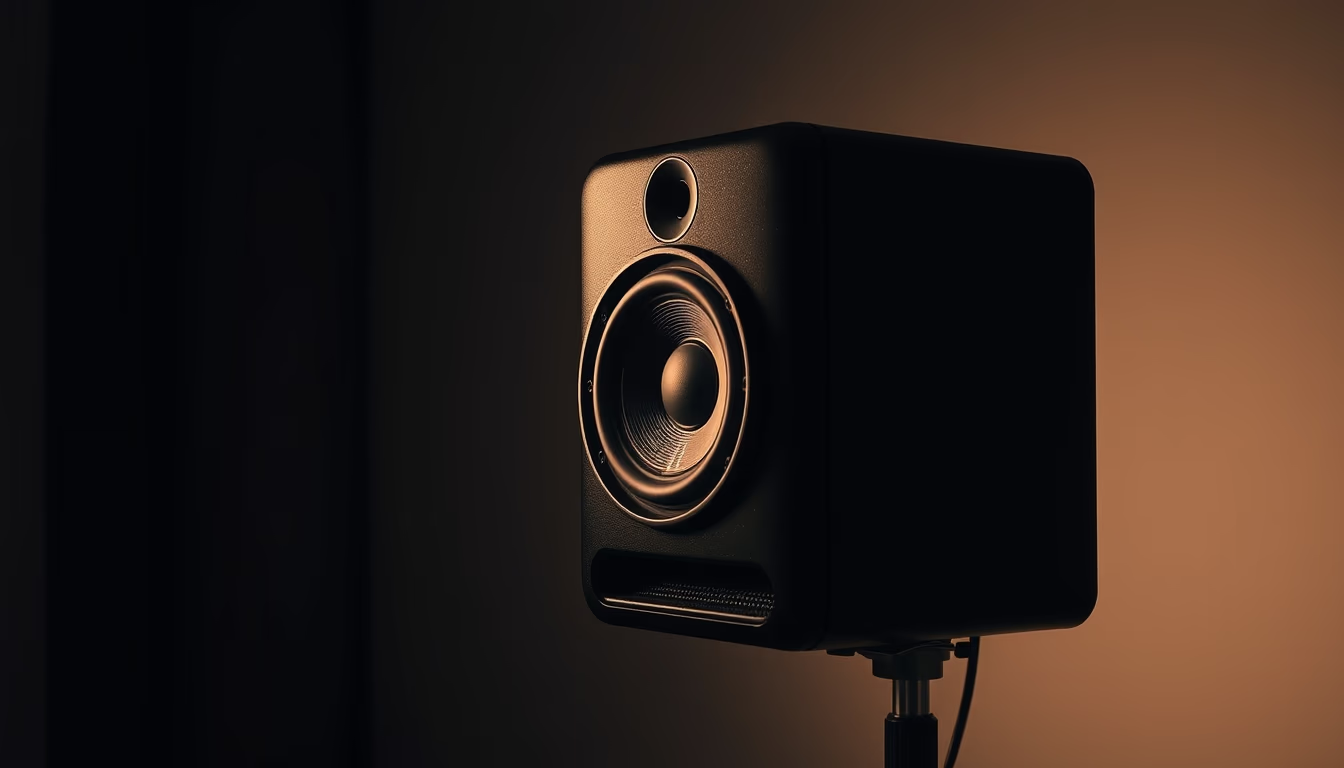
Audio interface knobs
1344×768 · AVIF · CC BY 4.0

Audio interface knobs provide tactile control over gain, volume, and mixing parameters, crucial for precise studio workflow.
About this subject
Audio interface knobs are rotary controls used to adjust critical parameters such as input gain, output volume, monitor balance, and, in higher-end units, EQ and effects. They are typically either potentiometers (pots) or rotary encoders. Analog pots provide continuous, smooth adjustment, while digital encoders offer discrete steps and often include push-to-select functionality. The choice between them directly affects tactile feedback and precision.
Materials and design vary widely across brands and price points. Metal knobs, often with anodized finishes, offer superior durability and a premium feel, found on units from Universal Audio and RME. Plastic knobs with rubber grips are common in budget interfaces like the Focusrite Scarlett series, prioritizing cost-effectiveness. Surface texture also matters: knobs with ridges or indentations facilitate precise adjustments, especially in dimly lit studios.
Beyond technical function, knobs play an ergonomic and aesthetic role. Arranged on compact front panels, they must allow quick adjustments without obscuring LED indicators. The torque resistance is calibrated to prevent accidental moves while ensuring smooth operation. In home studios and podcast setups, the audio interface is the central control hub, and knob quality directly influences user experience, from the feel when turning to long-term durability.
Interestingly, the evolution of knobs mirrors the shift from analog to digital. Older interfaces used exclusively analog pots, which can wear out over time (causing crackling). Digital encoders, with no physical contact, eliminate this issue and allow features like automatic parameter reset. Yet many audio engineers still prefer the analog response of pots for the musicality in gain and EQ adjustments.
Frequently Asked Questions
What do the knobs on an audio interface control?
Knobs control input gain for microphones and instruments, output volume for headphones and monitors, and on advanced models, mixing parameters like balance, EQ, and built-in effects.
How to clean audio interface knobs?
Use a soft cloth slightly dampened with isopropyl alcohol. Avoid excess liquid and never apply directly to the knob. For caked-on dirt, use a dry anti-static brush before the damp wipe.
Why are some knobs ridged and others smooth?
Ridges or textures increase friction and aid precise adjustments, especially in low light or for users with sweaty hands. Smooth knobs are common in minimalist designs and may indicate functions that rarely need fine adjustment.
Direct URL
https://pub-c7d6a6ea828543ac903a74a341ccb2e1.r2.dev/imagens/audio-interface-knobs-film-grain-authentic-fresh7.avifHow to credit
Include a visible link back to UtilizAí. Copy one of the snippets below:
<a href="https://xn--utiliza-eza.com/en/midia/imagens/audio-interface-knobs-film-grain-authentic-fresh7">Audio interface knobs</a> by <a href="https://xn--utiliza-eza.com">UtilizAí</a>, licensed under <a href="https://creativecommons.org/licenses/by/4.0/">CC BY 4.0</a>.
[Audio interface knobs](https://xn--utiliza-eza.com/en/midia/imagens/audio-interface-knobs-film-grain-authentic-fresh7) by [UtilizAí](https://xn--utiliza-eza.com), CC BY 4.0
License: CC-BY-4.0