Art nouveau klimt gold
1344×768 · AVIF · CC BY 4.0

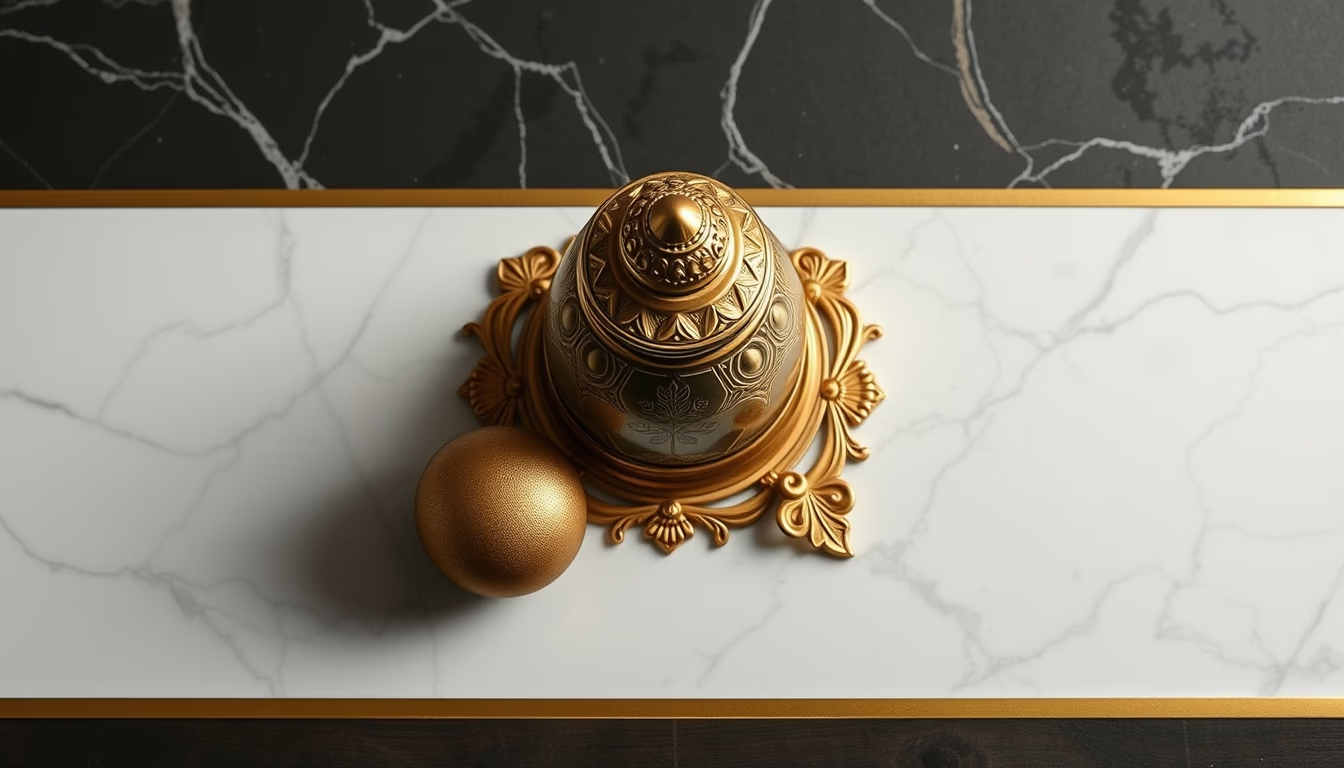
Golden Art Nouveau detail inspired by Gustav Klimt, exploring ornamental aesthetics and the use of gold leaf.
About this subject
Art Nouveau was an artistic and design movement that flourished between 1890 and 1910, characterized by curving lines, organic forms, and a pursuit of integrating the arts. Gustav Klimt, an Austrian symbolist painter, became a leading figure of this style, especially during his golden phase, which lasted roughly from 1901 to 1909. During this period, Klimt incorporated gold leaf into works such as 'The Kiss' (1907-1908) and 'Portrait of Adele Bloch-Bauer I' (1907), imparting a metallic shimmer and a sensual, mystical atmosphere to his compositions.
Klimt's technique combined influences from Byzantine art, Ravenna mosaics, and goldsmithing, resulting in richly decorated surfaces that blend figuration and abstraction. The use of gold was not merely decorative: it symbolized the divine, the eternal, and transcendence, recurring themes in his work. In 'The Kiss', the couple enveloped in golden robes represents the union of the spiritual and the earthly, while geometric and floral patterns allude to desire and fertility.
The cultural context of Vienna around 1900, home to the Vienna Secession, was crucial for Klimt's development. The Secessionist movement, of which he was president, rejected conservative academicism and promoted artistic freedom, valuing ornamentation and the integration of architecture, painting, and decorative arts. Klimt, along with artists such as Egon Schiele and Koloman Moser, helped define the aesthetic of Viennese modernity, influencing future generations.
Today, Klimt's golden works are icons of popular culture and continue to inspire designers, architects, and contemporary artists. His legacy is present in global exhibitions and permanent collections, such as at the Belvedere Palace in Vienna, which houses 'The Kiss'. The unique combination of eroticism, symbolism, and golden luxury makes Klimt one of the most recognized and studied artists of the Art Nouveau period.
Frequently Asked Questions
What characterizes Gustav Klimt's golden phase?
Klimt's golden phase lasted from about 1901 to 1909, when he extensively used gold leaf in his paintings, inspired by Byzantine mosaics and goldsmithing. Works like 'The Kiss' and 'Portrait of Adele Bloch-Bauer I' exemplify this period, blending figuration, abstraction, and symbolism.
Why did Klimt use gold in his works?
Klimt used gold to symbolize the divine, the eternal, and transcendence. Beyond decorative effect, the precious metal lent a sensual and mystical atmosphere, elevating the amorous and spiritual themes depicted in his paintings.
What is Klimt's importance to the Art Nouveau movement?
Klimt was a leading figure of Art Nouveau, particularly within the Vienna Secession. His ornamental approach, use of curving lines, and integration of decorative arts profoundly influenced early 20th-century painting and design.
Direct URL
https://pub-c7d6a6ea828543ac903a74a341ccb2e1.r2.dev/imagens/art-nouveau-klimt-gold-macro-closeup-fresh5.avifHow to credit
Include a visible link back to UtilizAí. Copy one of the snippets below:
<a href="https://xn--utiliza-eza.com/en/midia/imagens/art-nouveau-klimt-gold-macro-closeup-fresh5">Art nouveau klimt gold</a> by <a href="https://xn--utiliza-eza.com">UtilizAí</a>, licensed under <a href="https://creativecommons.org/licenses/by/4.0/">CC BY 4.0</a>.
[Art nouveau klimt gold](https://xn--utiliza-eza.com/en/midia/imagens/art-nouveau-klimt-gold-macro-closeup-fresh5) by [UtilizAí](https://xn--utiliza-eza.com), CC BY 4.0
License: CC-BY-4.0