Art nouveau klimt gold
1344×768 · AVIF · CC BY 4.0
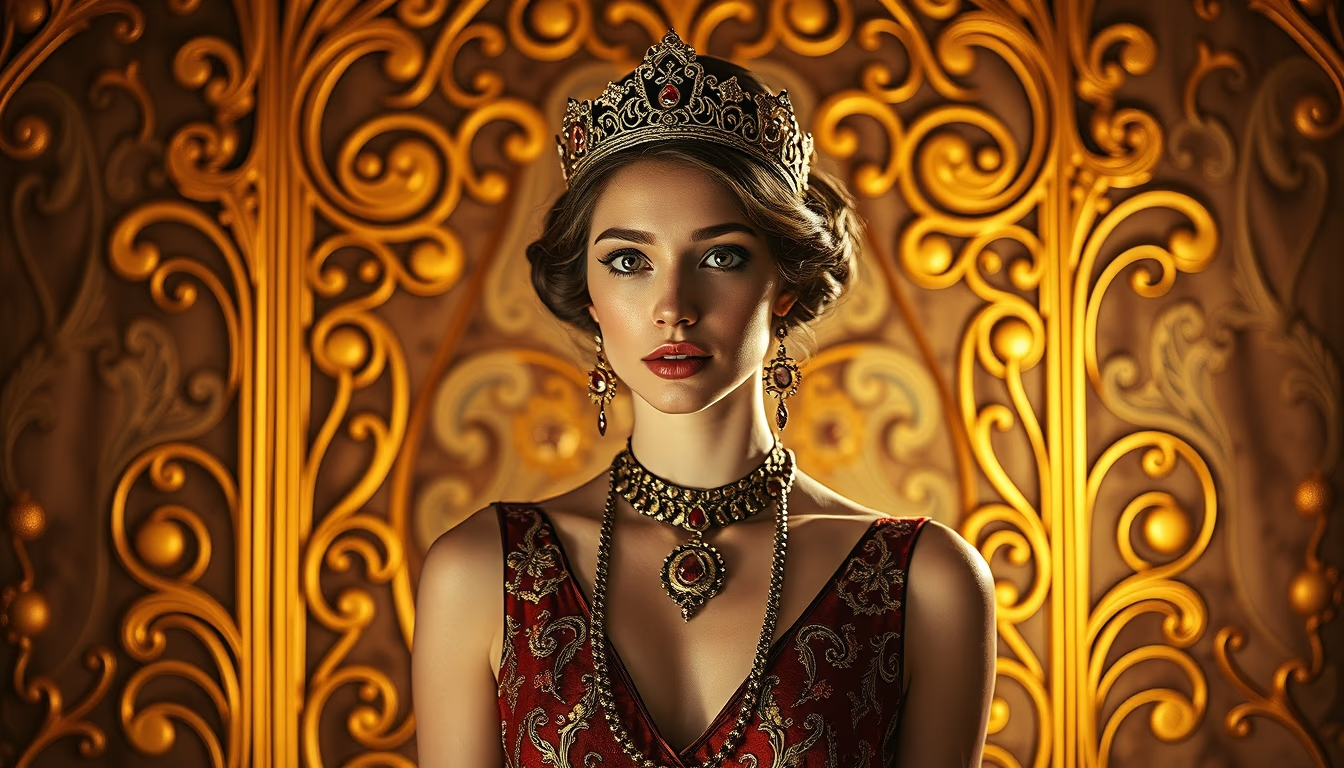
Gustav Klimt, expoente da Art Nouveau vienense, revolucionou a pintura com o uso exuberante de folhas de ouro em obras como O Beijo.
Sobre o tema
A Art Nouveau, movimento artístico que floresceu entre 1890 e 1910, encontrou em Gustav Klimt um de seus maiores expoentes. Nascido em Viena em 1862, Klimt foi um dos fundadores da Secessão Vienense, grupo que rompeu com o academicismo e buscou integrar arte, artesanato e design. Sua fase áurea, conhecida como Período Dourado, iniciou-se após viagens a Ravenna, onde se impressionou com os mosaicos bizantinos. Passou então a aplicar folhas de ouro e prata em suas telas, criando superfícies ornamentais que fundiam figuração e abstração.
A técnica de Klimt combinava pinceladas precisas com ricas texturas douradas, frequentemente retratando figuras femininas envoltas em padrões geométricos e florais. O Beijo (1907-1908), sua obra mais célebre, exemplifica essa estética: um casal abraçado sobre um fundo dourado, com roupas decoradas por espirais e retângulos. A tela foi adquirida pelo governo austríaco e hoje está no Palácio Belvedere, em Viena. Outras obras importantes incluem Retrato de Adele Bloch-Bauer I (1907) e Judith I (1901), ambas marcadas pela profusão de dourados.
A influência de Klimt transcendeu a pintura, atingindo a arquitetura, o design de interiores e a joalheria. Seu estilo ornamental e sensual provocou controvérsias na época, mas hoje é celebrado como marco do modernismo. Apesar de ser associado à Art Nouveau, Klimt desenvolveu uma linguagem única que mesclava simbolismo, erotismo e referências clássicas. Sua morte em 1918 não encerrou seu legado: obras como o Retrato de Adele Bloch-Bauer II (1912) alcançam centenas de milhões de dólares em leilões.
Curiosamente, o uso de ouro em pinturas é uma tradição milenar, presente em ícones religiosos e manuscritos medievais. Klimt resgatou essa técnica de forma laica e moderna, inspirando gerações de artistas. Sua obra continua a ser objeto de estudos e exposições, como a mostra "Klimt: The Immersive Experience" que percorre o mundo.
Perguntas frequentes
Qual foi a importância do ouro na obra de Gustav Klimt?
O ouro foi central no período áureo de Klimt, usado para criar superfícies decorativas que remetiam a mosaicos bizantinos e ícones religiosos. Essa técnica elevou o valor estético e simbólico de suas telas, como em 'O Beijo', onde o fundo dourado envolve as figuras em uma atmosfera atemporal.
Onde posso ver as principais obras de Klimt com ouro?
A maior coleção está no Palácio Belvedere, em Viena, que abriga 'O Beijo' e 'Judith I'. Outras obras estão na Galeria Nacional Austríaca e em museus internacionais, como o Museu de Arte Moderna de Nova York. O retrato de Adele Bloch-Bauer I está na Neue Galerie, em Nova York.
Como Klimt influenciou a Art Nouveau e o design moderno?
Klimt foi um dos líderes da Secessão Vienense, que promoveu a integração das artes. Seu uso ornamental do ouro, padrões geométricos e ênfase na figura feminina influenciaram designers de móveis, joias e pôsteres. Sua estética dourada tornou-se ícone do estilo Art Nouveau.
URL direta
https://pub-c7d6a6ea828543ac903a74a341ccb2e1.r2.dev/imagens/art-nouveau-klimt-gold-fine-art-photography-fresh7.avifComo creditar
Inclua um link visível de volta pro UtilizAí. Copie um dos snippets abaixo:
<a href="https://xn--utiliza-eza.com/midia/imagens/art-nouveau-klimt-gold-fine-art-photography-fresh7">Art nouveau klimt gold</a> by <a href="https://xn--utiliza-eza.com">UtilizAí</a>, licensed under <a href="https://creativecommons.org/licenses/by/4.0/">CC BY 4.0</a>.
[Art nouveau klimt gold](https://xn--utiliza-eza.com/midia/imagens/art-nouveau-klimt-gold-fine-art-photography-fresh7) by [UtilizAí](https://xn--utiliza-eza.com), CC BY 4.0
Licença: CC-BY-4.0