Anchor large rusty
1344×768 · AVIF · CC BY 4.0
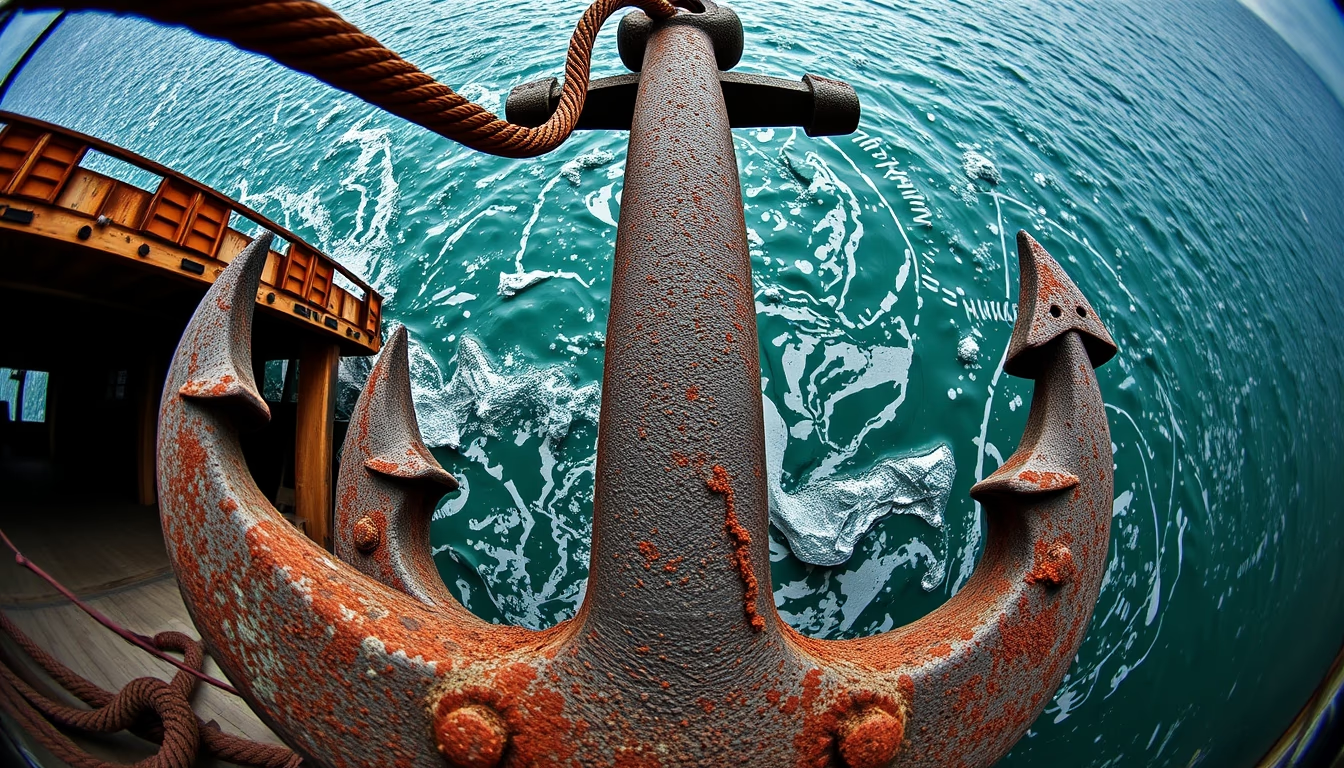
Massive iron anchors, like this rust-covered one, were essential for navigation for centuries, symbolizing safety and stability at sea.
About this subject
Anchors are devices used to secure vessels to the seabed, preventing them from drifting due to currents or wind. Older models, such as the admiralty anchor, were forged from iron and featured curved arms and a vertical shank. The rust visible on this example is a natural oxidation process of iron when exposed to salt water and air. This corrosion can over time compromise the anchor's structural integrity, but it also creates a patina that many find aesthetically striking.
Historically, anchors evolved from stones tied to ropes, used by ancient civilizations, to complex metal pieces during the Age of Discovery. The admiralty anchor, patented in the 19th century, became standard on wooden ships. With the advent of steel vessels, stockless anchors like the Danforth type emerged, lighter and more efficient on different seabeds. Despite innovations, traditional iron anchors are still found in ports and museums, serving as testaments to naval engineering.
Culturally, the anchor is a symbol of hope and steadfastness, appearing in coats of arms, flags, and tattoos. In Christianity, it represents unwavering faith. In nautical contexts, the phrase "drop anchor" means to settle in a safe place. The accumulation of rust, while indicating abandonment or disuse, also gives the piece a historical character, suggesting years of service at sea. Interestingly, discarded anchors are sometimes recovered and restored as decorative objects.
Frequently Asked Questions
Why do iron anchors rust?
Iron oxidizes when exposed to salt water and oxygen, forming rust (iron oxide). Salt water accelerates this process due to the presence of electrolytes.
What are the main types of anchors?
Common types include the admiralty anchor (with stock and curved arms), the Danforth (stockless, with two plates), and the Bruce anchor (finned, single piece).
What is the origin of the anchor symbol?
The anchor as a symbol dates back to early Christians, who used it to represent hope and faith. In maritime contexts, it became an emblem of stability.
Direct URL
https://pub-c7d6a6ea828543ac903a74a341ccb2e1.r2.dev/imagens/anchor-large-rusty-fish-eye-wide-angle-p11.avifHow to credit
Include a visible link back to UtilizAí. Copy one of the snippets below:
<a href="https://xn--utiliza-eza.com/en/midia/imagens/anchor-large-rusty-fish-eye-wide-angle-p11">Anchor large rusty</a> by <a href="https://xn--utiliza-eza.com">UtilizAí</a>, licensed under <a href="https://creativecommons.org/licenses/by/4.0/">CC BY 4.0</a>.
[Anchor large rusty](https://xn--utiliza-eza.com/en/midia/imagens/anchor-large-rusty-fish-eye-wide-angle-p11) by [UtilizAí](https://xn--utiliza-eza.com), CC BY 4.0
License: CC-BY-4.0