Amethyst geode purple
1344×768 · AVIF · CC BY 4.0
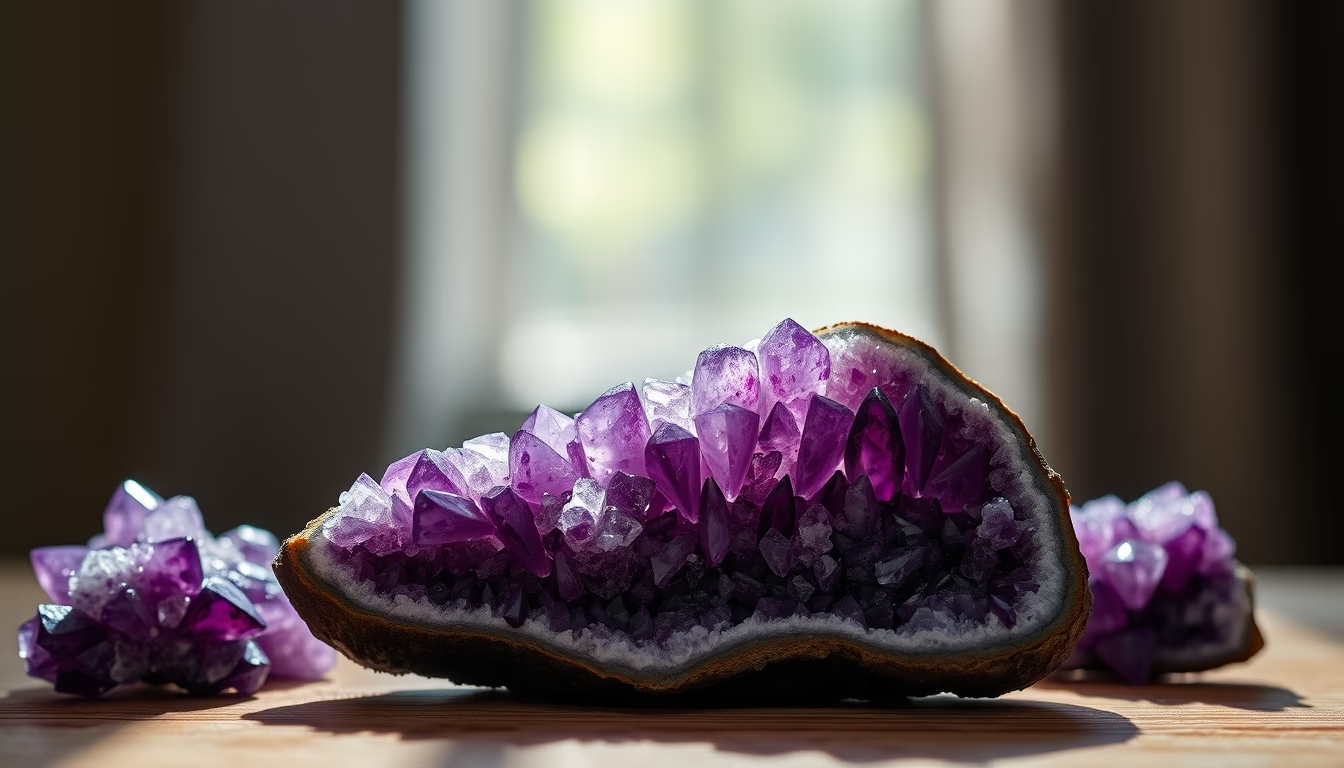
Amethyst geodes are hollow rock formations lined with purple crystals, the result of millions of years of volcanic activity and mineral deposition.
About this subject
Amethyst geodes are cavities in volcanic or sedimentary rocks that, over geological eras, were filled with silica- and iron-rich solutions. The characteristic purple color comes from natural irradiation and the presence of iron ions in the quartz crystal structure. The world's largest deposits are in Brazil, especially in the states of Rio Grande do Sul, Santa Catarina, and Minas Gerais, with the region of Ametista do Sul producing geodes up to 5 meters in height.
Geode formation begins with gas bubbles trapped in solidified lava. Millions of years later, groundwater rich in minerals enters the cavity and deposits successive layers of silica. Specific temperature and pressure conditions determine the size and purity of the crystals. Brazil accounts for over 90% of the world's amethyst production, and the extracted geodes are often exported to the gem and decoration market.
Culturally, amethyst has been associated with wisdom and spirituality since ancient Greece. The word comes from Greek "amethystos", meaning "not intoxicated," as the stone was believed to prevent drunkenness. Today, amethyst geodes are used as decorative pieces, in jewelry, and by crystal healing practitioners. Mining these geodes requires care to preserve crystal integrity, often involving manual extraction to avoid damage.
Fact: the world's largest amethyst geode, called "Giant Amethyst," was found in Maquiné, Rio Grande do Sul, weighs over 30 tons, and is displayed in a local museum. Sustainable extraction and legal trade are ongoing challenges in the region, which faces issues of illegal mining and smuggling of valuable specimens.
Frequently Asked Questions
How do amethyst geodes get their purple color?
The purple color results from iron ions within the quartz structure combined with exposure to natural radiation over millions of years.
Where are the largest amethyst geodes in Brazil found?
The largest geodes are found in Rio Grande do Sul, especially in Ametista do Sul, and in Santa Catarina, with specimens exceeding 5 meters in height.
What is the economic importance of amethyst for Brazil?
Brazil is the world's largest producer of amethyst, accounting for over 90% of global supply, generating significant revenue from exports of rough and cut gems.
Direct URL
https://pub-c7d6a6ea828543ac903a74a341ccb2e1.r2.dev/imagens/amethyst-geode-purple-documentary-photography-p2.avifHow to credit
Include a visible link back to UtilizAí. Copy one of the snippets below:
<a href="https://xn--utiliza-eza.com/en/midia/imagens/amethyst-geode-purple-documentary-photography-p2">Amethyst geode purple</a> by <a href="https://xn--utiliza-eza.com">UtilizAí</a>, licensed under <a href="https://creativecommons.org/licenses/by/4.0/">CC BY 4.0</a>.
[Amethyst geode purple](https://xn--utiliza-eza.com/en/midia/imagens/amethyst-geode-purple-documentary-photography-p2) by [UtilizAí](https://xn--utiliza-eza.com), CC BY 4.0
License: CC-BY-4.0