Air plants tillandsia
1344×768 · AVIF · CC BY 4.0
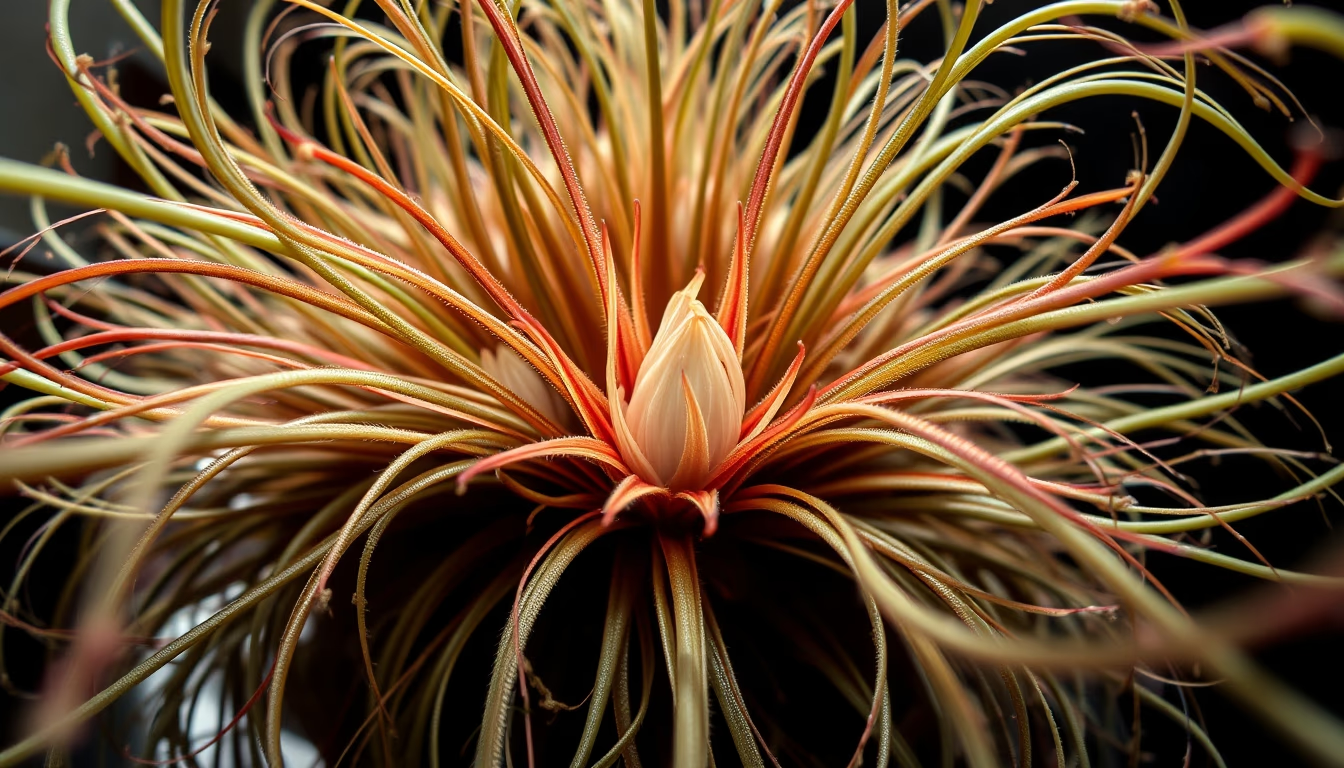
Tillandsia, or air plants, are epiphytic bromeliads that absorb moisture and nutrients through their leaves, native to the Americas.
About this subject
Tillandsias, commonly known as air plants, are a genus of epiphytic bromeliads that require no soil. Their leaves are covered with specialized trichomes that absorb water and nutrients directly from the atmosphere. With over 650 species, they range naturally from the southern United States to Argentina, inhabiting environments as diverse as rainforests and arid deserts.
Caring for air plants is straightforward: mount them on bark, rocks, or decorative holders. They thrive in bright, indirect light with good air circulation. Watering is done by misting once or twice a week, or by soaking the plant for 20, 30 minutes monthly in dry climates. This low-maintenance nature makes them ideal for terrariums, living walls, and vertical gardens.
Ecologically, air plants play key roles. Their rosettes provide microhabitats for insects, spiders, and small amphibians. Some species, like Spanish moss (Tillandsia usneoides), serve as bioindicators of air quality, accumulating pollutants such as heavy metals. Historically, various cultures have used tillandsias in crafts and traditional medicine.
Popular varieties include Tillandsia ionantha, whose leaves turn bright red when blooming, and Tillandsia cyanea, with its striking pink inflorescence. The fish-eye lens of this image emphasizes the sculptural, almost futuristic form of the leaves, highlighting how these plants have evolved to capture every drop of moisture from the air.
Frequently Asked Questions
How to care for an air plant?
Place in bright indirect light, mist with filtered water twice a week. Once a month, soak for 30 minutes and dry upside down.
Does tillandsia need soil?
No. They are epiphytic and absorb nutrients through leaves. Mount them on bark, rocks, or supports.
What is the difference between tillandsia and other bromeliads?
Tillandsia is a genus within the Bromeliaceae. Most tillandsias are epiphytic, while other bromeliads may be terrestrial.
Direct URL
https://pub-c7d6a6ea828543ac903a74a341ccb2e1.r2.dev/imagens/air-plants-tillandsia-fish-eye-wide-angle-fresh5.avifHow to credit
Include a visible link back to UtilizAí. Copy one of the snippets below:
<a href="https://xn--utiliza-eza.com/en/midia/imagens/air-plants-tillandsia-fish-eye-wide-angle-fresh5">Air plants tillandsia</a> by <a href="https://xn--utiliza-eza.com">UtilizAí</a>, licensed under <a href="https://creativecommons.org/licenses/by/4.0/">CC BY 4.0</a>.
[Air plants tillandsia](https://xn--utiliza-eza.com/en/midia/imagens/air-plants-tillandsia-fish-eye-wide-angle-fresh5) by [UtilizAí](https://xn--utiliza-eza.com), CC BY 4.0
License: CC-BY-4.0