Agricultural robot field
1344×768 · AVIF · CC BY 4.0
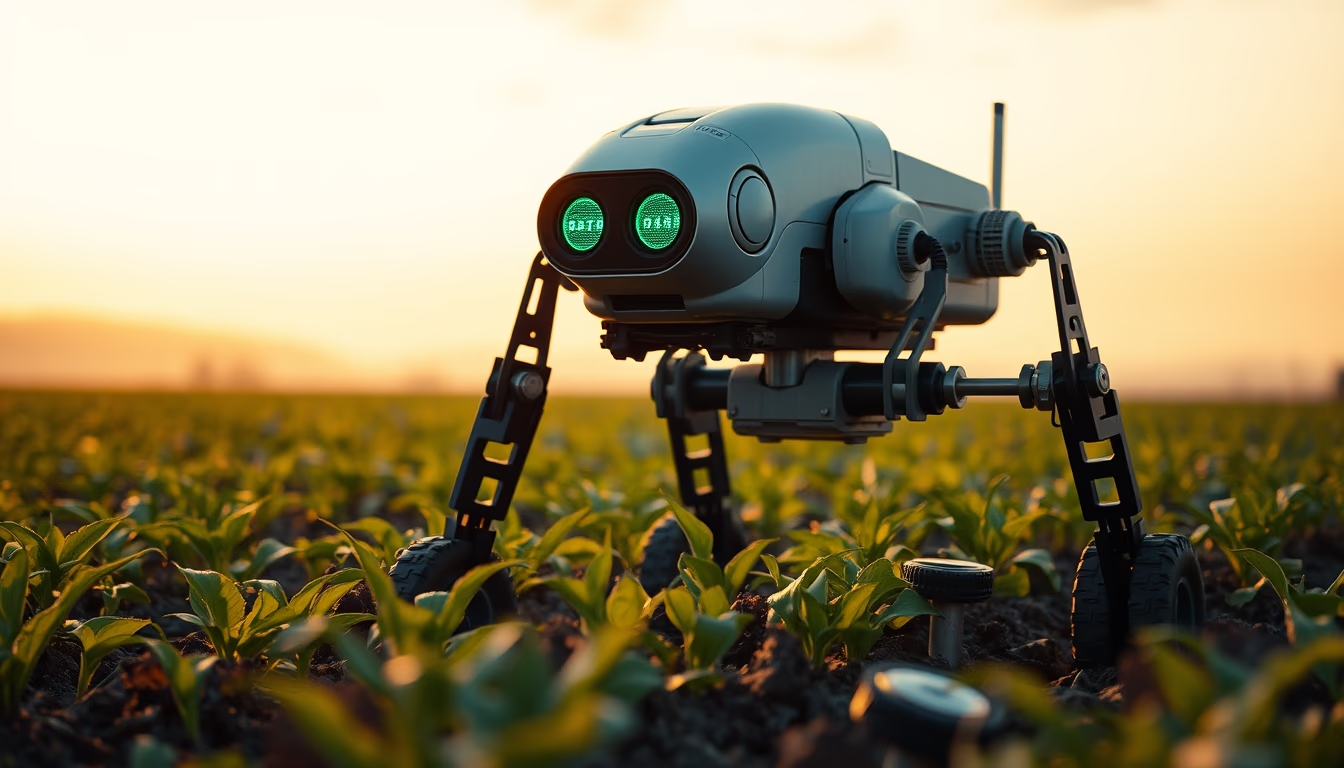
Agricultural robots are transforming farming worldwide with autonomous systems that optimize yields and reduce environmental impact.
About this subject
Agricultural robots are among the most promising innovations for modern agribusiness. These autonomous or semi autonomous devices are designed to perform tasks such as planting, irrigation, spraying, harvesting, and crop monitoring. Equipped with sensors, cameras, GPS, and artificial intelligence, they can navigate uneven terrain, identify weeds, diseases, or nutrient deficiencies, and apply inputs precisely. This technology reduces water, fertilizer, and pesticide usage, contributing to more sustainable practices.
The adoption of agricultural robots is growing rapidly in countries like the United States, Japan, Germany, and Brazil, although it still faces barriers such as high initial costs, need for connectivity infrastructure, and adaptation to different crops. In recent years, startups and large companies have developed specific solutions for crops like soybeans, corn, coffee, and fruits. Robot use also helps mitigate rural labor shortages, a growing problem in many regions.
A notable example is the "See & Spray" robot by Blue River Technology (a John Deere subsidiary), which uses computer vision to distinguish cultivated plants from weeds and apply herbicide only where needed. The "Tractica" robot performs automatic spraying with millimeter precision. In Brazil, Embrapa develops prototypes for crop monitoring and pest detection. These advances point to a future where agriculture will become increasingly digital and efficient, with robots working alongside farmers.
Frequently Asked Questions
How do agricultural robots work in practice?
They use sensors and artificial intelligence to map the terrain, identify plants, and apply inputs precisely. Some are fully autonomous, while others require remote supervision.
What are the main benefits of using robots in the field?
Reduced input and labor costs, increased productivity, lower environmental impact, and greater precision in agricultural operations.
Will agricultural robots replace farm workers?
Not entirely. They tend to automate repetitive and heavy tasks, but still require human supervision and create new opportunities for technical and operational work.
Direct URL
https://pub-c7d6a6ea828543ac903a74a341ccb2e1.r2.dev/imagens/agricultural-robot-field-cinematic-wide-shot-p7.avifHow to credit
Include a visible link back to UtilizAí. Copy one of the snippets below:
<a href="https://xn--utiliza-eza.com/en/midia/imagens/agricultural-robot-field-cinematic-wide-shot-p7">Agricultural robot field</a> by <a href="https://xn--utiliza-eza.com">UtilizAí</a>, licensed under <a href="https://creativecommons.org/licenses/by/4.0/">CC BY 4.0</a>.
[Agricultural robot field](https://xn--utiliza-eza.com/en/midia/imagens/agricultural-robot-field-cinematic-wide-shot-p7) by [UtilizAí](https://xn--utiliza-eza.com), CC BY 4.0
License: CC-BY-4.0